


Iran Destroys $700m U.S. Spy Plane, Refueling Tanker in Strike on Saudi Air Base
By 𝔸bdulrazak Tomiwa
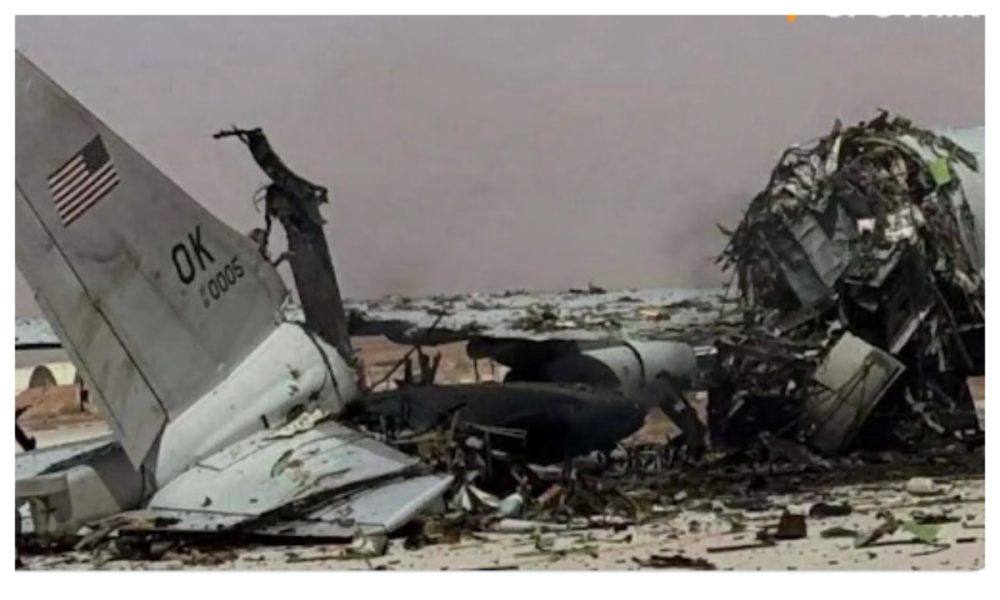
Iran launched a significant strike against a United States Air Force asset at the Prince Sultan Air Base in Saudi Arabia. The attack, which took place on Saturday, resulted in the destruction of a U.S. E-3 AWACS plane, a high-tech surveillance aircraft valued at approximately $700 million.
The E-3 AWACS is considered a vital “spy plane” and airborne command hub, serving as a flying radar that tracks aerial threats and directs U.S. air operations. Its loss represents a major blow to the American military’s regional surveillance and coordination capabilities.
In addition to the destruction of the aircraft, the strike resulted in injuries to 12 U.S. soldiers. Reports indicate that while most of the personnel sustained light injuries, two of the American service members are currently listed in serious condition following the explosion.
The assault was not limited to the AWACS plane; at least one KC-135 air refueling tanker was also hit during the bombardment. The tanker reportedly caught fire, adding to the material damage sustained by the U.S. fleet stationed at the Saudi base.
According to regional sources and military analysts, the attack was a coordinated effort involving both Iranian ballistic missiles and suicide drones. These weapons were able to penetrate the base’s perimeter to hit high-value targets parked on the tarmac.
The strike is part of a broader, month-long war between the United States and Iran. This particular conflict escalated sharply following the reported killing of the Iranian Supreme Leader and other high-ranking officials in previous American and Israeli operations.
The Prince Sultan Air Base has become a focal point of the regional tension, as it hosts a significant number of U.S. personnel and advanced hardware. This latest incident highlights the vulnerability of static military assets to Iran’s evolving missile and drone technology.
As the war enters its second month, the destruction of such expensive and essential equipment underscores the high cost of the conflict. The U.S. military has yet to announce its formal retaliatory measures for this specific loss of life and equipment.