

Avatar Tinubu @74 Aging Like Fine Wine
The More He Ages, The More we Need to Pick His Brain
By Bamidele Atoyebi
As the irreversible pages of time turn, there is a prevailing school of thought that posits influence fades with age. However, in the realm of Nigerian politics and strategic leadership, the opposite holds true. The more a visionary leader ages, the more critical it becomes for the nation to tap into the depth of their experience, foresight, and weathered wisdom.
This is more than a tribute; it is a recognition of a journey paved with calculated precision and a relentless devotion to the Nigerian project. It is an acknowledgment that true leadership is a marathon of the mind, requiring a spirit sharpened by decades of navigating the most treacherous political terrain.
Sacrifice is the currency of true statesmanship, and for Tinubu, this was never a mere slogan but a lived experience in reality. During the dark days of military dictatorship, he didn’t just pay lip service to democracy; he heavily funded the resistance movements that challenged tyranny at home. He sacrificed his vast business interests, personal safety, and the comfort of his family, choosing the cold uncertainty of exile with NADECO over the cowardly comfort of silence. This period of his life teaches us that you cannot birth a new, democratic nation without willing to lose something of your own in the process, a foundation of selflessness and sacrifice that naturally leads to the virtue of waiting for the right moment.
Drawing from that foundation of sacrifice, Tinubu emerged as a grandmaster of the long game in a political landscape often defined by “fire brigade” approaches. After leaving the Governor’s office in 2007, he did not rush for a convenient federal appointment; instead, he spent over 16 years in the “political wilderness,” painstakingly and clear-sightedly rebuilding the opposition from the grassroots up. He understands that a fruit plucked prematurely is sour, and his journey proves that truism that power belongs to those who can weather the storm, staying focused on the horizon. This deliberate patience allowed him time to cultivate a garden of leadership by investing in the potential of others.
This investment in time directly fueled his “Multiplication Effect,” where his greatest pride lies in the long list of success of those he has mentored rather than his own singular glory. He chose not to be the lone tree in the forest but groomed others to create a political foliage which his detractors find hard to breach. He is famous for the technocrats he has empowered, producing Vice Presidents, Governors, Ministers, and heads of global agencies who began their journey in his cabinet. By appointing technocrats like Yemi Osinbajo and Babatunde Fashola, he proved that a leader’s true strength is measured not by the size of his shadow, but by the brightness of the stars he helps to rise. This culture of empowerment gave him the backup needed to exercise immense bravery when the state’s survival was at peril.
With a team of experts behind him, he found the strength to say “No” when it was unpopular but fundamentally necessary for the people’s survival. When the Federal Government unconstitutionally seized Lagos State’s local government allocations, the state was expected to collapse, yet Tinubu stood his ground with iron-clad resolve. Instead of backing down, blinking first or begging for crumbs, he overhauled the state’s tax system and proved Lagos could sustain itself and thrive independently, sparking a financial revolution that was born out of the raw courage to challenge the status quo a courage that was always directed toward the singular goal of protecting the common man.
That protective instinct highlights that leadership is essentially a shepherd’s task, requiring a deep, empathetic connection to the flock. This principle is seen in his legendary grassroots connection, ranging from the massive free health missions and eye surgeries in Lagos to the current national “Renewed Hope” social intervention programs. He has always maintained that a leader must ensure the “sheep” are fed first, prioritizing food security and social welfare. By ensuring the people were cared for, he built the moral capital necessary to bridge divides and have former adversaries queue behind him.
Because his large heart and focus remained on the people rather than personal pride, he operated with a legendary capacity for forgiveness, understanding that “politics is a game of addition, not subtraction.” He has frequently invited former political rivals, individuals who once vilified him back to the table to serve the nation, prioritizing stability over personal grudges. He recognizes that reconciliation is the only way to heal a fractured nation and build a stable, unified front, a strategy that eventually allowed him to look beyond regional borders to form broader coalitions.
This spirit of reconciliation was the catalyst for the formation of the APC in 2013, which remains a masterclass in strategic alliance and political engineering. Tinubu realized early on that no single region could win a national election alone, and he had the vision to collapse his own party’s identity (the ACN) into a larger entity to achieve a greater national goal. He teaches that to win big, you must be willing to share the stage, sacrifice ego, and form lasting bridges across ethnic, religious, and regional divides. These alliances, however, required a constant state of internal balance and fair play to remain functional.
Maintaining such large alliances required the sophisticated art of settlement, achieving a delicate equilibrium among competing interests. It is the practice of finding a middle ground where all stakeholders feel seen, heard, and valued. As a “Final Arbiter” in many political disputes, he utilizes strategic compromise to prevent the “political house” from collapsing, ensuring every interest group feels they have a genuine “stake in the farm.” Despite being the architect of these massive settlements, he never allowed the power to inflate his ego, maintaining a surprising sense of personhood.
This ability to settle disputes is rooted in his posture of accessibility and a genuine willingness to listen, despite the “Jagaban” title and his immense influence. He has often shown the humility to learn from his critics and consult widely with traditional rulers, youth leaders, and technocrats before making major moves. He bows to party decisions and respects the hierarchy of elders, proving that true power stays secure only when it remains deeply connected to its roots, a connection he maintains through constant, quiet acts of giving.
His humility is best expressed through a philanthropy that has operated as a silent, powerful engine behind the scenes for decades. Long before he occupied the Presidency, his home was a sanctuary for the needy, and his office a place where the broken found help. From scholarships for thousands of indigent students to sponsoring life-saving surgeries for strangers, his generosity is a lifestyle rooted in the deep-seated belief that wealth is only useful if it flows toward those who have none. This habit of giving back to society eventually culminated in his most significant political sacrifice for the sake of the national good.
The ultimate test of that philanthropic spirit came in 2015 when Tinubu stepped aside from a deserved Vice-Presidential slot to ensure the party’s ticket remained balanced and acceptable to the wider electorate. He chose to put the success of the progressive movement and the stability of the party over his own personal ambition. This pivotal move secured the party’s historic victory and redefined him as a leader who values the cause more than the title, ensuring the very structure he built remained intact.
Because he was willing to put the structure above himself, that very structure has remained a constant Northern Star for his followers while other politicians switch parties with the seasons. He has maintained a consistent, loyal political framework for over 25 years, investing heavily in human capital and clear ideological focus. This resilience has kept his followers unified across decades of transitions, creating a formidable machine that functions on trust and long-term vision rather than just temporary interests, though he remained wise enough to adapt when the times changed.
Within that rigid structure, he remained a pragmatist at heart, known for his remarkable ability to pivot and recalibrate when policies faced unforeseen challenges. Whether it was adjusting tax models in Lagos to be more business-friendly or recalibrating national economic reforms today, he understands that while the destination remains fixed, the road must be adjusted for the times. His leadership shows that rigidity is the enemy of progress, and it was this fluidity that gave him the strength to push through the hardest final miles of his journey.
Ultimately, all these principles converged in his journey to the Presidency, which was the ultimate display of “Never Say Die” resilience in the face of overwhelming odds. Facing internal sabotage, currency crises, and external obstacles, his doggedness served as both his shield and his weapon. The phrase “Emi Lo Kan” was not just a claim of right; it was a declaration of a man who had fought every battle, survived every betrayal, and refused to be denied his place in history through sheer force of will.
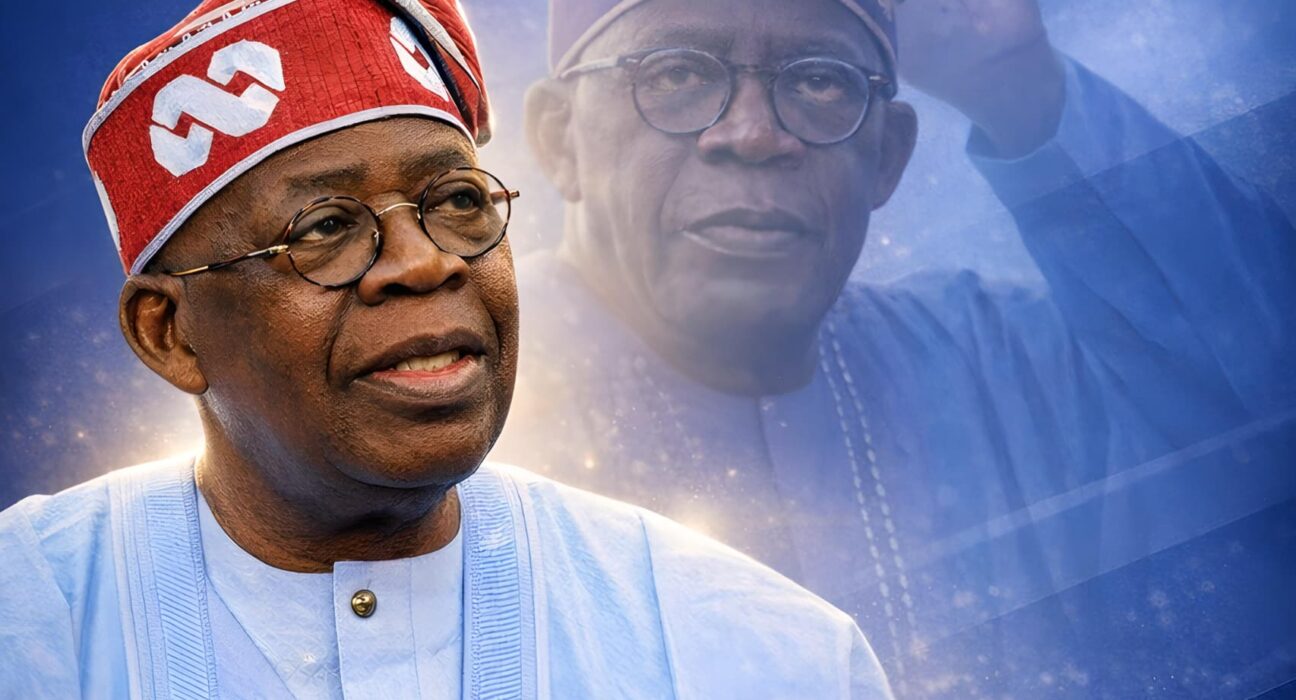
On this auspicious day, the BAT IG joins the nation and the world in celebrating our President, Asiwaju Bola Ahmed Tinubu. We salute the Jagaban of Borgu, the Asiwaju of the Universe, and the Lion of Bourdillon, an enigma, a man whose heart is a sanctuary for the distressed and whose mind is a blueprint for national development and prosperity. Happy Birthday to a living legend of democracy; we pray for divine health and many more years of groundbreaking impact. At BAT-IG, we are committed to more than just picking his brain; we are dedicated to mentoring a new generation through our BAT-HOME-CELL structures, the BAT Institute of Governance, LASUTECH and Center for Politics, Public Policy, and Accountability, Bola Ahmed Tinubu Endowed Chair at UNILAG and our Political Impartation Summits, we are raising walking carriers of your endless principles of sacrifice, patience, pushing others to succeed, courage, feeding the flocks, reconciliation, alliances, settlement, humility, philanthropist, selflessness, maintaining political structure, flexibility, and principle of
doggedness.
Happy Birthday, Mr. President; may your legacy of raising men and women for the nation continue to flourish
Bamidele Atoyebi is the Convener of BAT Ideological Group, National Coordinator of Accountability and Policy Monitoring and a publisher at Unfiltered and Mining Reporting