



Strengthening Nigeria’s Geoscience Future Through Capacity Building.
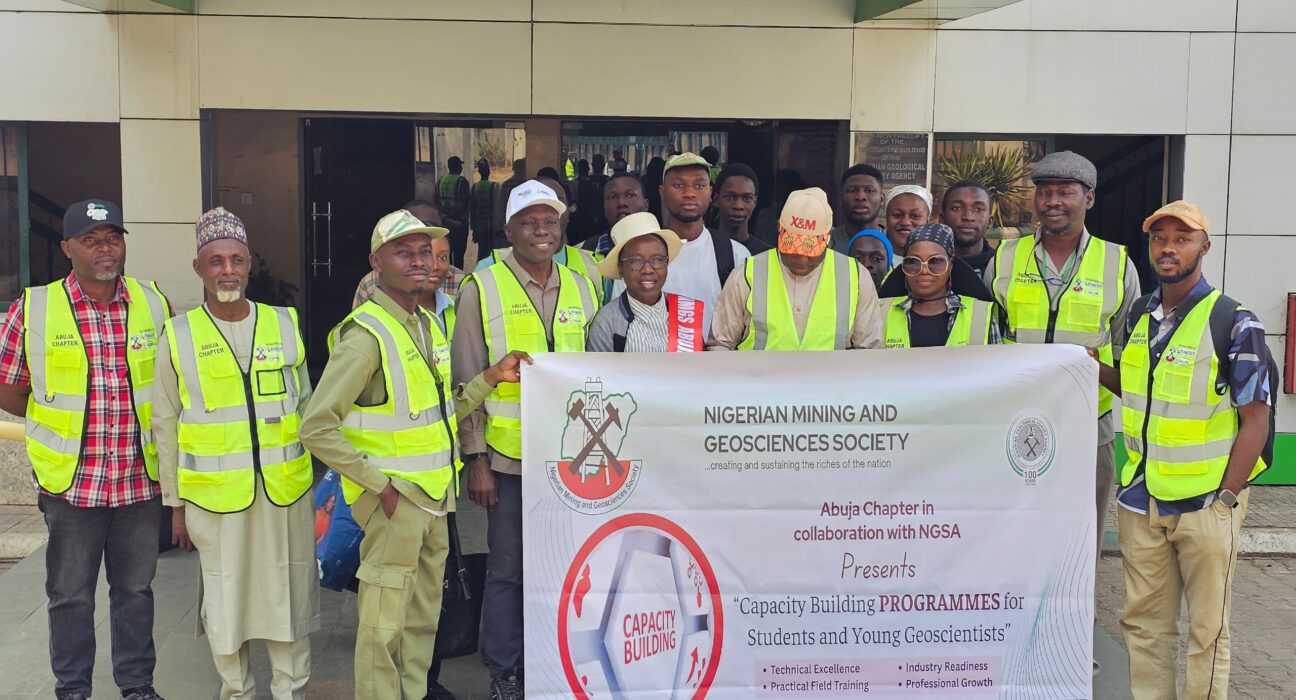
Nigeria’s drive toward sustainable mineral development received a significant boost as the Nigerian Mining and Geosciences Society (NMGS), Abuja Chapter, in collaboration with the Nigerian Geological Survey Agency (NGSA), mentored young professionals and students through a comprehensive capacity-building programme focused on rudimentary field mapping and mineral exploration.
The capacity-building programme, which commenced on Tuesday, March 3, 2026, in Abuja, brought together graduates, students, industrial trainees and experienced geoscientists for practical training aimed at strengthening technical competence and improving industry readiness within Nigeria’s evolving mineral sector.
The event was declared open by the Chairman of the NMGS Abuja Chapter, while the Director-General of NGSA, Olusegun Ige, delivered the keynote address, stressing the importance of sustained investment in human capacity development to drive national growth through mineral resource development.
Professor Ige noted that strengthening local expertise remains essential as Nigeria intensifies efforts to diversify its economy through the mining sector and reduce dependence on oil revenues.
A major highlight of the programme was a hands-on field training exercise conducted at geological outcrops in the Lugbe area of the Federal Capital Territory. Participants were guided by industry experts on practical techniques including identification of geological formations, accurate location recording using Global Positioning System (GPS) devices, and measurement of structural features such as dip and strike with compasses and clinometers.
The field session provided participants with real-world exposure to geological mapping processes and mineral exploration methods considered fundamental to modern mining operations.
Beyond technical training, the workshop also served as a mentorship and networking platform, enabling young professionals to interact with seasoned practitioners on career development, professional standards and emerging opportunities within Nigeria’s geoscience industry.
The training comes at a critical time for Nigeria’s mining sector, which has received renewed government attention through ongoing reforms by the Federal Ministry of Solid Minerals Development aimed at increasing the sector’s contribution to the national economy.
The growing global demand for critical minerals, particularly lithium deposits in Nasarawa State, has accelerated exploration activities and investor interest in the region, positioning the state as a key player in Nigeria’s emerging minerals market.
However, increased mineral activity has also heightened concerns over illegal and artisanal mining, which stakeholders say continues to result in revenue losses, environmental degradation and safety risks.
Organisers said the Abuja training addressed these concerns by promoting scientifically sound and legally compliant exploration practices while equipping emerging geoscientists with professional knowledge capable of supporting sector formalisation.
Experts believe initiatives such as the NMGS-NGSA collaboration will play a vital role in developing a skilled indigenous workforce needed to sustain ongoing lithium exploration and broader mineral development across the country.
The programme, participants noted, represents a strategic step toward building Nigeria’s next generation of exploration professionals at a time when the nation seeks to position itself competitively within the global clean-energy minerals value chain.