

Netanyahu Says ‘All Indications’ Point to Khamenei’s Death After US-Israeli Strikes
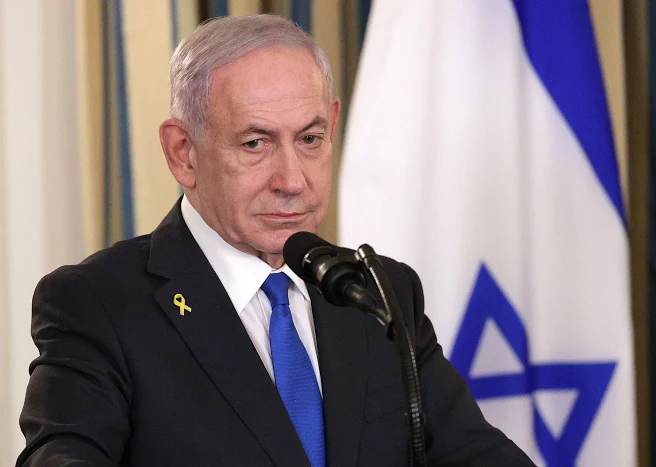
Israeli Prime Minister, Benjamin Netanyahu on Saturday said “all indications” suggest that Iran’s Supreme Leader, Ayatollah Ali Khamenei, is dead following extensive US-Israeli airstrikes on Tehran, as Iran insisted its top leadership remains alive.
Netanyahu, addressing the media hours after the joint military operation began, said Israeli airstrikes had destroyed Khamenei’s compound and claimed that the Iranian leader was “no longer with us.” Although he stopped short of officially confirming Khamenei’s death, the statement marks the strongest indication yet from Israel that the long-time Iranian leader may have been killed.
Khamenei has not been seen or heard from since the strikes commenced.
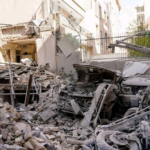
Satellite imagery shows heavy damage to his secure compound in Tehran, with multiple structures destroyed and black smoke rising from the site.
However, Iran’s foreign ministry maintained that both Khamenei and President Masoud Pezeshkian are “safe and sound.” Foreign minister Abbas Araghchi also told international media earlier that, “as far as I know,” all high-ranking officials remain alive.
The US and Israel launched what President Donald Trump described as “major combat operations” aimed at crippling Iran’s missile industry, nuclear infrastructure and senior regime leadership. Netanyahu said the campaign would continue “as long as needed” to remove what he described as an existential threat.
Iranian state media reported that at least 201 people were killed and 747 injured in the strikes across the country.
Separately, reports said 40 people were killed in a strike on a girls’ school. In Israel, emergency services reported 94 people wounded following Iranian retaliation, most with minor injuries.
In response to the attacks, Iran launched hundreds of missiles and drones targeting US and allied installations in the Gulf region, including bases in Kuwait, Bahrain, Qatar and the United Arab Emirates. The US Central Command said there were no American casualties and that damage to its facilities was minimal.
Netanyahu also called on Iranians to “flood the streets” and seize what he described as a “once-in-a-generation opportunity” to overthrow the regime.
He urged citizens to unite and “get the job done,” claiming the strikes would help free them from tyranny.
Meanwhile, several world leaders called for restraint and diplomacy. Turkish President Recep Tayyip Erdoğan condemned the strikes as violations of Iran’s sovereignty and warned that the region risked being dragged into a “circle of fire.”
French President Emmanuel Macron said France was neither warned nor involved in the operation and urged renewed diplomatic efforts, stressing that Iran’s nuclear programme could not be resolved through military strikes alone.
Within the United States, opposition lawmakers criticized the operation.
Senator Bernie Sanders described the attack as “illegal” and unconstitutional, comparing it to past US wars in Vietnam and Iraq. House Democratic leader Hakeem Jeffries said the president failed to seek congressional authorization before launching the strikes.
Iran has requested an emergency meeting of the International Atomic Energy Agency (IAEA), calling the US and Israeli claims about its nuclear programme “baseless” and demanding accountability for what it termed acts of aggression.
The United Nations Security Council is also expected to hold an emergency meeting as tensions escalate and airspace closures disrupt international travel across the Middle East.
As of Saturday evening, uncertainty remains over Khamenei’s whereabouts, with conflicting claims from Israeli and Iranian officials and no independent confirmation of his status.