


Nigeria Records 12% Surge in Maritime Exports as Reforms, Dangote Refinery Drive Growth
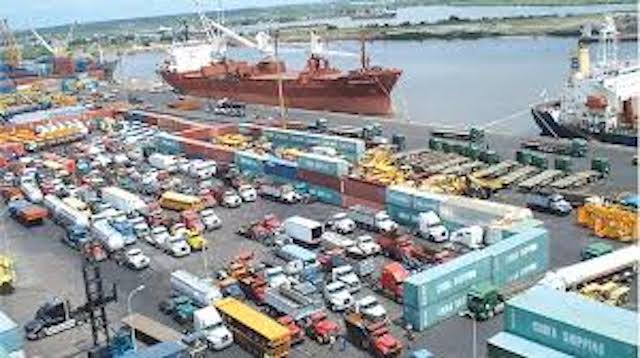
Nigeria’s maritime exports expanded by 12 per cent in the first half of 2025, reaching ₦42.87 trillion compared to ₦38.27 trillion in the corresponding period of 2024.
The National Bureau of Statistics (NBS) attributed the increase to sustained foreign exchange reforms, a weaker naira, and higher export volumes—particularly from the Dangote Petroleum Refinery.
Data showed that maritime transport continued to dominate Nigeria’s trade activities over other modes such as air, road, and pipelines. Analysts said the steady rise underscores the effectiveness of ongoing government policies aimed at promoting exports and boosting foreign exchange inflows.
Exports through sea transport rose from ₦20.36 trillion in the first quarter to ₦22.51 trillion in the second quarter of 2025. In contrast, the same quarters in 2024 recorded ₦19.02 trillion and ₦19.25 trillion, respectively.
The Director of the Centre for the Promotion of Private Enterprise, Dr. Muda Yusuf, attributed the upward trend to recent monetary reforms and improved export incentives.
“The 12 per cent growth in maritime exports reflects the impact of reforms,” Yusuf said. “Exchange rate depreciation makes exports cheaper and more competitive internationally, which in turn drives revenue growth.”
He explained that the Central Bank of Nigeria’s exchange rate unification under Governor Yemi Cardoso had eliminated the gap between the official and parallel markets, restoring confidence among exporters.
“Previously, exporters were forced to sell their foreign earnings at the official rate of ₦450 to a dollar when the parallel market was around ₦700, which discouraged exports.
The current system now allows them to receive full market value,” Yusuf said.
He also highlighted the growing role of the Dangote Refinery in boosting non-oil exports through fertiliser and refined petroleum shipments.
“The refinery is exporting fertiliser and petroleum products, which significantly contribute to non-oil export earnings,” he added.
Yusuf urged the Federal Government to maintain policy consistency and strengthen the business climate. “Sustaining these reforms and improving the structural environment will ensure even faster growth,” he noted.
Supply chain expert Marcel Mba described the development as a positive signal for the economy, noting that exports are the main source of foreign exchange earnings.
“Higher exports mean more money flows into the economy. The key, however, is ensuring imports don’t rise faster than exports,” Mba cautioned. “If export growth outpaces import growth, then Nigeria is on the right path.”
He added that the Dangote Refinery’s expansion into refined product exports could help strengthen the naira over time.
In May, Aliko Dangote announced that the refinery expects to export about 16,000 tons of fertiliser daily within two years—an equivalent of $6.5–$7 million in daily revenue.
Similarly, in July, Dangote Industries Chief Strategy Officer, Aliyu Suleiman, disclosed plans to double fertiliser output and expand export operations across Africa.
Both analysts agreed that the maritime export performance highlights Nigeria’s potential for export-led economic growth, provided reforms remain steady.
“The trend shows promise for the naira and for trade balance improvement,” Mba concluded.
Earlier reports indicated that in 2024, Nigeria’s maritime exports exceeded imports in the same category by nearly 40 per cent—a development analysts said reflected renewed investor confidence in the nation’s trade environment.