


China Hits Back at US, Places 11 Companies on Unreliable List, 16 on Export Ban
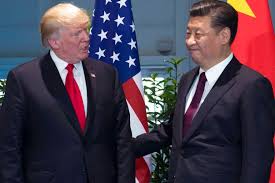
In an escalation of the global trade war, China unveiled has hit back on the United States with retaliatory measures, including placing 11 US companies on its “unreliable entity list” and imposing export ban on 16 US companies.
The move sent shockwaves through global markets, with US stock futures plummeting and European and UK stocks suffering their worst day in years.
The measures by the Chinese government, announced on Friday, on the Tomb Sweeping Festival, an important public holiday, are a response to the Trump administration’s wide-ranging tariffs on Chinese imports. The measures include anti-dumping investigations into imported medical CT X-ray tubes from the US and India and export restrictions of seven rare-earth minerals to the US, including samarium, gadolinium, and terbium.
The news has sparked a global market sell-off, with Dow futures plunging 1,000 points, or 2.3%, and the S&P 500 and Nasdaq Composite set to open 2.4% and 2.7% lower, respectively. European and UK stocks have been pummeled in the same way, with losses exceeding 3% on Friday.
The trade war has been escalating for days, and on Thursday the Dow fell over 1,600 points, or nearly 4%, and the S&P 500 and Nasdaq had their worst day in about five years. US Secretary of State Marco Rubio acknowledged the market turbulence, but stated that “the markets will adjust” once businesses become accustomed to the new rules.
But the woes for China-based supply chains are now multiple, with the unexpectedly steep US tariffs on Chinese imports and the broader tariffs from the Trump administration. The tariffs are adding to the problems of China’s slowing economy, which is already struggling with weak domestic consumption.
According to Macquarie Group chief China economist Larry Hu, the overall US tariff rate for Chinese products has been effectively raised to 69%, with the potential to shave as much as 2.5 percentage points off China’s growth this year. China aims to grow its economy by around 5% in 2025.
The impact of the trade war can be transmitted via a number of channels, including the reduced US demand for Chinese goods, the potential slower global economy, and the damage to export re-routing. Southeast Asian countries and Latin American nations that were part of the export re-routing trend in Trump’s first term can be affected again.
As the trade war escalates, investors and companies are bracing for the worst, with many wondering how it will play out and what the long-term consequences will be for the global economy. One thing is certain, however: the US-China trade war has now entered a new and potentially disastrous stage, with far-reaching implications for companies, investors, and consumers worldwide.