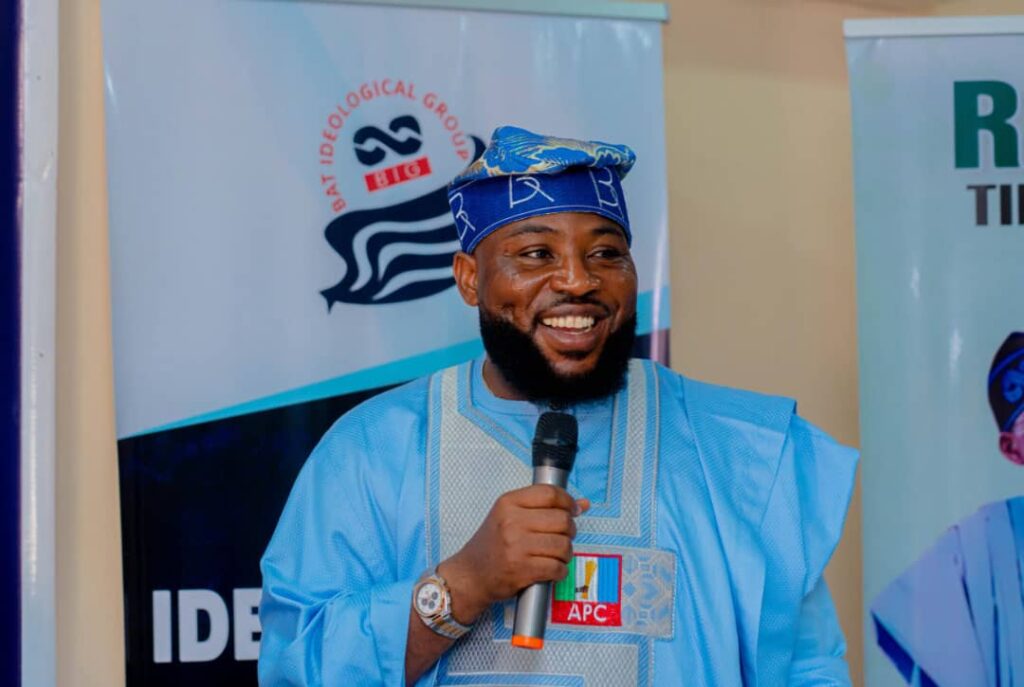
My Political Permutations, Policy Projections Consistently Aligning With Tinubu’s Administration
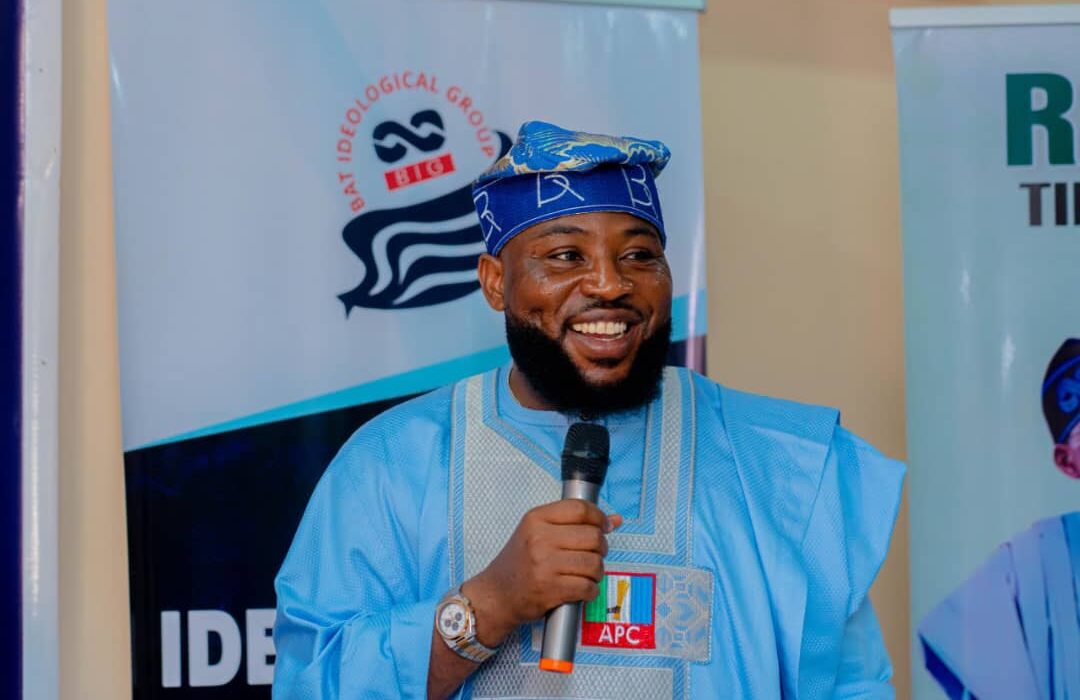
They maligned and called us mad and delusional. They said we were existing in dreamland for a movement that had barely found its feet. We neither argued nor honoured them with a response but remained focused. We simply worked, and we wrote, and we waited, until the decisions of the President began to read like pages pulled from our own notebooks.
When we started BAT-ideology, our vision was distinct, novel and uncompromising: to raise men and women who think like Asiwaju, have the courage of Asiwaju, and can come up with policy solutions like Asiwaju. We set out to build a political movement driven by deep philosophical conviction rather than the fleeting wind of political convenience.
So far, so good. We have achieved a great number of those milestones. Some may think it proud, or say we are overrating ourselves, when we insist that every member of BAT-ideology should hold their shoulders high as an heir to Asiwaju’s leadership, but the reality stands. In every state, local government, and political ward, our members are walking carriers of the BAT-ideology political spirit and leadership skills.
When we started, we did not want to enter the political space the way others do. We believe we are distinct and unique, an ideological group that should show fruit, skills, and strategies that are superior and philosophy-driven.
Without much talk, we calmly strategized on how to begin: by identifying gaps in grassroots policy intervention and providing solutions to them. Rigasa was the first project we came up with, and many other communities soon came to us with the different problems they faced in their political and community life.
As time went on, we saw that there was so much to be touched. On April 3, an inter-memo went out ordering every state coordinator of BAT-ideology to reach out to members across wards and local governments, identify a particular problem affecting them, and let us solve it. Where a problem could not be taken to the local government chairman or the state governor, it was to be sent to us at the national level.
Then, on April 22, Asiwaju approved a memo tagged World Priority Project. It means that you, in your ward, should look for a project that is very important to you, recommend a company to execute it, and bring it to us.
That is a very clear, almost word-for-word account of what we have been doing as BAT-ideology since last year. We started the Rigasa project as far back as November last year, before such projects were approved and put into this year’s budget, and we held the groundbreaking ceremony with the Kaduna State Governor in attendance. That is policy alignment at its clearest, and it shows how Asiwaju thinks and solves problems.
As we began to see how many things were not moving well in government, and how many lacunas and loopholes political appointees and governors were not covering, I wrote an article calling for a political summit and empowerment programme for all political appointees, including governors and local government chairmen, to be led by the President so that they can help him run his vision. In other articles, I argued that Asiwaju needs like-minded leaders who can help him run that vision, because he cannot be everywhere at once as president. I also posited that the money governors receive has turned them into money bags, as such they should engage in people-oriented projects, which would reduce the noise of critics.
UBEC Security Initiative. In early March, in UBEC, we pushed for a way to encourage and motivate our military men, police officers, paramilitary personnel, and other frontline officers to give their best. Our proposal was that the President and the government should secure the education of their children, starting with the children of those whose parents have been killed on the front line, up to age 18. Five days later, the President hosted the servicemen, reviewed their salaries upward, and approved allowances. This was followed by decentralized accommodation, including two-bedroom houses for junior officers, and a soldier-first welfare approach that stopped salary slippage between postings. He also donated his own four-year salary to frontline officers and raised the minimum wage from between 45,000 and 75,000 to a minimum of 180,000.
Another policy alignment can be seen in the Nigerian Mining Book, which I wrote for 2024. Our aim is to expose Nigerian youths, from primary and secondary school, to the mineral resources around them, so that they do not feel the need to travel all the way to Lagos or other cities just to look for greener pastures. The opportunities are right where they are.
We are also exposing them to alternative career paths. Not all of them need to become doctors or lawyers; they can be mining engineers, artisans, geological surveyors, or even investors. Many Nigerians know only about oil and gas, and remain unaware of the other mineral resources deposited all around them and what those resources can be used for. When you are not aware of what lies beneath your own feet, you miss out. This book is our way of opening their eyes to these possibilities.
The President echoed these same views this year when he met with the Securities and Exchange Commission (SEC). He noted that if our stock market is doing well, and indeed it is, we should teach our children how to invest and make small money from the very beginning, taking them into the Nigerian stock market straight from the classroom.
What he is saying aligns completely with what we believe, and that is why we made sure this book was written and made available. As part of the BAT – ideology, this is who we are. We are out there, passionately pursuing the President’s vision and mission, wanting to see him succeed, and looking to draw as many lessons and leadership qualities from him as possible. We want many more people to step forward, proud to support a government that delivers the quality of leadership we want, at every level, in every state, and across the entire country.
On May 13, we wrote to the President about the worries of the people of Kwara South, who were being chased out of their land. We warned that the Yoruba people of Kwara South might face extinction if no action was taken. The President responded by creating a battalion, which was then extended to at least six other places.
Around June or July last year, I wrote that the ADC is a coalition of people without an existential and humanistic philosophy, whereas our movement is built on word and doctrine. When we did background checks on civil servants whose take-home pay had been reduced by the removal of the fuel subsidy, we wrote to the President. He graciously approved our recommendation and made it a policy focus for state governors to provide for their civil servants.
Many people thought we were mad or delusional when we started, but facts do not lie. The President has confirmed the alignment several times by buying into our ideas, and even by doing things we did not know he had done, which we later discovered fit together with ours. Nobody can question us.
We are building men through philosophy, ideology, and policy solutions, not through political activities done merely for a gift. Money will come, but first let us understand who we are, our identity, and our goals and objectives, before scrambling for money. This is why I have always told our members to build on word, doctrine, philosophy, and policy solutions rather than on gifts, money, or the kind of mobilization others practice in politics, which will not give us the nation we want to build.
If any BAT-ideology member who knows our principles and ethics, and who claims to be working for Asiwaju, is questioned anywhere, they should hold their shoulders high. We are building men through philosophy, ideology, and policy solutions, and no one will be able to question them anywhere.
Bamidele Atoyebi is the convenor of BAT Ideological Group, National Coordinator of Accountability and Policy Monitoring and a publisher at Unfiltered and Mining Reporting and political social worker