


FEC Approves ₦45.8 Billion Biosecurity System for Five International Airports for Early Detection of Disease Threats
The Federal Executive Council (FEC) has approved ₦45.8 billion for an integrated biosecurity and disease surveillance system at five international airports, aimed at strengthening Nigeria’s capacity to detect and respond to emerging infectious disease threats at its borders.
The approval was granted at the council’s meeting on Wednesday, 28 October 2026, presided over by President Bola Tinubu at the Presidential Villa, Abuja. Coordinating Minister of Health and Social Welfare, Professor Muhammad Ali Pate, disclosed the decision while briefing State House correspondents after the meeting.
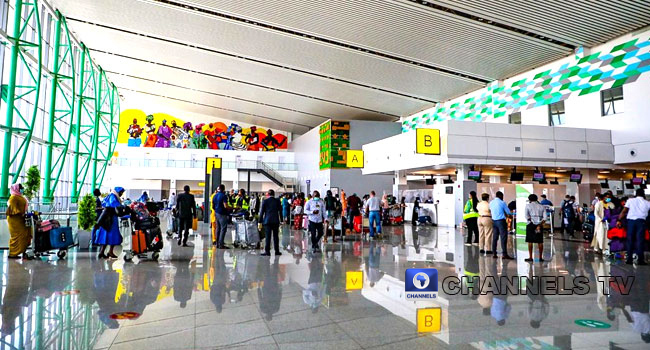
The system will be deployed at Murtala Muhammed International Airport, Lagos; Nnamdi Azikiwe International Airport, Abuja; Mallam Aminu Kano International Airport, Kano; Port Harcourt International Airport; and Akanu Ibiam International Airport, Enugu. Pate noted that more than 18 million passengers pass through Nigeria’s airports annually, making robust surveillance at points of entry critical to national health security.
The project will be implemented as a 20-year public-private partnership concession awarded to the BioHealth Consortium, following the council’s approval of the full business case.
Under the arrangement, the private-sector partner will design, finance, build, operate and maintain the facilities throughout the concession period, while the Federal Government provides policy, institutional and regulatory oversight.
At the end of the term, the assets will revert to the Federal Government in line with the agreement reviewed and endorsed by the Infrastructure Concession Regulatory Commission.
The system will feature aircraft wastewater surveillance to detect pathogens, air and surface sampling equipment, technologies for monitoring cargo and baggage, and modern laboratories for rapid diagnostics at points of entry. It will also establish a National Surveillance Operations Centre to coordinate real-time monitoring, integrate data, track incidents and support rapid responses to suspected outbreaks.
Operations will be integrated with the Nigeria Centre for Disease Control and Prevention (NCDC), Port Health Services, Nigeria Customs Service, Nigeria Immigration Service and the National Agency for Food and Drug Administration and Control (NAFDAC).
Pate described the initiative as a major investment in Nigeria’s health and economic security, noting that infectious disease outbreaks can disrupt economic activities and threaten public safety.
“Over the last two weeks, I think you realise the significance of enhancing biosecurity at our points of entry,” he said. “Since COVID, we have known that there are significant vulnerabilities in terms of public health threats crossing borders and the need for coordinated, technology-driven systems for early warning, detection and response to emerging infectious disease threats.”
The approval follows Nigeria’s response to an imported case of Bundibugyo Ebola virus disease confirmed in the Federal Capital Territory on 20 October 2026. The index patient, a 42-year-old woman and wife of a Swiss diplomat, arrived in Abuja from Uganda via Addis Ababa on 3 October and developed symptoms on 7 October. She received treatment in Nigeria, improved clinically, and was medically evacuated with her asymptomatic husband to Switzerland on 26 October for further care.
The World Health Organization subsequently indicated that Nigeria had no active cases following the evacuation, while contact monitoring continued.
The NCDC identified and placed 53 primary contacts under surveillance, including healthcare workers, household and domestic staff, and others. None had tested positive or developed symptoms in the latest reports. To encourage compliance with the required 21-day quarantine—particularly among contacts who depend on daily earnings—the government approved a weekly support of ₦100,000 per person, in addition to accommodation and feeding.
Pate defended the measure as a targeted public-health intervention to prevent community transmission, warning that evasion of quarantine could put the wider population at risk.
The project also builds on earlier preparedness steps taken after the resurgence of Ebola in the Democratic Republic of Congo and related concerns in Uganda.
In June 2026, President Tinubu established a Presidential Task Force on Ebola Virus Disease Preparedness and Emerging Public Health Threats, chaired by Chief of Staff Femi Gbajabiamila, and ordered the immediate release of ₦10 billion for emergency preparedness, including tighter airport and border surveillance.
That fund has drawn political scrutiny, with former Vice-President Atiku Abubakar demanding transparency on its use; the APC Presidential Campaign Council has stated that the funds remained largely untouched as of late October, with agencies drawing on existing resources.
Port Health Services and the Federal Airports Authority of Nigeria had already intensified screening of passengers arriving from higher-risk countries. Pate expressed confidence that the new biosecurity system would improve early detection of emerging threats, enhance inter-agency coordination and better protect Nigeria against future public-health emergencies.