
Wike Questions Atiku’s Credibility, Urges Rivers Residents Not to Trust Him
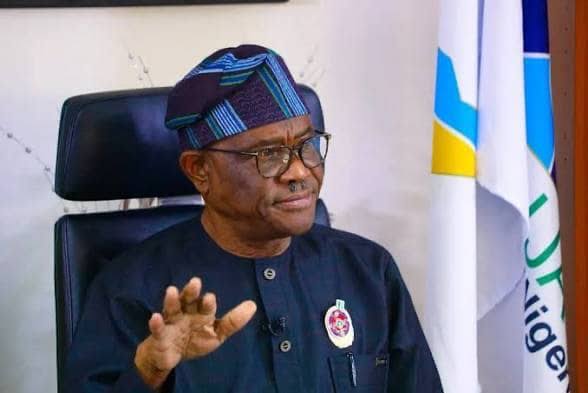
Minister of the Federal Capital Territory, Nyesom Wike, has criticised former Vice President Atiku Abubakar, claiming that his promises cannot be relied upon.
Wike and Atiku were previously members of the Peoples Democratic Party (PDP) and contested against each other during the party’s 2022 presidential primary, which Atiku won.
While Wike remains a PDP member and serves in President Bola Tinubu’s All Progressives Congress-led administration, Atiku is seeking the presidency in 2027 under the African Democratic Congress (ADC).
The FCT minister made the remarks on Tuesday during the unveiling of candidates endorsed by his Rainbow Coalition for the 2027 general elections in Rivers State. The event, held at Yakubu Gowon Stadium in Port Harcourt, attracted supporters from different political parties, including the APC and PDP.
During his address, Wike questioned the strength of opposition parties in Rivers State, suggesting that their activities did not necessarily indicate that they had a significant political presence in the state.
He dismissed the idea that the emergence of groups supporting other political platforms meant they had established a formidable opposition.
Turning his attention to Atiku, Wike asked the audience whether they knew the former vice president. After the crowd responded in the negative, he urged them to maintain their distance from him.
Wike said his experience working with Atiku during the 2022 presidential primary and his involvement in the campaign had informed his assessment of the former vice president.
According to the minister, Atiku frequently changes his position, making it difficult for people to rely on his commitments.
He alleged that the former vice president could make one promise in the morning and communicate a different position later in the day.
Wike’s comments come amid political realignments and preparations by parties and coalitions ahead of the 2027 general elections, with Rivers State emerging as a focal point of political competition.