
Go to The President With Solutions Not Problems Analysis
The President Is Right To Tell The Catholic Bishop The Economy Is Doing Well.
The recent high-profile exchange between President Bola Ahmed Tinubu and the Catholic Bishops’ Conference of Nigeria highlighs a defining dynamic in Nigerian public discourse. When the church leaders raised serious concerns regarding economic hardship and security challenges, President Tinubu stood firm, maintaining that the country’s macroeconomic indices were pointing in the right direction and has stabilized with the economy rescued from the brink of total collapse.
President Tinubu was fully justified in asserting that the nation’s direction is on a far firmer footing today than in recent years. However, the broader takeaway from this crucial exchange extends beyond political rhetoric. It is time for Nigeria’s prominent voices, religious institutions, civil leaders, and youth to transition from perpetually cataloguing grievances to actively delivering actionable solutions.
When evaluating national progress, objective indicators and international consensus provide a far clearer picture than emotional sentiment alone. Global economic metrics and credit rating agencies, including Standard & Poor’s, the International Monetary Fund, and the World Bank, have acknowledged that Nigeria’s bold structural reforms were laying the necessary groundwork for long-term recovery.
By unifying foreign exchange markets and rationalizing unsustainable fuel subsidies, the administration averted severe fiscal default, turning an uncertain economic outlook into a stabilized platform for sustainable growth. At the same time, targeted interventions like the Nigerian Education Loan Fund are directly tackling social mobility by ensuring financial barriers do not prevent young citizens from completing higher education. This has been reinforced by a restored academic calendar across public universities, ending years of chronic labour strikes that previously disrupted academic calendars.
Beyond economic policies, defense spending and security investments under the current administration have increased substantially to combat insurgency, banditry, and criminal networks. Heavy investments in modern defense hardware, expanded troop recruitment, and enhanced welfare packages for frontline personnel have shifted military operations from defensive postures to proactive offensive strategies. For example, when the past administration’s defense budget is compared to that of the present, you will notice a significant increase. Jonathan administration in 2010 – 2015 budgeted ₦920 billion – ₦1.0 trillion for defense, Muhammadu Buhari administration from 2015 – 2023 budgeted ₦1.0 trillion – ₦2.9 trillion while the present administration from 2023 – Present budgeted ₦3.85 trillion – ₦6.57 trillion.
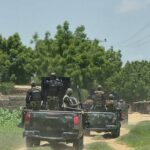
Increased investment in security is delivering clear results across the country. On June 1, 2026, the Department of State Services (DSS) intercepted and arrested a suspected arms courier, Abubakar Muhammad, in Gezawa Local Government Area (LGA), Kano State, recovering three AK-47 rifles alongside loaded magazines. Concurrently, joint operations between Nigerian and United States forces launched at the start of June led to the elimination of approximately 200 Islamic State-linked fighters.
This operational momentum extended into subsequent weeks. On June 7, state security forces alongside joint tactical teams executed a successful hostage rescue mission in Kogi State, neutralizing threat actors and safely securing all held civilians. Days later, on June 9, the Nigerian Army tracked down and arrested members of an active kidnapping syndicate in Enugu State, recovering the entire ransom amount previously extorted from a victim.
Between July 10 and July 31, 2026, troops of Operation HADIN KAI conducted a series of successful counter-terrorism operations against ISWAP in Borno State, resulting in the rescue of 117 kidnapped victim and destruction of a major terrorist stronghold and logistics hub at Yaganari, the neutralisation of a hideout with weapons recovered during clearance operations, and the arrest of a suspected ISWAP logistics supplier, Mohammed Goni, who was apprehended in possession of pharmaceutical drugs.
Operational readiness was demonstrated again on June 10 when troops of the 12 Brigade thwarted a terrorist attempt to abduct schoolchildren at Iluke Primary School in Kabba Bunu LGA, Kogi State, neutralizing one attacker and injuring several others. By June 15, troops under Operation HADIN KAI neutralized an ISWAP fighter and seized key logistical supplies in Konduga, Borno State, without sustaining any military casualties further highlighting a series of decisive tactical victories nationwide.
Discussions surrounding localized policing frameworks, state police, and specialized forest guards are addressing security gaps that previously allowed criminal elements to operate unchecked in remote areas. While localized security incidents remain a challenge, the overall strategic gains, structural investments, and operational successes achieved in recent months far outweigh past stagnation.
Highlighting problems like finger pointing is simple, but constructive and viable solutions requires real intellectual effort. For decades, traditional and religious leaders, civil society groups, and ordinary citizens have relied heavily on lamentation as their primary form of civic engagement. Yet, complaining in isolation has never resolved a complex national crisis. The current administration has repeatedly demonstrated that it operates as an accessible, listening government, provided stakeholders bring well-thought-out, practical proposals to the Executive table.
This progressive model of partnership is already yielding tangible results. When traditional rulers presented targeted frameworks to expand conditional cash transfer programs so they would directly reach vulnerable rural households, the president reviewed and approved the policy direction. Similarly, when Olubadan visited the president to thank him for the Orire ransom free rescue , he used the opportunity to request permanent security outposts in strategic corridors connecting border forests, the administration evaluated the request and deployed personnel to ensure cleared zones were not reoccupied by Kidnappers. These instances prove that when leaders approach the government with structured, actionable ideas rather than broad lamentations, executive action follows swiftly. Rather than using high-level presidential meetings merely to reiterate widespread economic challenges, religious bodies which possess vast administrative ideas are uniquely positioned to act as implementation partners.
Instead of simply lamenting to the president that congregation members are hungry, religious leaders should propose structured program frameworks to alleviate these sufferings. For instance, Living Faith Church runs an initiative known as “Kingdom Care,” which provides for those in need. Other religious organizations could adopt similar models. If a church actively runs such programs and falls short of its budget, any subsequent request for government support is far more likely to be met with assistance.
National development is not the exclusive responsibility of the federal government; it is a shared, collaborative enterprise. Tackling insecurity and navigating complex economic transitions requires every sector of society to step up from local government councils fortifying grassroots intelligence to faith organizations driving community empowerment programs.
The President was right to defend the government’s economic reforms and operational security achievements. Nigeria’s structural reforms are producing results, the economy is stabilizing, and the groundwork for lasting prosperity is actively being laid. To accelerate this momentum, our national conversation must evolve. It is time to move past the endless cycle of complaint and step boldly into an era of co-creation, contribution, and patriotic partnership.
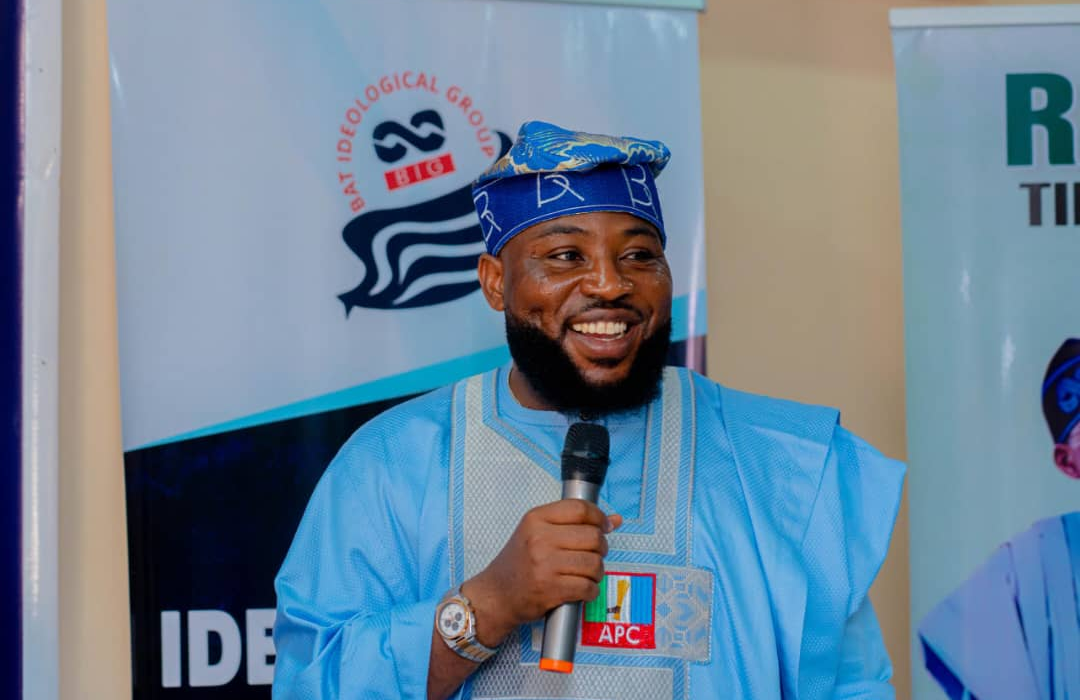
Bamidele Atoyebi is the Convener of BAT Ideological Group, National Coordinator of Accountability and Policy Monitoring and a publisher at Unfiltered and Mining Reporting and political social worker