

Today in History: The July 28 Counter Coup
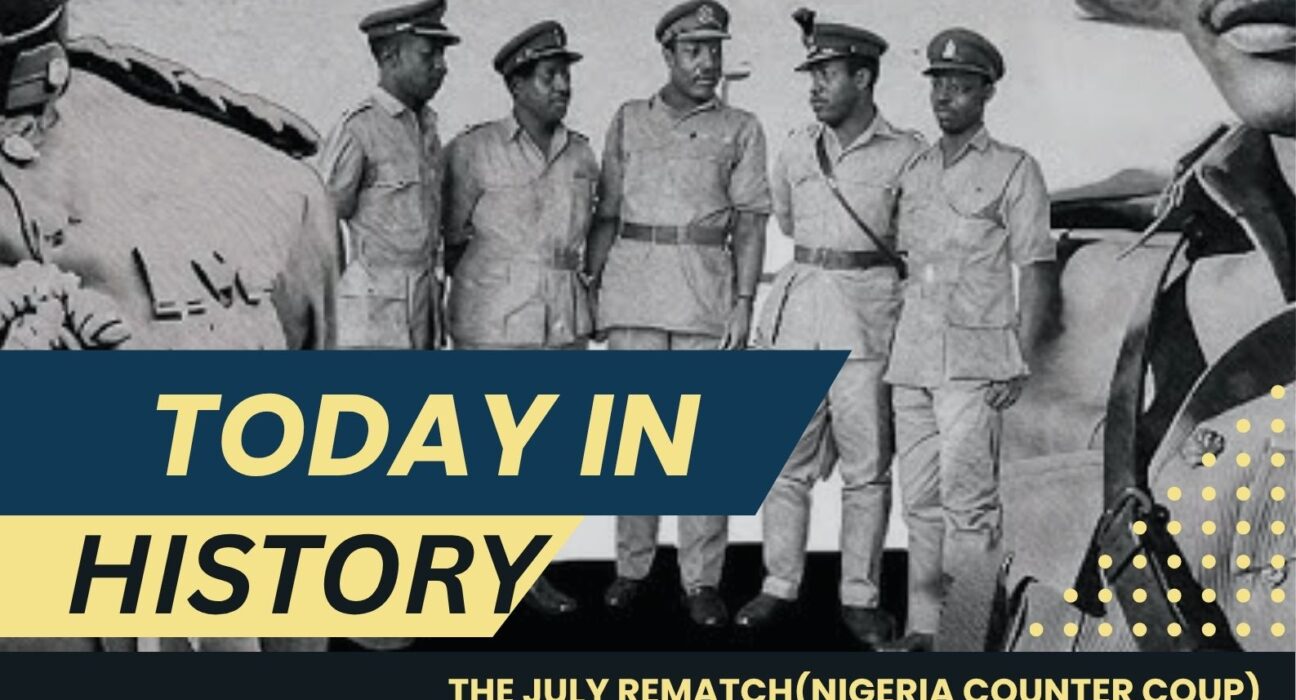
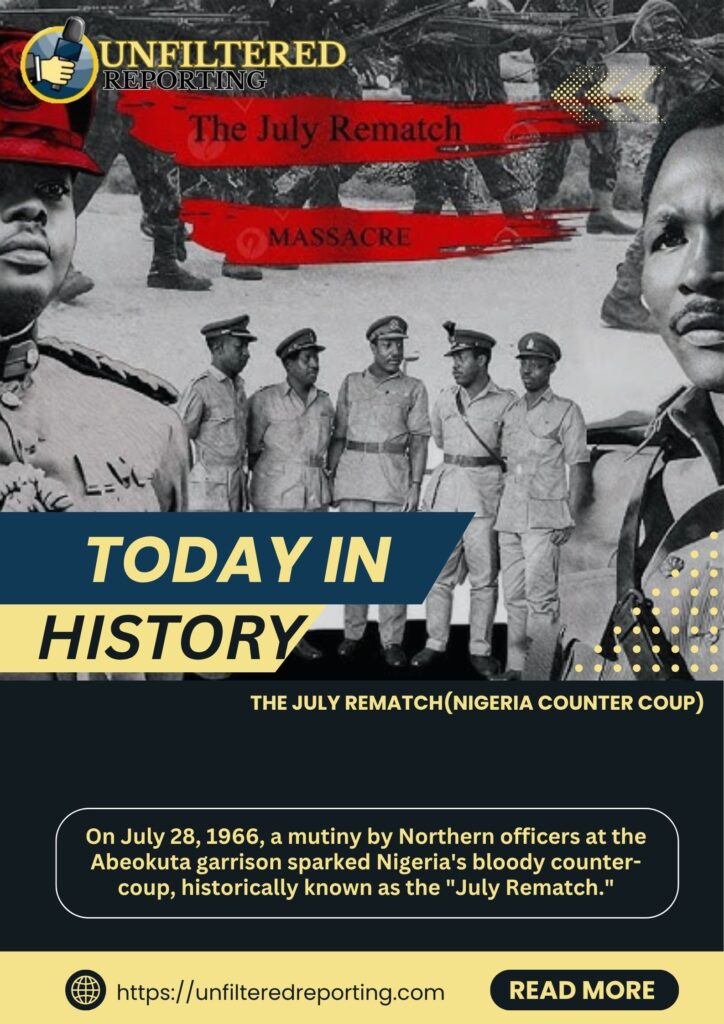
In the quiet, dead of the night of July 28, 1966, tension inside the Abeokuta military garrison reached fever pitch. What began as low whispers and clandestine gatherings among Northern officers rapidly escalated into open mutiny. By the time dawn broke on July 29, the gunfire at Abeokuta had signaled the start of Nigeria’s counter-coup a historic, bloody turn of events widely referred to as the “July Rematch.”
To understand the explosive nature of July 28, 1966, one must look back six months to January 15 of the same year. Nigeria’s first military coup had overthrown the First Republic, resulting in the deaths of prominent political figures, largely from the Northern region, including Prime Minister, Sir Abubakar Tafawa Balewa and Northern Premier, Ahmadu Bello. When Major General Johnson Aguiyi-Ironsi, an Igbo, assumed power as Head of State, deep-seated regional suspicions began to fester. The passage of Unification Decree No. 34 in May 1966 which abolished the federal structure in favor of a centralized government further stoked fears of regional domination, transforming the military barracks into a keg of gun powder.
The spark was finally struck at the Abeokuta garrison on the night of July 28. Northern soldiers, led by junior officers, moved swiftly to neutralize their commanders and take control of the armory. Tactical communications flashed across military formations in Ikeja, Ibadan, and Kaduna.
By the morning of July 29, the wave reached Ibadan, where General Aguiyi-Ironsi was hosting a conference of traditional rulers. Lieutenant Colonel Adekunle Fajuyi, the Military Governor of the Western Region, refused to abandon his guest. Both Aguiyi-Ironsi and Fajuyi were seized by mutinous troops led by Major Theophilus Danjuma and were subsequently executed a fatal blow that left the country without a central leadership for three grueling days.
In the power vacuum that followed, intense negotiations took place at the Ikeja Cantonment. On August 1, 1966, Lieutenant Colonel Yakubu Gowon, a 31-year-old Northern officer who was then the Chief of Army Staff, was named Head of State and Supreme Commander of the Armed Forces. Gowon’s immediate challenge was stabilizing a nation rapidly fracturing along ethnic and regional fault lines.
The events that began on July 28 altered the trajectory of modern Nigerian history. The counter-coup drastically deepened mistrust between the Eastern region and the rest of the federation, dismantling military hierarchy and accelerating a chain of political crises. Less than a year later, these unresolved tensions would plunge the nation into the devastating 30-month Nigerian Civil War.
Decades later, July 28 remains a somber milestone a stark reminder of how fragile national unity can be when institutional trust collapses, and a defining moment that permanently altered the geopolitical landscape of Nigeria.