
Every BAT-IG Member is Walking Solutionist Not Problem Analyst
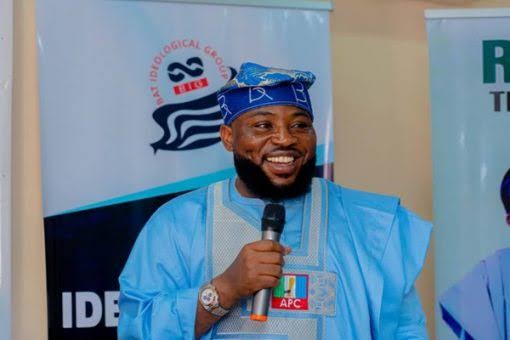
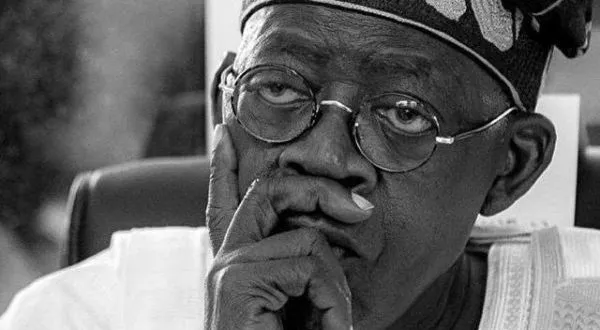
Every BAT-IG member is a rightful heir to the Asiwaju leadership throne. Every BAT-IG member is a walking solutionist not a wailer, and certainly not just a problem analyst. To understand why we look up to Asiwaju as an institution, we must examine the practical, innovative, and solution-driven methods he has consistently used to solve complex human challenges.
Around 1995, long before he became President, a young woman approached Asiwaju seeking financial assistance to start an eatery business. Tinubu’s response was a defining lesson in mentorship: “Do you want my money, or do you want to pick from my brain?” Choosing to pick from his brain, she listened as Asiwaju looked at her and said, “You are too young for that business. Have you considered other sectors?” When she replied no, Asiwaju picked up his phone, called a Member of Parliament in UK at the time, and asked, “What opportunity is available for a young lady over there?” The MP replied, “The education sector.” The young woman agreed to pivot into the education business, and in doing so, she received something far more valuable than a simple handout she secured a £100,000 grant through Asiwaju’s guidance and network.
Alhaji Tejumade shared another narration regarding an individual who had been struggling for a political post in the Alimosho Local Government Area. Alhaji took this individual to Asiwaju and introduced him as an active, dedicated politician who had supported the party well and was widely known in the area. However, due to claimed political arrangement, he was denied the opportunity to serve. Asiwaju asked Alhaji to present the man to him. Once they met, Asiwaju asked the individual if he knew a particular person, to which the individual answered yes. Asiwaju then asked if that person knew him, and the individual again answered yes. At that moment, Asiwaju picked up his phone and called Rauf Aregbesola, who was the political leader in Alimosho at the time, and asked if he knew the person. When Aregbesola replied in the affirmative, Asiwaju responded, “He is right in front of me, and I want him to become the flag bearer for the House of Representatives this year.” Just like that, the political bottleneck was completely resolved.
Alhaji Tejumade also confided in me about a particular individual who owed him a massive sum of money, causing severe harm to Alhaji’s business. This debtor was notorious for his “in-your-face” attitude; put simply, he felt completely untouchable. Alhaji tried every legal and formal means to recover the funds, including visiting the Public Complaints Commission in Lagos, but he was told the man was far too influential to be coerced. He was advised instead to look for someone close to the man who could either appeal to him or beg him. Resorting to Asiwaju, Alhaji narrated the issue. Asiwaju nodded and said, “I know him. He is a very difficult person; he will not pay.” But Tinubu quickly added, “However, there is a way we can make him pay. You have to go to his father in his hometown and narrate everything to him. He only respects and listens to his dad.”
Alhaji traveled down to the town to meet the defauubelter’s father. Upon arrival, he greeted the elderly man, who asked, “What brought you here?” Alhaji replied: “Bàbá, ẹ̀jọ̀ọ́, ọmọ yín ni o. Ó jẹ mí ní owó, kò sì fẹ́ san. Ẹ̀yin nìkan lẹ lè bá a sọ̀rọ̀.” (Father, please, it is about your son. He owes me money and refuses to pay. I was told that only you can speak to him.)
The father apologized to Alhaji on his son’s behalf, picked up his phone, and called the debtor. “Hello, do you know Alhaji Tejumade?” The son replied, “Yes.” The father responded, “He is sitting right in front of me as we speak. He says you owe him money. How much do you owe him?” The son mumbled, “I can’t remember the exact amount.” The father concluded, “I will give Alhaji my card, and he will come to see you. Make sure the money is available.” Alhaji returned to Lagos, and the entire debt was paid the very next day via cheque.
Alhaji Tejumade gave another striking account of Asiwaju’s impact involving a man whose son was struggling to find employment. Alhaji accompanied the man to a government agency in Lagos to seek an opening, but they were told it was impossible without the explicit clearance of a few specific leaders among whom was Asiwaju. The catch was that this father had been a highly vocal critic of Asiwaju. Despite this, he swallowed his pride and sought help through Alhaji. When they arrived at Asiwaju’s residence on Bourdillon, the leader was just about to depart. Instead of dismissing them or bringing up the man’s past political criticisms, Asiwaju listened intently as Alhaji introduced his friend and explained how the man’s son had been denied employment at the agency. Without a moment’s hesitation, Asiwaju took out a card, wrote a direct note on it, handed it to the man, and instructed him to deliver it straight to the Director of the agency. The job was secured.
There is also the story of how Asiwaju intervened for around 100 immigration officers who were long overdue for mandatory promotional training overseas but had been repeatedly denied. These officers approached Asiwaju to brief him on the injustice. Keep in mind, Asiwaju was not the President at the time, nor was the ruling party at the center an APC administration. He asked them, “Who is your boss?” They gave him the name. He then asked, “Are you certain you are genuinely due for this promotion?” They replied, “Yes, sir, even our peers have already been granted theirs.” Asiwaju requested their boss’s direct phone number and placed a call to him on the spot. Following that brief conversation, the promotion for all 100 officers was instantly approved.
You must be wondering how we at BAT-IG started our advocacy for underserved communities throughout Nigeria. Wonder no more it all started with the Rigasa electricity crisis. I was hinted by an insider that the Rigasa community had voted heavily against the APC in the 2023 elections specifically due to the severe electricity problems they faced. I appreciated the feedback and immediately inquired which government agency was responsible for that jurisdiction. We were told it was the Niger Delta Power Holding Company (NDPHC).
Bear in mind that I am not an elected official. However, armed with genuine intentions, the knowledge I absorbed from Asiwaju’s leadership philosophy, and my own area of specialization, I took it upon myself to visit the NDPHC headquarters. Upon getting there, I was informed that only the Managing Director could resolve an issue of that magnitude.
A few days later, by a stroke of fortune, I crossed paths with the MD on a flight to Lagos State. We exchanged pleasantries and fixed a formal appointment. On the day of our meeting, I laid out the entire situation of Rigasa. I clearly demonstrated how solving their electricity issues would not only uplift the livelihoods of the people but also add immense value to the administration of Asiwaju and the reputation of the NDPHC itself. Because we engaged strategically, the problem was solved. The intervention was no minor fix; a massive, state-of-the-art injection substation worth billions of Naira was built for the community.
Another major intervention of ours was with the National Directorate of Employment (NDE). I noticed a massive public outcry regarding the student loans distributed via NELFUND, with many arguing that if students graduate without jobs, they will have no means to repay the loans. I took it upon myself to visit the NDE to pitch an innovative proposal. I proposed that any student who benefited from NELFUND and graduated with a Second Class Upper (a CGPA of 3.5 and above) should automatically be fast-tracked into employment to prevent them from sitting idle. The leadership loved the concept but noted that standard employment fell outside their immediate jurisdiction, designating it instead for the “Renewed Hope Employment” framework. Through this proactive intervention, we have successfully secured over 2,000 employment slots, and once the portal goes live, everything will be finalized.
Moving to the security sector, we all know there has been a noticeable drop in morale and passion within our security forces. This stems largely from a painful, lingering question: “If I lose my life or get critically injured in the line of duty, who will take care of my family?” We discovered there was no comprehensive safety net in place to address this psychological burden. We sought to solve this lack of motivation by leveraging the Universal Basic Education Commission (nhC) and the National Health Insurance Authority (NHIA). By guaranteeing free education and comprehensive health insurance for their families, we could easily remotivate our officers. UBEC completely bought into the initiative, and today, we have successfully enrolled over 2,000 children of fallen or wounded security personnel into this program. As of today, over 42 grassroots projects and policies have been aggressively pushed and advocated for by the BAT-IG.
The current structural push for Local Government autonomy serves as a direct empowerment of grassroots administrations, enabling them to independently solve infrastructural and educational deficiencies within their own jurisdictions. Armed with autonomy, local governments now possess the direct legal power and financial resources to fix pressing challenges, whether they are roads, schools, hospitals, or local security. By granting them this autonomy, the federal government is actively empowering them to take full charge of their own destiny.
Under President Bola Ahmed Tinubu, the grand focus is on cultivating an independent, problem-solving society at both the state and local levels. This marks a massive departure from the old, centralized system that kept these lower tiers entirely dependent on the federal government for survival. This exact philosophy drives the ongoing police reforms and the advocacy for state policing, ensuring that security challenges are managed by the very communities they affect.
We see this same decentralized approach in the power sector, where electricity has been successfully moved from the Exclusive Legislative List to the Concurrent Legislative List. This structural shift sends a clear, unambiguous message to sub-national governments: Go and solve your own electricity challenges using localized solutions. A similar mandate governs the various Regional Development Commissions, which are designed to compel regions to confront and resolve their socio-economic issues independently.
This strategy is rooted in a clear, sophisticated understanding of effective governance. Rather than fostering a dependent nation, dependent regions, or dependent local councils, giving these entities the autonomy and freedom to act multiplies leadership impact exponentially. A single leader cannot be everywhere at the same time to solve every single issue. Therefore, the true hallmark of transformative leadership is not solving every problem for the people, but mentoring, coaching, and producing independent leaders who can become problem solvers themselves.
To every BAT-IG member out there, and to every patriotic Nigerian reading this, ask yourself what specific infrastructural deficiency is currently plaguing your community, and identify which government agency or ministry is legally responsible for fixing it. What makes you think that if you approach the head of that agency with a well-researched, value-driven proposal, they won’t solve it? Consider what one concrete step you can take this week to test the waters, and weigh the small cost of taking that single action against the heavy cost of complaining without ever taking a step.
Bamidele Atoyebi is the Convener of BAT Ideological Group, National Coordinator of Accountability and Policy Monitoring and a publisher at Unfiltered and Mining Reporting and political social worker