SYD Emergence And Need For Urgent Reconciliation Among Kwara APC Stalwarts
Kwara APC Flagbearer Choice Was About Equity and Justice, Not Governor AbdulRazaq’s Personal Preference
The narrative circulating in some quarters that Governor AbdulRahman AbdulRazaq simply handpicked the APC flagbearer out of sheer personal influence is a study in classic oversimplification.
While it is relatively right to acknowledge that a sitting governor weilds immense political leverage, labeling the outcome as mere favoritism is absolutely false.
My involvement began about two years ago during a mining business trip to Kwara State, at a time when rumors were swirling that the Speaker of the House was a shoe-in for the governorship. This political transition followed the tenure of Governor Rahman, who took over the Kwara North slot after the eight-year administration of Governor Fatai Ahmed.
For the people of Kwara South, Ahmed’s entire time in office was widely seen as a wasted opportunity, handpicked by Senator Bukola Saraki, he ran the government by proxy and left Kwara South entirely starved of significant infrastructural development and bereft of feeling of belonging.
Governor Rahman entered office promising that Kwara North would eventually secure power through his administration, since he had taken their turn in the rotational cycle. Yet, that promise was kept in breach as tensions flared during the election primaries.
Yahaya Seriki transformed into a formidable political force during Governor Rahman’s second term, fueled by widespread rumours of their shared mining ventures. Since the law legally bars a sitting governor from active business, Rahman had to rely on a proxy arrangement to protect his business interests. In reality, Seriki was Rahman’s ultimate favorite; if the governor hadn’t already locked himself into a promise to cede power to Kwara North, Seriki would have been his absolute choice. This underlying tension eventually exploded into the open during the primary negotiations.
It is worth noting that the president had initially chosen BOB as his preferred candidate. However, due to a lack of official confirmation from the national leadership just a day before the primaries, the governor pivoted and selected Yahaya.
The primary election was subsequently postponed to the following day because officials from the electoral body arrived late to the venue. During this delay, two critical meetings took place simultaneously: while the electoral body met with all the aspirants, a high-stakes meeting was underway involving the president and key Kwara stakeholders.
During the presidential meeting, one of the stakeholders argued that Kwara Central had held power for 20 years, whereas Kwara South had only ruled for 8 years. Acknowledging this disparity, the president concluded that the ticket should go to a region that had been historically excluded. This shift in consensus prompted the governor to reveal his actual candidate, SYD. Left with little room to maneuver, the president had no choice but to concede to the regional rotation arrangement.
The political landscape of Kwara State was tensed when an ambitious contender from Ilorin launched a swift, independent bid at the Presidential Villa to counter the President’s preference for Bashir Omolaja Bolarinwa, sparking what is now regarded as the most intense political warfare in the state’s modern history. In a reckless attempt to diminish his rivals’ leverage, the candidate audaciously claimed that Kwara South no longer possessed the electoral numbers to justify the appointment, arguing that persistent banditry had displaced the majority from their ancestral villages. This demographic miscalculation backfired spectacularly, fiercely provoking the region’s delicate identity politics by overlooking a definitive cultural reality: Kwara remains overwhelmingly Yoruba. From the fiercely proud, purely Yoruba populace of Kwara South, to the predominantly Yoruba footprint of Ilorin East and Ilorin South, and down to the people of Moro Local Government who have continually reasserted their Yoruba heritage while resisting institutional efforts to impose an Emirate hegemony over them, the backlash was instant; by weaponizing security challenges and attempting to statistically erase these strongholds, the candidate’s remarks ultimately unified diverse factions in a high-stakes battle for respect, representation, and identity recognition.
The high-stakes political drama deepened significantly when the presidency began tilting toward Senator Salihu Mustapha, creating an intense standoff as the Governor made it clear that out of the 16 total contenders, his two arch-enemies BOB and Mustapha must never emerge. While the roots of his deep-seated animosity toward Bashir Omolaja Bolarinwa (BOB) remain somewhat baffling given that BOB was a foundational leader of the historic Oto Ge movement that dismantled the Saraki dynasty, and the BOB himself had previously begged APC stakeholders to hand him the ticket despite a last-place finish, the friction with Mustapha traces back to a highly visible, pre-2023 rivalry. Back then, Mustapha’s soaring popularity earned him the moniker of Kwara’s “golden boy,” positioning him as a formidable threat to the Governor’s reelection until he was ultimately persuaded to step aside to allow the incumbent a smooth path to a second term. Relationships shattered completely during this second tenure when Mustapha, now a serving senator, publicly accused the Governor of systematically blocking and sabotaging his key constituency projects and programs aimed at the people of Kwara Central; consequently, the Governor drew an unyielding line in the sand, signaling that he would readily tolerate any of the other 14 candidates emerging, so long as it meant completely freezing out BOB and Senator Salihu Mustapha.
The political reality of Kwara dictates a simple truth: winning a party primary is merely a license to enter the battlefield, not a guarantee of victory on election day. With Bukola Saraki and the PDP shifting their strategy to exploit the Governor’s tactical victory by intentionally picking an Ilorin Emirate candidate to capture protest votes, the APC’s grip on power is facing its most delicate test yet. If Rt. Hon. Yakubu Salihu Danladi (SYD) wants to actually win the general election and not just hold a hollow ticket, he must immediately pivot from a factional beneficiary to a consensus builder. He cannot afford the luxury of arrogance; he needs to personally reach out, negotiate, and reconcile with his fellow aspirants many of whom command deep-rooted local acceptance that far outstrips his own. To prevent a disastrous collapse from within, SYD must aggressively mend fences, offer genuine assurances of inclusivity, and ensure that no disgruntled heavyweight decamps or stays back to work for the opposition. The political game is getting tighter and more volatile by the day, and if the APC intends to retain the state, SYD’s absolute priority must be converting yesterday’s internal rivals into tomorrow’s fiercely committed stakeholders.
I urge the APC in Kwara State to rectify their mistakes by assigning the speakership to Kwara South. We are weary of the deputy governor position being filled by ineffective individuals. This time, Kwara Central should be responsible for selecting the deputy governor.
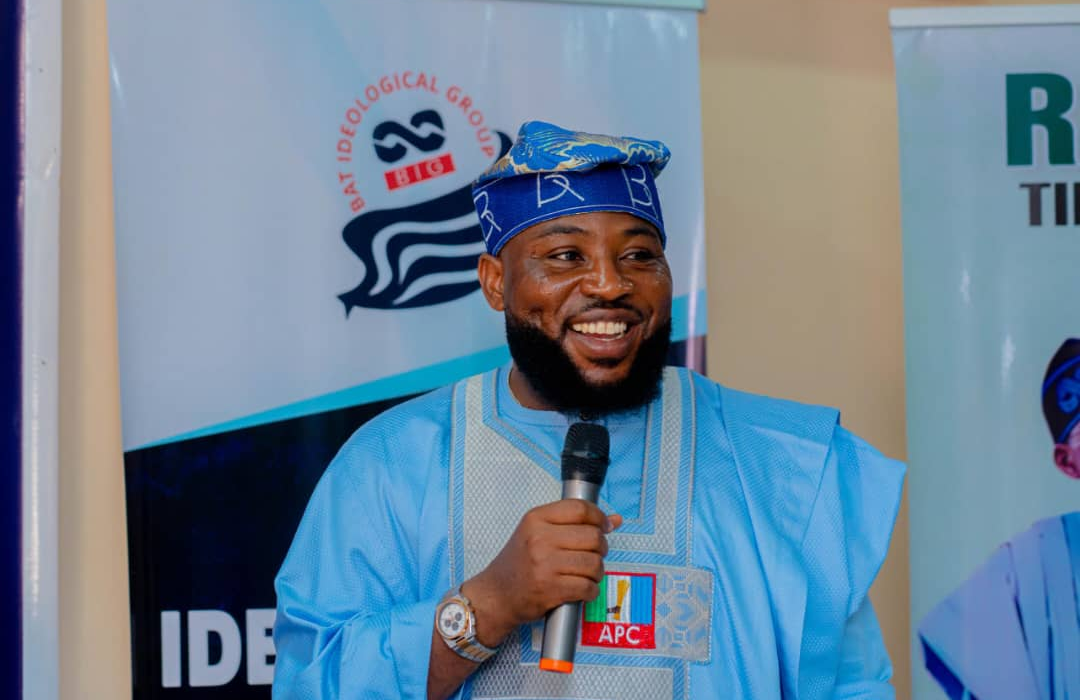
Bamidele Atoyebi is the Convener of BAT Ideological Group, National Coordinator of Accountability and Policy Monitoring and a publisher at Unfiltered and Mining Reporting