


Spinning First Lady’s Comments Out of Context Doesn’t Change the Facts
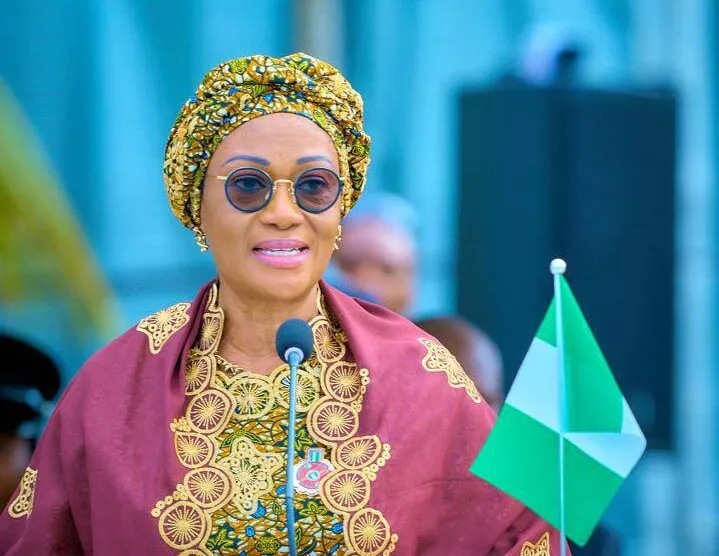
A video has been trending for the past few days featuring Nigeria’s First Lady, SenatorOluremo Tinubu. In the clip, she highlighted her efforts to empower several vulnerable and average Nigerians across various communities, providing them with seed money to start or scale micro-businesses. She specifically mentioned trades as modest as akara and kuli-kuli production.
Predictably, critics have taken these comments completely out of context. Yet, in that same address, she spoke of proviiding billions of naira in funding for cancer awareness and treatment, educational support, and donating school buses to institutions like Obafemi Awolowo University (OAU), Ile-Ife.
The reality remains unchanged: we are currently witnessing one of the most active, responsive, and politically savvy First Ladies in our nation’s history. From traveling across the nooks and crannies of the country to empathize with citizens to actively championing the “Renewed Hope” agenda alongside her husband, her impact is obviously conspiqous. A quick glance at her itinerary reveals a consistent track record of grassroots engagement.
To understand why the First Lady was entirely correct, we must take social media out of the way. Many critics seem to suffer from deliberate historical and geographical amnesia regarding how the Nigerian economy actually functions.
Complaints about inflation and the cost of living are nothing new in our national discourse. For instance, a retrospective glance at broadcast archives from 1994 reveals news clips where citizens lamented that ₦50 could no longer buy basic foodstuffs or household necessities because everything had gone up. Even past leaders, like Gani Fawehinmi, publicly complained during that era that the average, poor Nigerian could no longer even afford to buy a banana.
To put that in proper perspective, between 1992 and 1994, my daily food allowance for breakfast during school was just ₦3. Yet, even then, people argued that ₦50 was becoming worthless for running a household. This historical context proves that economic challenges are structural and cyclical, not entirely unprecedented.
As someone normally constantly move between Lagos and my village, the reality of micro-businesses is clear. Between the 1990s and the mid-2000s, individuals running consistent akara, kuli-kuli, or puff-puff businesses in small towns were often considered part of the thriving local economic class. They sent children to school and sustained households entirely on these trades.
Poverty is not worse today simply because social media makes it more visible. Decades ago, the vast majority of rural households lacked basic amenities. Today, even in smaller villages, access to electricity, generators, and television has exponentially increased, signaling gradual, structural shifts.
The capital gap at the bottom of the ladder is a stark reality. In many Nigerian communities, thousands of people do not have access to a lumpsum of ₦50,000 or ₦100,000 to start a trade. For an individual struggling to provide daily meals, a micro-grant to launch an akara or petty trading business is not an insult; it is a vital lifeline.
Nigeria is currently undergoing deep structural economic reforms aimed at fixing long-term systemic failures. For decades, populist policies like unsustainable fuel subsidies and artificial exchange rates drained the national treasury, leaving little for infrastructure, healthcare, or civil service wages.
The structural changes being implemented now are designed to ensure that state and local institutions actually work. However, for these reforms to fully materialize at the grassroots level, the responsibility cannot fall solely on the federal government.
While the federal government manages macroeconomic policy, national infrastructure, and major intervention programs like conditional cash transfers targeting millions of households, state and local governments are closer to the ground. They are expected to drive direct community development, local security, primary healthcare, and targeted agricultural or business grants for local artisans and traders.
The First Lady’s interventions are compassionate, immediate relief measures meant to cushion the effects of these structural shifts. True sustainability, however, requires local government chairmen and state governors to utilize their financial autonomy to replicate these empowerment schemes across all 774 local government areas.
Instead of sitting idly online, it is time for citizens to identify policy gaps, organize themselves, and demand accountability directly from their local and state governments to get things done. It is easy for spectators on social media to criticize grassroots empowerment initiatives from the comfort of their phones. But as the saying goes, a spectator always looks like the best player until they step onto the field.
Many Nigerians do claim they have never benefited anything from Nigeria, it’s a lie, iaf you have ever attended a public primary or secondary school, you have benefited. If you attended a public higher institution, you have benefited immensely, as these schools have always been highly subsidized by the government. Even if you claim not to have benefited from the education sector, you must have certainly enjoyed the fuel and FX subsidies that were recently removed. From subsidized electricity to public healthcare, the impacts are there. One way or the other, you have benefited from Nigeria.
While critics vent online, the data shows that enterprising Nigerians are adapting to the changing economic landscape. Hundreds of thousands of new businesses continue to register and seek out opportunities within the expanding formal economy.
We must ask ourselves what we are personally contributing to our communities. Many people online have ₦500,000 or ₦1,000,000 sitting in their bank accounts, yet they would never spare ₦50,000 to empower someone else to start a small business. Rather than quickly condemning the First Lady for using her resources to uplift the vulnerable, we should focus on constructive solutions.
Providing a citizen with the capital to start a small business creates dignity, independence, and immediate economic activity. Twisting these efforts for political gains do nothing to alleviate the realities of the grassroots economy it only demonstrates a disconnect from it. Moving forward, complaining alone will not solve our collective challenges; we must mobilize, propose ideas, and push for growth together.
Bamidele Atoyebi is the Convener of BAT Ideological Group, National Coordinator of Accountability and Policy Monitoring and a publisher at Unfiltered and Mining Reporting and political social worker