



Marketers Re-Import Dangote Fuel Through Togo Hub
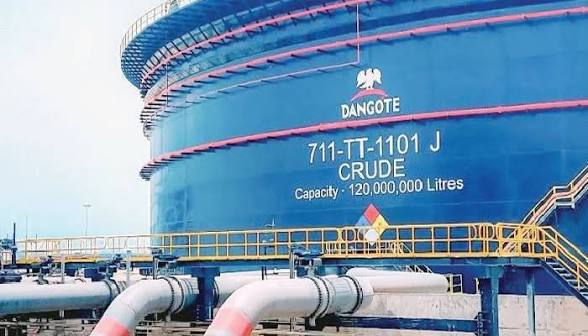
Nigerian fuel marketers are increasingly importing refined petroleum products produced by the Dangote Petroleum Refinery through the offshore ship-to-ship (STS) trading hub in Lomé, Togo, despite the refinery’s growing capacity to supply the domestic market, according to new market data presented by S&P Global Commodity Insights.
The disclosure was made by S&P Global Energy official Matthew Tracey-Cook during a webinar organised by the Major Energies Marketers Association of Nigeria (MEMAN) on Thursday, where he examined fuel pricing trends and product flows across West Africa amid geopolitical tensions affecting global energy markets.
Tracey-Cook revealed that petroleum products refined at the Dangote facility are being exported on a coastal basis to the Lomé offshore trading hub before finding their way back into Nigeria, a development he said points to the increasingly interconnected nature of regional fuel supply chains and possible pricing advantages in international markets.
According to him, Dangote-origin products now account for the overwhelming majority of waterborne fuel imports arriving in Lagos and other Nigerian destinations.
“Over the last six months, if you look at the volume of products on a waterborne basis that’s imported directly into Nigeria, Dangote production has become increasingly dominant,” he said.
He explained that between March and May 2026, more than 70 to 80 per cent of refined products imported into Nigeria by sea originated from the Dangote refinery before being re-imported through coastal trading arrangements.
“For several months, from March until May, we saw well over 70 to 80 per cent of the volumes that were imported into Nigeria actually originated from Dangote; from their coastal Dangote volumes which were re-imported,” Tracey-Cook stated.
The analyst noted that a similar trend has emerged in the diesel market, underscoring the refinery’s growing influence on fuel distribution within Nigeria and across West Africa.
Despite Dangote’s expanding direct supply operations, Tracey-Cook said the Lomé trading hub remains strategically important because it serves as a major transshipment centre for the region. Large medium-range tankers discharge products offshore before the cargoes are transferred to smaller vessels capable of accessing ports with limited draft and handling capacity.
“Lomé has become an increasingly important transshipment hub for filling regional shortages across the region. It serves an important purpose, given that many ports in West Africa don’t have the capacity to take a fully laden MR-sized vessel,” he explained.
Data presented during the webinar showed substantial volumes of petrol, diesel, aviation fuel and other refined products moving from Dangote to the Lomé hub, which receives cargoes from multiple sources but consistently handles significant shipments from the Nigerian refinery.
Tracey-Cook also highlighted unusual pricing patterns in the regional fuel market, noting that petrol prices in West Africa have remained significantly higher than those in Europe since the onset of tensions in the Middle East.
He observed that Dangote’s petrol pricing remains closely linked to benchmarks established at the Lomé STS market, creating price differentials that traders can use to manage risks and optimise supply flows.
Describing the refinery and the Lomé hub as the region’s two dominant supply centres, he said both facilities have become critical to fuel distribution across West Africa.
“These two locations, the FOB Dangote market and also the STS Lomé market, are the two largest and most important regional hubs of supply in the region as a whole,” he said, adding that the evolving market structure mirrors the interconnected trading systems seen in the Mediterranean energy market.
Tracey-Cook further noted that global supply disruptions linked to the conflict involving Iran have strengthened Dangote Refinery’s role in international fuel markets, particularly in the supply of aviation fuel.
He said Europe had previously relied heavily on jet fuel supplies from the Persian Gulf region, but disruptions to those flows led to a sharp increase in demand from alternative suppliers, including Dangote.
“What we saw in the months after the war broke out was an increasing flow of product from the US, but also a large flow of product from Dangote. We actually saw in May Dangote being the largest single exporter of jet fuel globally in terms of refined product capacity,” he said.
The presentation also showed record export volumes from the refinery between April and June 2026, with shipments reaching destinations including the United Kingdom, the Netherlands and South Africa.
The development comes months after petroleum marketers alleged that Dangote Refinery was offering petrol to international traders at prices lower than those available to local buyers. In November 2025, the Depot and Petroleum Products Marketers Association of Nigeria (DAPPMAN) and the Petroleum Products Retail Outlet Owners Association of Nigeria (PETROAN) claimed that some traders purchased fuel from Dangote at prices reportedly about ₦65 per litre below what Nigerian marketers paid.
The marketers argued that the pricing structure made it economically viable for traders to move products through Lomé before re-exporting them to Nigeria.
However, Dangote Refinery rejected the allegations at the time, maintaining that it was not selling petrol at lower prices in Togo than in Nigeria.
The latest market data nonetheless highlights the refinery’s growing dominance in regional fuel supply and the increasingly important role of cross-border trading arrangements in meeting Nigeria’s petroleum demand.