
How State Police Can Solve 90 Percent of Insecurity
I recently watched an interview on Arise TV featuring Agbambu a security company CEO who claimed that state policing would not solve even 10 percent of Nigeria’s security crises. It is deeply concerning to hear such a defeatist perspective from a supposedly industry executive on national television. In reality, a decentralized state police structure is exactly what Nigeria needs to tackle the root causes of our insecurity. It addresses systemic issues ranging from disguised unemployment to political sabotage, lack of local accountability, and the absence of genuine passion among personnel.
In 2010, I experienced firsthand the leakages and unprofessionalism within the centralized police force after being financially defrauded by people I considered friends. Rather than relying solely on police, I took the initiative to personally track the perpetrators. My efforts eventually paid off when I gathered solid intelligence regarding their whereabouts. Eager to act quickly, I rushed to the local police station at around 4:00 AM to report the lead, but what I encountered upon arrival was a reflection of institutional decay. The officer on duty was fast asleep across the station counter. Attempting to alert her to the urgent situation, I gave her a gentle tap and said, “Madam, madam.” Instead of attending to a security report, she woke up with hostility, snapping at me, “Go wake your mother for house, you no see say I dey sleep?” Shocked and appalled by her response, I later made inquiries about her background and discovered that she is from Delta State but was deployed to work in Lagos State. Assuming it’s a state police, I could have taken a decisive action against the act.
There is a fundamental difference between someone who takes a police job simply because they cannot find other work, and an indigene who joins out of a passionate desire to defend their ancestral land and community. The Yoruba have a proverb, (Onilu o ni fe ki ilu re tu) which means that no true indigene of a community will sit idly by while their homeland is overrun by terrorists. We already see this drive in action across the Southwest, where local hunters and volunteers tirelessly comb dense forests to root out criminal elements without even demanding payment. If we formalize this local dedication into state police forces, we will instantly inject a level of commitment and passion that the current federal structure entirely lacks.
A major gap in our current security architecture is the complete lack of tracking at state and local government borders. A critical advantage of state policing as noted in recent discussions regarding the presidency’s active framework for this transition is the ability to regulate internal migration. State police will directly address unmonitored crossings from one state to another without proper identification, the unchecked movement of individuals and herders between local government areas without documentation, and the infiltration of rural villages by outsiders who bypass community awareness.
Our current centralized system is also highly vulnerable to sabotage. When poorly paid officers are deployed to unfamiliar territories, they lack an emotional stake in the safety of the host community, leaving them open to financial inducement. In 2018, a police officer in Lagos candidly admitted to me that the temptation to compromise for a massive payout was incredibly high.
When bandits or terrorists offer millions to look the other way, or when powerful political godfathers order officers to stand down to protect criminal syndicates, a disconnected federal officer is far more likely to comply.
State policing drastically reduces this risk because local officers answerable to their own communities are far less likely to sell out their neighbors and families. Furthermore, marginalized armed groups who currently cause unrest would willingly join formal state recruitment drives if they knew their primary mandate was to legitimately protect their own people. The primary reason initiatives like the Forest Guards are faltering in certain regions is that they repeat the mistakes of the federal system. For instance, a recent report pointed out that none of the personnel recruited for the Kwara State Forest Guard were actually indigenes of the local communities they were assigned to protect, such as Omu Aran. When a security force is comprised of outsiders, or worse, dominated by the very demographics suspected of local incursions, it completely erodes public trust and operational efficiency.
Perhaps the most transformative byproduct of state policing is political accountability. Currently, state governors and local government chairmen easily deflect blame for security failures by hiding behind the excuse that the federal government controls the police and military. Once state policing is fully implemented, this excuse vanishes. If a governor allows their state to be breached because they took bribes or lacked the political will to equip their force, the blame rests squarely on them. Citizens will finally be able to ask tough questions about why their neighboring state is peaceful while theirs is in chaos, forcing electorates to stop voting for unserious, incompetent leaders and instead elect administrators who prioritize public safety.
No matter how many resources the federal government pours into the current centralized security architecture, we will continue to face recurring waves of kidnappings and territorial incursions because the system is fundamentally broken. The presidency has reportedly been working intensively on the state police framework over the last few days, with indications that the foundational work is nearly complete. We must actively discourage anyone attempting to discredit this shift. Decentralized law enforcement is not just an alternative option; it is the most viable, definitive pathway to securing Nigeria.
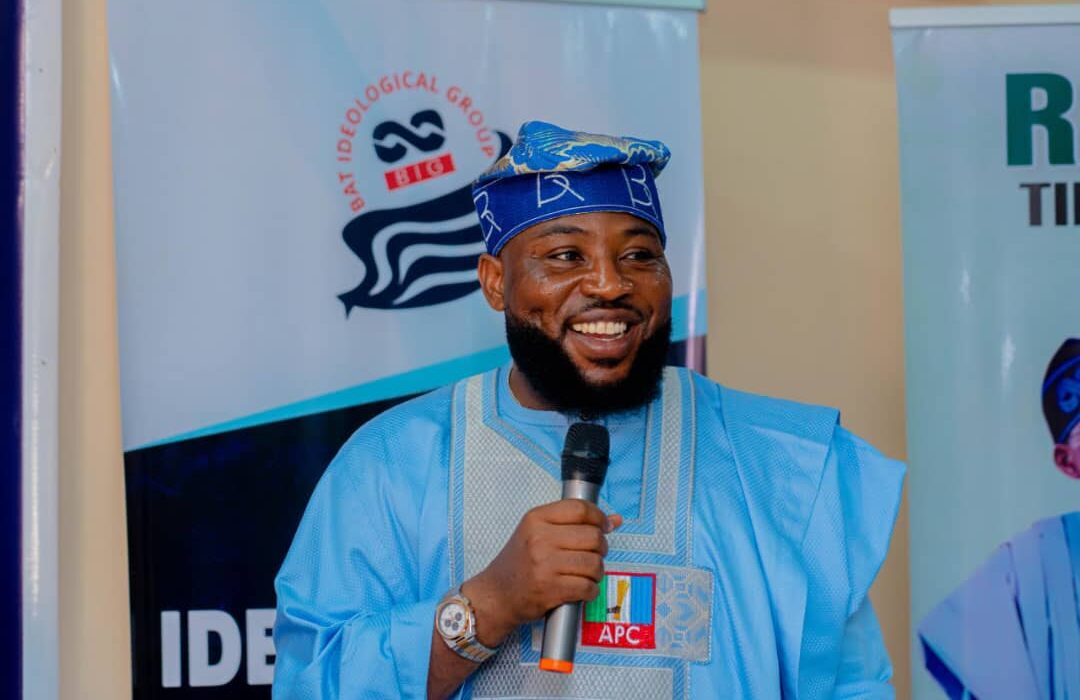
Bamidele Atoyebi is the Convener of BAT Ideological Group, National Coordinator of Accountability and Policy Monitoring and a publisher at Unfiltered and Mining Reporting and political social worker