
Netanyahu Accepts Trump’s Request to Not Retaliate Iranian Attack
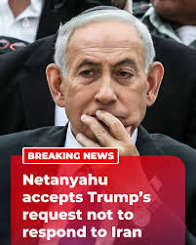
Israeli Prime Minister, Benjamin Netanyahu has accepted a request from U.S. President, Donald Trump not to retaliate following an Iranian missile attack on northern Israel, according to Israeli media reports, in a move that temporarily averts a broader escalation.
The attack, which saw Iran launch multiple barrages of ballistic missiles at northern Israel on Sunday, marked the first such direct Iranian assault since a fragile ceasefire came into effect in early April. According to reports from Israel’s state-owned Kan TV news, Trump and Netanyahu held a phone conversation after the attack, during which the Israeli leader acquiesced to the U.S. request to stand down.
The U.S. president had publicly signaled his intentions ahead of the call. In an interview with Israel’s Channel 12 News, Trump stated he would tell Netanyahu not to strike back, as he did not want to jeopardize ongoing U.S.-Iran ceasefire negotiations. He further elaborated in comments to Axios, framing the exchange as a contained incident. “Each of them had their fun. Israel had its strike, and Iran had its strike. We don’t need another one,” Trump said, also noting that the Iranian missiles “didn’t hurt anybody”. Asserting his authority over the U.S.-Israel relationship, Trump told the Financial Times, “I call the shots. I call all the shots. He doesn’t call the shots” .
The Iranian missile launches came in direct retaliation for an Israeli airstrike on a Hezbollah command center in the southern suburbs of Beirut earlier on Sunday. Israel’s Iron Dome air defense system intercepted the incoming projectiles, and the military reported no casualties from the attack.
Despite the apparent acceptance of the U.S. request, the situation remains tense. While Netanyahu’s office has not immediately commented on the call, an Israeli official confirmed its occurrence.
The Israel Defense Forces (IDF) had previously indicated it was ready to respond, with a spokesperson stating that the military was “approving plans for the future”.
In a related security measure, Israel closed the Kerem Shalom and Rafah crossings into Gaza following the attack. Meanwhile, the White House has remained publicly quiet, though a State Department official has blamed Hezbollah for the escalation, describing Iran as using the group as a proxy to prevent a final peace deal.