



Oil Revenue Slumped by N2.7 Trillion in Q3, 2025 from Production Shortfalls
The federal government recorded a total of N2.79 trillion oil revenue shortfall in the third quarter (Q3) of 2025, realising only N2.45 trillion or 31.87 per cent of the total projection for the quarter in the 2025 Budget.
However, non-oil revenue performed better with N5.25 trillion (68.18 per cent), exceeding total projections, buoyed by improved Value Added Tax (VAT), Electronic Money Transfer Levy (EMTL), Independent Revenue, and Education Tax (TETFUND) revenue performance.
This was disclosed in the Q3 Budget Implementation Report (BIR) for 2025.
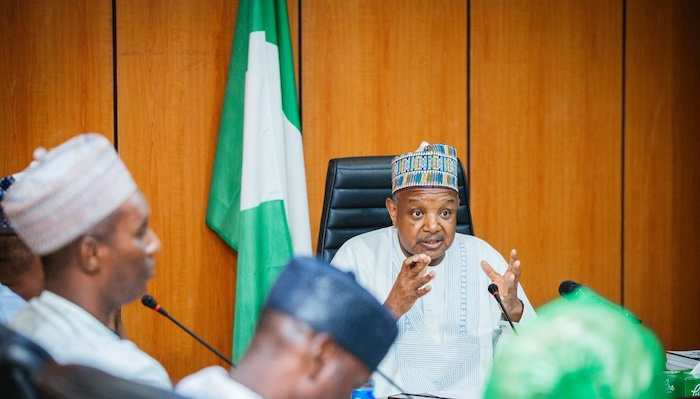
In the preface to the Q3 report, the Minister of Budget and Economic Planning, Senator Abubakar Atiku Bagudu, observed that revenue shortfalls persisted in both oil and non-oil receipts.
He said, “Total FG revenue stood at N7.70 trillion, and expenditure reached N8.03 trillion, resulting in a fiscal deficit of N328.57 billion, financed through privatization proceeds and domestic borrowing.
“Despite fiscal pressures, the government prioritised capital investment, highlighting the ongoing imperative to strengthen domestic revenue mobilisation and ensure fiscal sustainability.”
The report indicated that aggregate expenditure, which included Government Owned Enterprises (GOEs) and Project-tied Loans, totalled N8.03 trillion as against prorated N13.75 trillion.
Non-Debt Recurrent Expenditure stood at N2.66 trillion in the review period, while debt service gulped N3.41 trillion, below projection by 4.80 per cent.
According to the report, the fiscal deficit for the quarter was N0.33 trillion (below projection), financed mainly through privatisation proceeds and domestic borrowing.
The report observed that oil revenue volatility exposed fiscal outcomes to production and pricing shocks, while structural underperformance persisted amid lower market prices.
It also noted that the debt service-to-revenue ratio remains elevated; fiscal space is constrained, requiring urgent revenue mobilisation and expenditure rationalisation.
It alluded to cash management bottlenecks — including bottom-up cash planning delays — which continued to slow project execution and raise project cost risks.
The Q3 report equally pointed to pathways to better fiscal management in what it described as “reform and policy priorities.” These are “benchmark realism,” including alignment of oil production assumptions with verifiable capacity, and adoption of conservative price benchmarks to build fiscal resilience against external shocks.
It further underscored the need for revenue expansion through deepening compliance enforcement, rationalising tax expenditures, accelerating e-Customs rollout, and optimising independent revenue remittance.
The report explained the imperative of expenditure efficiency, institutionalising value-for-money audits, and prioritising high-impact projects with measurable economic returns.