



War, Supply Chains and Fertiliser Security Deficit
The coverage of the fertiliser crisis has focused on the wrong number. Price per tonne, shipping lane closures, percentage of global trade at risk — these are the metrics dominating the headlines, and of course, they matter.
But they are not where the lasting damage is being done. The real risk is quieter, slower and significantly harder to reverse: it is what happens to the quality and integrity of fertiliser supply when systems come under strain, and who fills the gap when regulated suppliers can’t get through.
Fertiliser has historically never been a particularly prestigious commodity. It was bought cheap, shipped fast and largely disregarded by key decision makers and planners. However, disruptions in the Red Sea over the past two years and renewed pressure on the Strait of Hormuz have changed that. Urea has surpassed $800/tonne on an FOB Egypt basis. Force majeure clauses have been invoked across contracts previously assumed watertight. Producers in India, Bangladesh and Pakistan have reduced their output following tightening of Qatari gas supplies. Egypt has lost Israeli gas imports. The snowball effect has continued.
What initially seemed like a regional shipping issue has turned out to be something much more fundamental: a global fertiliser system that had been optimised so aggressively for cost and efficiency that it has essentially no buffer left. Approximately one third of all globally traded fertilisers move through the Straits of Hormuz, as well as 20% of global LNG and 27% of oil. These are major flows which underpin the global economy, and they all converge in that one single chokepoint, with next to no redundancy factored in.
Fertiliser arguably now belongs in the same national security conversations as oil and gas, and the businesses that can keep quality supply moving across these bottlenecks and areas of tension are no longer niche operators; they are essential global infrastructure.
The price spike was, and still is, significant, but it is a distraction from the real damage that is playing out. Fertiliser is not a commodity in the traditional sense of the word; it cannot be substituted, deferred or replicated without serious knock-on effects. Crop yields depend on the right amount of product being applied at the right time. In soils lacking natural nutrients, there is little there to compensate farmers if the timings are off, if they miss an application window because supply has dried up, or if they accept a lower-grade product because it is cheaper. They will not just be facing a one-off difficult season; the consequences will compound steadily across multiple years and multiple harvests. Food production volumes will decrease, soil health will deteriorate, quality and nutritional density will decline until the damage is endemic. Reversing this harm is neither quick nor cheap.
This is what differentiates fertiliser supply disruption from supply disruption in most other commodities. The superficial headline damage and the real, less visible damage are separated by a significant lag, which is the root cause of the system’s fragility in the first place.
Disruption also creates a very specific kind of commercial opportunity for less regulated market players. When buyers are under pressure and supply is constrained, the temptation to accept lower-specification or incorrectly blended product increases sharply. The wild-west of producers or state-backed traders who can undercut on price in markets is growing. In the end, farmers’ trust in the whole system is eroding along with soil performance.
The resulting disadvantage for compliant producers is real: meeting environmental, safety and quality standards all come at a cost. That cost then becomes a competitive liability at exactly the moment when price sensitivity is highest and buyers are least able to be selective. Without some form of policy support, disruption ends up filtering out high-integrity suppliers rather than the less scrupulous and more opportunistic ones, and the food system will feel the negative consequences of that substitution for years.
All is not lost, however, and policy is moving, albeit gradually. The US, Brazil and the EU are all working on supply diversification. Governments that had previously never included fertiliser in long-term plans are now looking at storage capacity, revisiting dormant domestic production, and factoring it into trade negotiations. The notion that fertiliser now belongs in the same category as oil and gas for national security planning purposes is correct, and it is promising to hear it acknowledged openly in government circles.
But acknowledgement alone does not guarantee resilience. Diversification does not reduce systemic risk; it simply shifts it. The goal has to be quality-assured supply from multiple legitimate sources, rather than simply expanding the roster, and resilience will require prioritising trusted, quality-assured supply over supply at all costs. This distinction is crucial and is being glossed over in many of the policy conversations.
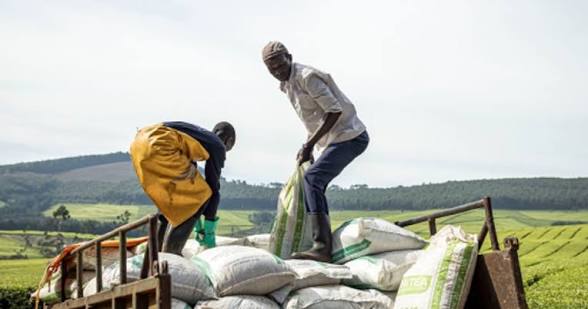
The evidence is already there, with Kenya offering the most recently documented examples. In 2024, government agencies were found to have distributed substandard fertiliser through the national subsidy programme to farmers during the critical planting season. Kenya’s standards authority impounded nearly 6,000 bags before the scale of the problem became clear, and an independent investigation found systemic failures across procurement, warehousing and distribution that had allowed opportunists to infiltrate and extort the supply chain across multiple points.
This was not just a one-off in Kenya: in February 2026, police in Eldoret seized over 600 bags of government-sourced fertiliser that had been debased with unknown chemicals and repackaged for resale at premium prices. Indeed, broader data from the African Union and FAO suggests that up to 30% of agrochemicals circulating in some African markets are either substandard or outright counterfeit.
This is not a problem exclusive to Africa. It is what happens to any market when supply tightens, oversight weakens, and the pressure to accept whatever is available overrides the ability to verify what it actually is.
Comparing the situation with oil, though overdone, is not a cliché. It is a precise and instructive analogy: it shows how long this kind of reclassification actually takes, and what level of shift is required. Oil did not become a strategic asset overnight after the shocks of the ’70s. It took sustained political will, significant capital reallocation, and a fundamental change in how energy businesses were evaluated, recognising their ability to operate reliably through conditions that markets had previously underestimated. The businesses that came to define the post-shock energy landscape were not always the dominant players beforehand. They were the ones that accepted that supply was neither infinite nor problem-free.
Fertiliser is at the beginning of an equivalent shift. The difference is that the window to get ahead of it is narrow, and the cost of getting it wrong is not a price spike that corrects over months. The businesses that see it clearly now are better positioned for the next cycle, representing an integral part of the solution to a structural problem that governments alone cannot fix.
Maintaining access for regulated, quality-assured suppliers, even when they are not the cheapest option, is a necessity for food security. It must become a procurement and policy priority, not just a talking point. The investors, buyers and governments who treat it as such will be both better prepared, and on the right side of a problem that, if handled badly, could take a further generation to undo.