

Tinubunomics: Assessing Gains, Gaps in Nigeria’s Economic Reform
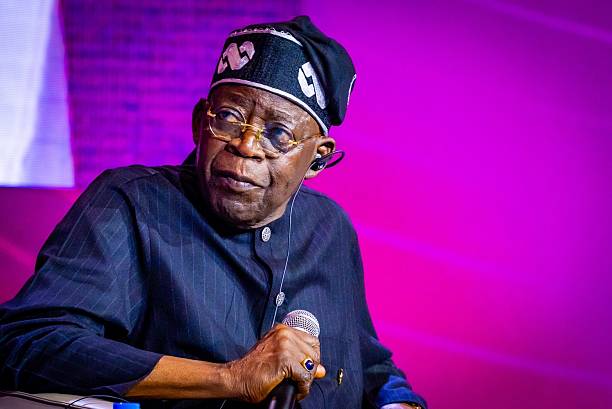
Three years into President Bola Tinubu’s administration, a cluster of macroeconomic indicators are pointing in a direction that supporters have been quick to brand “Tinubunomics” a shorthand for the sweeping economic overhaul that began with the twin shocks of fuel subsidy removal and foreign exchange liberalisation in May 2023.
The numbers, where they hold, are striking. Nigeria’s gross external reserves climbed to a 13-year high of $50.45 billion in February 2026 before settling at approximately $49.25 billion as of May 25, 2026, driven by stronger crude oil earnings, rising diaspora remittances, and improved foreign portfolio inflows. GDP growth, projected to exceed 4 percent for the year by the Central Bank of Nigeria and revised upward to 4.4 percent by the World Bank, is outpacing most sub-Saharan African peers and marks a meaningful acceleration from the 3.89 percent recorded in 2025.
The fiscal deficit has been trimmed through expenditure restructuring and the removal of costly subsidies, while inflation has decelerated sharply from a peak of 34.8 percent in December 2024 to the mid-teens, with the CBN projecting a further decline toward single digits before year-end.
Perhaps the most symbolically significant endorsements of Nigeria’s reform trajectory have come from the global credit rating agencies.
Fitch, Moody’s, and Standard & Poor’s have all issued positive rating actions on Nigeria, with S&P’s upgrade being the country’s first in 14 years, returning it to a ‘B’ rating with a stable outlook. Finance Minister Taiwo Oyedele described the S&P action as a validation of Nigeria’s reform agenda, citing foreign exchange liberalisation, fiscal consolidation, and ongoing tax restructuring as the pillars driving the shift in international perception. Foreign direct investment has also responded, rising to $720 million in the third quarter of 2025 from just $90 million in the preceding quarter a near eightfold jump that reflects the gradual but measurable return of investor confidence that had largely deserted Nigeria during years of opaque currency management and economic drift.
On the social investment and human capital side, the Nigerian Education Loan Fund NELFUND has emerged as one of the administration’s most tangible domestic achievements. As of April 2026, the scheme had disbursed over N242 billion in interest-free loans to approximately 1.39 million students across 288 tertiary institutions nationwide, covering both tuition fees and monthly upkeep allowances for students who would otherwise have been driven out of higher education by poverty. Over 1.7 million loan applications have been received since the portal launched in May 2024, and the scheme spans federal and state universities, polytechnics, and colleges of education.
The administration has also pointed to the ongoing provision of free education for over 30 million pupils in public primary and secondary schools, a policy aimed at stemming the tide of Nigeria’s estimated 10.5 million out-of-school children. Increased statutory allocations to states and local governments, made possible in part by the removal of the fuel subsidy that previously consumed a disproportionate share of federation revenue, have also strengthened subnational fiscal capacity.
Infrastructure and structural reform remain works in progress. Massive road and rail projects are ongoing across the country, while the electricity sector is undergoing decentralisation under a framework intended to transfer more operational and commercial authority to states and distribution companies, a reform that backers say is essential to ending decades of near-total grid failure. On the security front, the administration has intensified operations against armed non-state actors, with the military recording the elimination of key bandit and terrorist commanders across the North West, North Central, and North East a campaign that has been reinforced by the Chief of Army Staff’s recent operational visits and directives.
The picture is not without its shadows. S&P itself noted persistent structural constraints including low tax revenue, stubbornly high poverty and unemployment rates, and ongoing security concerns. Critics have argued that the macroeconomic gains, however real, have not yet translated into tangible relief for the majority of Nigerians still reeling from the cost-of-living pressures that followed the 2023 reforms. The debate over Tinubunomics is ultimately a debate about sequencing about whether the pain came first so the gain could follow, or whether the gain remains confined to balance sheets while the streets tell a different story. What is no longer in dispute is that the numbers have moved.