


Nigeria’s Regulatory Showdown with Digital Loan Sharks
In early 2026, after years of escalating public complaints, the Nigerian government delivered a decisive blow to the country’s most predatory digital lenders.
Following the expiration of the January 5, 2026, compliance deadline, the Federal Competition and Consumer Protection Commission (FCCPC) launched an aggressive phased enforcement action against digital money lenders that had failed to regularize under the new Digital, Electronic, Online and Non-Traditional Consumer Lending Regulations (the DEON Regulations).
After years of predatory lending, the FCCPC had officially set January 5, 2026, as the deadline for loan apps to comply with new regulations. With that deadline lapsed, the Commission immediately moved to withdraw conditional approvals from non-compliant operators and remove them from its approved register. Official statements confirmed that 103 applications were placed on a watchlist, while at least 25 were actively delisted. Subsequently, 45 illegal loan apps were formally blacklisted, including many—such as Joy Cash, EagleCash App, LuckyLoan, EaseLoan, and Yoyi—that match the names on the user’s provided list.
The government’s heightened scrutiny was not merely about missing paperwork—it was directly linked to unethical practices that had terrorized Nigerians. Official investigations by the FCCPC and the Nigeria Data Protection Commission (NDPC) revealed how these apps accessed borrowers’ phone contacts without permission, harassed family members at midnight with threatening messages, and shared images without consent.
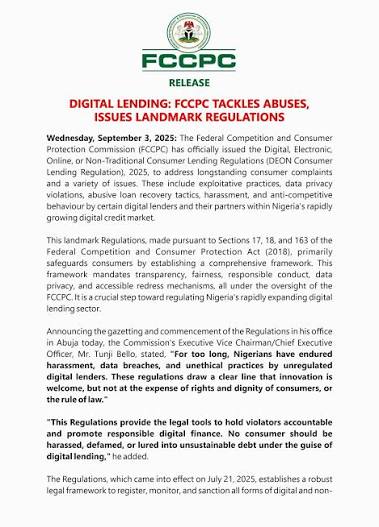
The then-Executive Vice Chairman of the FCCPC, Tunji Bello, defended the crackdown, stating that the objective was “to promote discipline, transparency, and consumer confidence within the digital lending space, not to disrupt legitimate business activity”.
Victims of these practices had long voiced their distress. In a nation scarred by past abuses—where digital lenders had sent defamatory messages and public shaming tactics drove others to near suicide—the government’s response was seen by many as a necessary hard reset for an industry spiraling into abuse.
Regulatory actions in 2026 did not stop at blacklisting. The FCCPC moved quickly to make these delistings effective, engaging directly with global app hosting platforms (specifically Google and Apple) and ordering the removal of these non-compliant apps from their stores. Additionally, the government expanded the scope of justice for past victims, reporting that enforcement efforts had helped recover approximately ₦10 billion for exploited consumers, demonstrating a tangible financial consequence for lender misbehavior.
The clampdown on illegal digital lending carried profound importance, signaling that the government was willing to wield regulatory power to protect the vulnerable. For millions of Nigerians, the message was clear: verify a lender before borrowing, and report harassment immediately. By establishing these digital red lines, the FCCPC and its government partners helped restore a measure of trust in the nation’s rapidly expanding digital financial ecosystem.