


NEC Adds N130 Billion to Police College Overhaul, Lifting Total Funding to N230 Billion
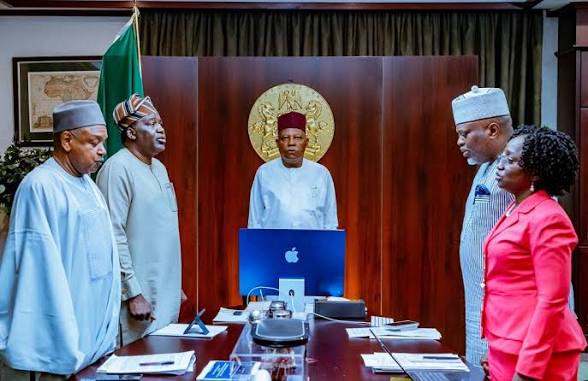
The National Economic Council has approved an additional N130 billion for the rehabilitation of police training institutions nationwide, raising total funding for the programme to N230 billion.
The approval was made at the Council’s 162nd meeting on Monday, as preparations continue for the planned recruitment of 50,000 police personnel.
The NEC ad-hoc committee on the rehabilitation of security training institutions, chaired by Enugu State Governor Peter Mbah, briefed the Council on progress.
The committee said work is currently ongoing at 13 locations across the country and that about 30 per cent of the rehabilitation has been completed. It said the extra money will speed up the works, upgrade training facilities and strengthen the capacity of the institutions to handle increased recruitment and training needs.
The Council had earlier approved N100 billion for the programme in December 2025, following the committee’s establishment in October 2025 on the recommendation of President Bola Tinubu.
The committee had told NEC at the time that most of the training institutions were in dire condition and needed urgent attention to accommodate the planned intake. The recruitment quota was later raised from 30,000 to 50,000 police personnel.
NEC also took other decisions at the meeting. It endorsed two projects backed by proposed World Bank financing totalling $850 million: the $350 million ARISE-Nigeria project, a six-year programme to improve disaster preparedness and response, and a $500 million state-led early childhood development programme covering the 36 states and the FCT.
The Council also approved a proposal by PenCom urging full implementation of the Contributory Pension Scheme across the federation, and called for stronger collaboration between the National Identity Management Commission and state governments to speed up national identity registration.
On the economy, Finance Minister Taiwo Oyedele told the Council that real GDP grew by 4.43 per cent in the second quarter of 2026, headline inflation fell for the fifth consecutive month to 14.06 per cent in October, and external reserves stood at $54.87 billion as of November 12.
He acknowledged, however, that the improved indicators have yet to translate sufficiently into relief for households and businesses, with food inflation still at 19.13 per cent and high lending rates and energy costs weighing on incomes.