


Did You Know: Why Packing Bag Is Christened “Ghana Must Go”?
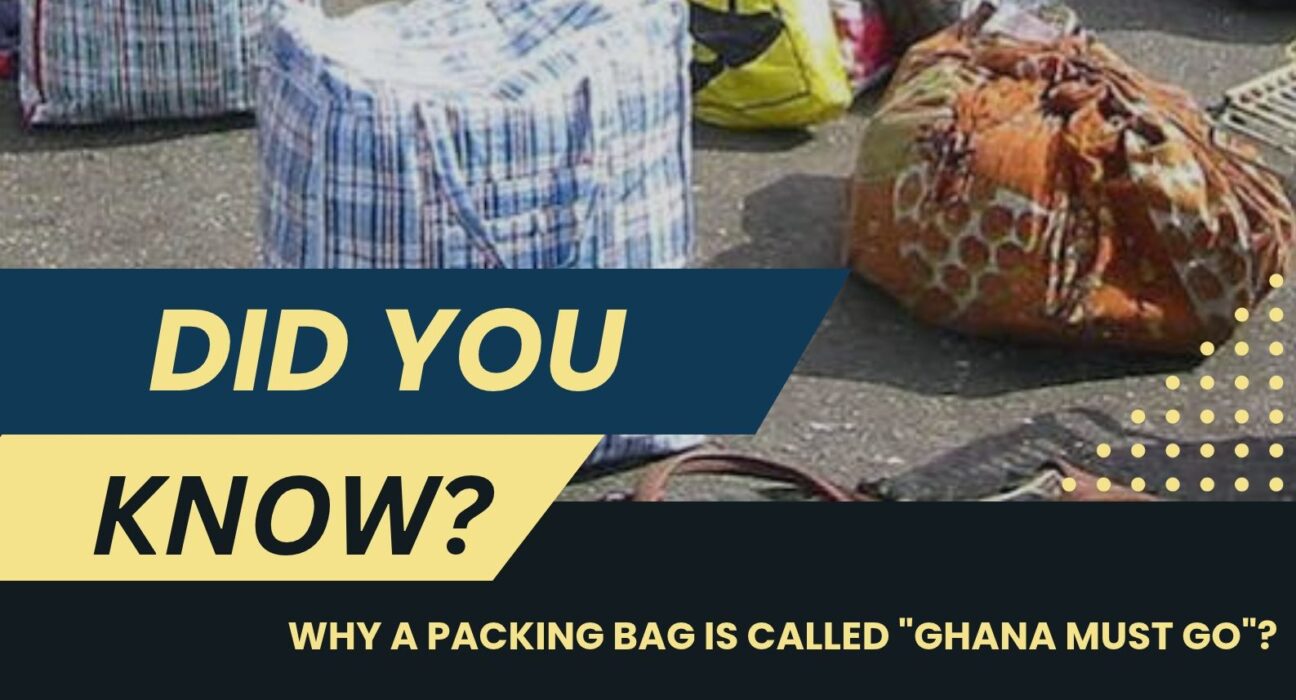
Did you know that one of West Africa’s most recognizable bags, the red, white and blue checkered carrier, carries the name of a political crisis?
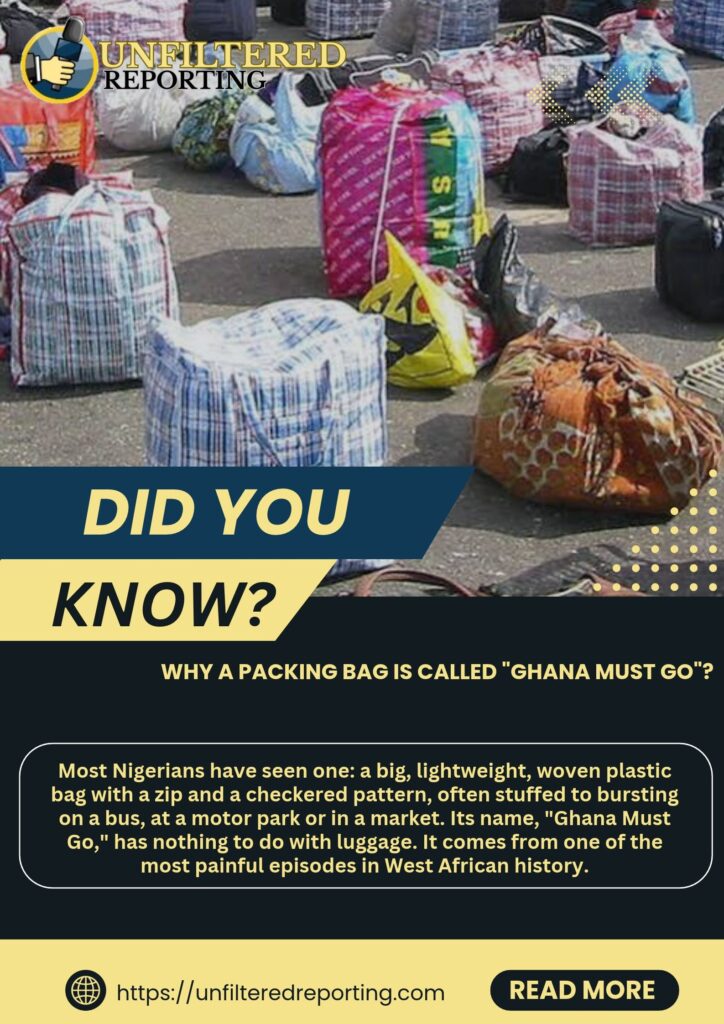
Most Nigerians have seen one: a big, lightweight, woven plastic bag with a zip and a checkered pattern, often stuffed to bursting on a bus, at a motor park or in a market. Its name, “Ghana Must Go,” has nothing to do with luggage. It comes from one of the most painful episodes in West African history.
In the 1970s, Nigeria’s oil boom drew millions of workers from neighboring countries, including a large number of Ghanaians, who worked as teachers, traders, artisans and labourers. By the early 1980s, the picture had changed. Oil prices plummeted, the economy slowed, unemployment rose and public frustration grew.
On January 17, 1983, President Shehu Shagari’s government announced an expulsion order against undocumented foreign workers. Immigrants without valid papers were given roughly two weeks to leave. The order affected up to two million people from several countries, and Ghanaians were widely reported to make up the largest group, numbering around a million.
The phrase was not new. In 1969, Ghana’s government under Prime Minister Kofi Busia had issued its own Aliens Compliance Order, which forced many foreign nationals, Nigerians among them, to leave Ghana. When Nigeria’s order came, some people saw it as a reversal of that history, and the slogan “Ghana Must Go” spread across the country as a bitter, mocking echo.
With so little time, families had to pack their lives into whatever they could find quickly and cheaply. The cheapest, sturdiest and most available option was the large woven polypropylene bag, which was inexpensive, tough, spacious and easy to carry. Thousands of people left Nigeria carrying these bags, heading west by road through Benin and Togo toward Ghana, and their image became inseparable from the event. Nigerians began calling the bag “Ghana Must Go,” and the name stuck for good.
Ghana was struggling at the time with drought, food shortages and economic hardship. The sudden return of so many people strained a country that was already in crisis. Many expellees came home to little support, having lost jobs, savings and homes built over years. The episode is remembered as a hard chapter for both nations, whose people have long been connected by trade, culture and family ties.
The bag itself is not Nigerian or even West African in origin. Similar woven plastic bags are produced across Asia and used around the world, and they go by different names in different places. Elsewhere you may hear them called “market bags” or “refugee bags,” and in some places they are linked to the migration journeys of other communities. Only in Nigeria and much of West Africa is the bag so tied to one historical moment.
Over the decades, the bag has become a symbol far larger than its origin. It features in literature, including Taiye Selasi’s acclaimed novel Ghana Must Go, and in art, fashion and music. Today it is still used every day by travelers, traders and students, mostly with no thought of where the name came from.
The next time you see that familiar checkered bag, remember that it is a piece of living history. Its name recalls a time of fear, hurried departures and economic hardship, and a reminder of how decisions made in capitals can travel through ordinary people’s lives, one packed bag at a time.