


National Policing Bill, 29 Amendment Bills to Reach Tinubu by October 30, Says Gbajabiamila
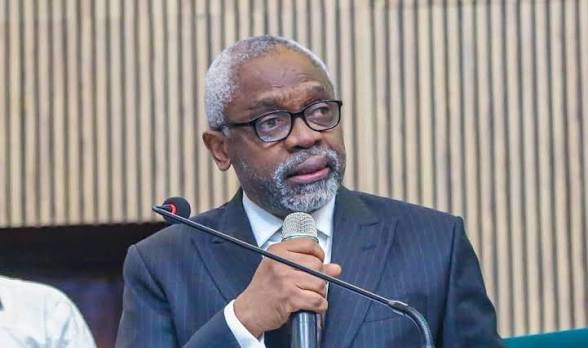
The Presidential Working Group on the National Policing Bill has completed drafting the proposed legislation and 29 related amendment bills, with the reviewed documents expected to be submitted to President Bola Tinubu by October 30.
Chief of Staff to the President and chairman of the working group, Femi Gbajabiamila, disclosed this in a statement on Tuesday, saying the draft bills had been forwarded to the Federal Ministry of Justice for legislative review and validation.
Gbajabiamila said the documents were submitted to the Attorney General of the Federation and Minister of Justice, Lateef Fagbemi, on Monday, October 19, in accordance with the group’s work plan.
He explained that the ministry’s review would ensure compliance with legislative drafting standards and conventions, as well as consistency with existing laws.
The validated drafts are expected to return to the working group on or before Friday, October 30, for final consideration before presentation to Tinubu, marking the completion of the group’s assignment.
According to Gbajabiamila, the proposed National Policing Bill will establish the legal framework for a dual policing system comprising the Federal Police Service and State Police Services.
He said the working group remained committed to producing a comprehensive legislative proposal for the President’s consideration and subsequent transmission to the National Assembly.
The Chief of Staff added that preparation of the policing legislation was proceeding alongside the consideration of the Constitution of the Federal Republic of Nigeria, 1999 (Sixth Alteration) Bill, 2026, by state Houses of Assembly.
He noted that the constitutional amendment process must be completed before the National Policing Bill could proceed to the National Assembly.
Last week, Gbajabiamila indicated that the proposed legislation was about 90 per cent ready for transmission to the legislature, following a meeting of the steering committee at the State House, Abuja.
He described the bill as one of the most consequential legislative proposals of the Tinubu administration, noting that deliberations had been ongoing since the working group’s steering committee began meeting on August 3.
He also expressed confidence that the constitutional amendments required to establish state police would receive broad support, despite concerns over the pace of approval by state legislatures.
Tinubu inaugurated the Presidential Working Group on July 7 to develop the legal framework needed to implement state policing following the National Assembly’s passage of the Constitution Alteration (State Police) Bill, 2026.
At the inauguration, the President explained that the constitutional amendment would provide the foundation for a dual policing system, while the National Policing Bill would establish the operational and legal requirements for its implementation.
The proposed legislation is expected to address minimum policing standards, state readiness certification, coordination between federal and state authorities, accountability, human rights protections and funding arrangements.
Meanwhile, the Delta State House of Assembly on Tuesday approved the Sixth Alteration Bill, 2026, which seeks to amend the Constitution to provide for the establishment of state police services.
The approval followed a request from the National Assembly for consideration and concurrence by the 36 state legislatures as part of the ongoing constitutional amendment process.
Speaker of the Delta Assembly, Emomotimi Guwor, said the proposed reform would bring policing closer to communities, strengthen intelligence gathering and improve the state’s capacity to address security challenges.
The House’s 23 members unanimously supported the bill, which seeks to retain the Nigeria Police Force as the Federal Police Service while allowing states to establish and fund their own police services.
Majority Leader Emeka Nwaobi said the proposed amendment could improve local responses to insecurity, protect lives and property, and create employment opportunities.
Guwor subsequently directed the Clerk of the House, Otto Aghoghophia, to communicate the Assembly’s resolution to the National Assembly.
The Speaker described the approval as an important step towards a more responsive policing system, expressing optimism that the reform would contribute to peace, investment and development in Delta State.