
Today in History: How Nigeria Secured Its Historic $18 Billion Debt Relief on October 20, 2005
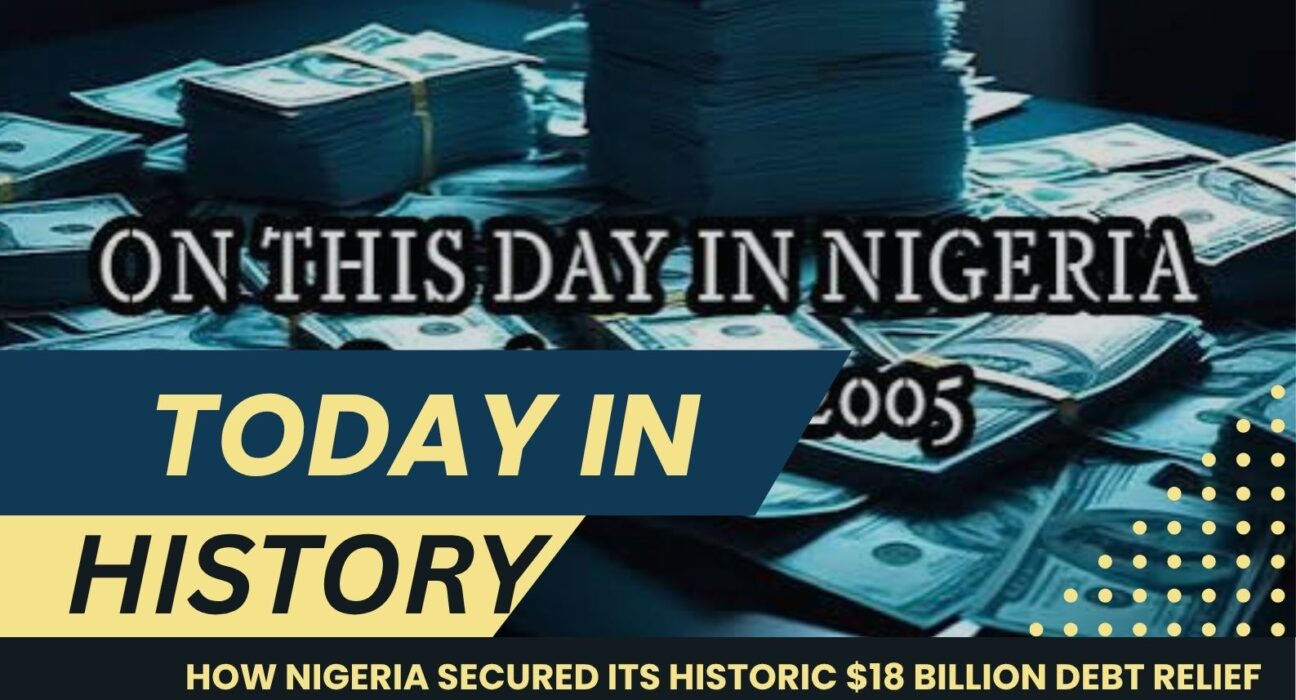
For decades, the ghost of an escalating external debt hung over Nigeria like a dark cloud, choking public expenditure, stunting national development, and redirecting critical national revenues away from schools, hospitals, and infrastructure into endless debt servicing. That narrative shifted permanently on October 20, 2005, when Nigeria reached a landmark, comprehensive debt-treatment agreement with the Paris Club of official creditors, effectively writing off roughly 60% of Nigeria’s $30.4 billion indebtedness and liberating Africa’s most populous nation from a crushing multi-decade economic stranglehold.
The path to the October 2005 agreement was paved by intense diplomatic engagement, rigorous economic bookkeeping, and an innovative financial exit strategy. Under the terms finalized in Paris, creditors canceled $18 billion outright—amounting to approximately 60% of the total $30.4 billion owed. To settle the remaining $12.4 billion, Nigeria cleared the balance through a combination of buybacks and arrears clearance, allowing the country to completely buy its way out of the Paris Club trap rather than dragging out restructuring terms over generations.
This breakthrough did not happen by chance. For years, Nigeria’s debt had ballooned, fueled by historical miscalculations, oil shocks, and compounding interest penalties. However, the turning point arrived under President Olusegun Obasanjo’s administration, propelled by a formidable economic management team spearheaded by the then-Minister of Finance, Dr. Ngozi Okonjo-Iweala. To convince skeptical Western creditors, Nigeria had to prove its internal economic discipline by instituting sweeping domestic reforms. The government enacted prudent fiscal management through the introduction of the Excess Crude Account, stopped treating high oil windfalls as disposable income, pushed hard against institutional graft to clean up banking and public systems, and paired its domestic agenda with a non-borrowing policy monitoring program with the International Monetary Fund to lock in international credibility.
Before the 2005 exit, Nigeria was spending upwards of $1 billion annually just servicing unsustainable debts money that could have gone into building roads, powering communities, and educating youth. Clearing the debt ledger unburdened the federal budget, creating fiscal space that was systematically channeled into pro-poor, Millennium Development Goals related projects, healthcare infrastructure, basic education, and agricultural programs. Furthermore, the deal restored international investor confidence, paving the way for Nigeria to secure its first-ever sovereign credit ratings and draw wider foreign direct investment. Two decades down the line, the October 20, 2005 agreement remains a masterclass in sovereign negotiation and economic diplomacy proving that rigorous internal reform, coupled with visionary leadership, can dismantle even the most daunting structural barriers to a nation’s future.