
Reps Advance Bill to Establish National Renewable Energy Authority
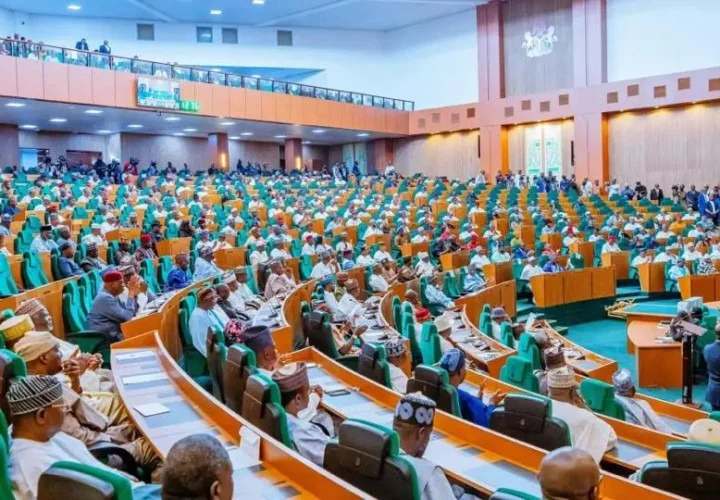
The House of Representatives has advanced a bill seeking to establish the National Authority for Renewable Energy (NARE) to improve the coordination, regulation and expansion of renewable energy across Nigeria.
The Electricity Act (Amendment) Bill, 2025, sponsored by Afam Ogene, who represents Ogbaru Federal Constituency, Anambra State, scaled second reading on Thursday after lawmakers debated its provisions.
Ogene, chairman of the House Committee on Renewable Energy, said the proposed legislation would address institutional overlaps in the power sector by transferring renewable energy responsibilities currently handled by the Nigerian Electricity Regulatory Commission (NERC), the Rural Electrification Agency and the Rural Electrification Fund to the new authority.
He argued that placing these responsibilities under a specialised institution would streamline operations, eliminate duplication and establish a more coordinated approach to renewable energy development.
Under the proposed legislation, NARE would promote renewable energy projects, particularly mini-grid and off-grid electricity systems designed to serve rural communities, areas without adequate electricity access and island settlements.
The authority would also be empowered to encourage local production of renewable energy equipment, strengthen research and develop technical expertise through financial support, tax incentives and regulatory measures aimed at attracting investment and generating employment.
The bill outlines plans to diversify Nigeria’s energy sources through the development of solar, wind, hydroelectric, geothermal, biomass and hydrogen power.
It also proposes granting the authority responsibility for licensing, setting industry standards, promoting fair electricity tariffs and resolving disputes within the renewable energy market.
The proposed body would work with NERC and the Federal Ministry of Finance to align policies and facilitate the integration of renewable energy into the national electricity grid.
Another major provision seeks to allocate 40 per cent of the Rural Electrification Fund’s annual resources to the proposed authority to support renewable energy projects.
Making a case for the legislation, Ogene argued that expanding the national grid alone would not adequately address Nigeria’s electricity challenges, particularly in communities where conventional power infrastructure remains inaccessible or unreliable.
He called for greater investment in decentralised renewable energy systems capable of supplying electricity to homes, businesses and public institutions without depending entirely on the national grid.
Following deliberations, lawmakers unanimously approved the bill for second reading and referred it to the relevant committee for further examination.
The committee is expected to scrutinise the proposed framework, including arrangements for transferring staff, assets and ongoing projects from existing institutions, before presenting its findings to the House.
The proposed legislation comes amid efforts to improve electricity access and diversify Nigeria’s power supply through alternative energy sources. Solar power and mini-grids have increasingly been considered options for extending electricity to communities where conventional grid expansion could be difficult or expensive.
However, the proposed redistribution of responsibilities among power-sector institutions and the allocation of 40 per cent of the Rural Electrification Fund to NARE could raise questions about funding priorities, regulatory coordination and the division of responsibilities between the new authority and existing agencies.
Ogene previously led the House Committee on Renewable Energy in engagements on green energy at the 29th United Nations Climate Change Conference in Baku, Azerbaijan, in 2024, and the 30th conference, COP30, in Brazil in 2025.