


FG Cannot Continue Bridging Electricity Tariff Shortfalls, Says Power Minister
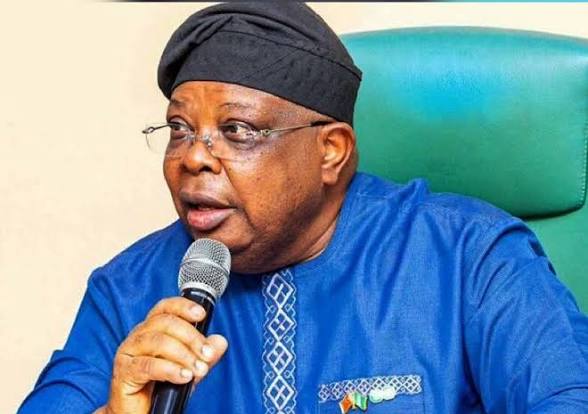
The Minister of Power, Joseph Tegbe, has said the Federal Government cannot continue to absorb electricity tariff shortfalls while guaranteeing power supply to Nigerians, citing mounting debts, poor revenue collection and widespread metering gaps in the sector.
Tegbe made the remarks at an energy conference organised by the Harvard Business School Association of Nigeria in Lagos on Friday, where industry stakeholders examined the challenges facing Nigeria’s electricity market and possible solutions.
He said the government was reviewing the electricity market structure and tariff framework in collaboration with the Nigerian Electricity Regulatory Commission to address persistent financial and operational challenges.
The minister also questioned the sustainability of the Nigerian Bulk Electricity Trading company model, which purchases electricity from generation companies and resells it to distribution companies, arguing that the arrangement had encouraged inefficiencies and failed to ensure adequate cost recovery.
He said the government intended to transition towards bilateral electricity agreements that would allow power producers to supply distribution companies and other customers under mutually agreed commercial terms.
Tegbe cited existing agreements involving Mainstream Energy Solutions and the Abuja and Ikeja electricity distribution companies as examples of arrangements in which payments were tied to electricity supplied.
He stressed that commercially viable electricity tariffs would not resolve the sector’s financial problems unless operators could effectively collect payments from customers.
The minister identified poor revenue collection, accumulated debts to power generation companies and inadequate metering as major obstacles to reliable electricity supply.
According to him, Nigeria has a metering gap of about 40 per cent, making it difficult for distribution companies to accurately measure consumption and collect revenue.
He disclosed that the Federal Government had deployed more than 700,000 meters nationwide in the preceding six months, with plans to install 7.5 million additional meters over the next two to three years.
Tegbe also put aggregate technical, commercial and collection losses across the electricity sector at more than 44 per cent, saying the losses had contributed to debts estimated at N3.3tn owed to generation companies.
He said the government had paid between N1.2tn and N1.3tn through a bond arrangement to settle outstanding obligations, adding that it intended to complete the payments by 2027.
However, he emphasised that clearing the existing debt burden would not be sufficient without reforms to prevent the accumulation of fresh arrears.
The minister further disclosed plans to explore independent transmission lines to connect underutilised power plants with industrial clusters requiring substantial electricity supplies.
He cited power plants in the Niger Delta, including Alaoji, which he said had a combined installed generation capacity of 3,000 megawatts but were producing approximately 400 megawatts.
He added that the government was reviewing transmission infrastructure, conducting technical audits and identifying areas where investment could deliver the greatest improvements in electricity supply.
Speaking at the conference, energy expert Gbite Adeniji said resolving the sector’s liquidity crisis required the government to settle outstanding debts and strengthen the financial position of the Nigerian Bulk Electricity Trading company.
Adeniji explained that inadequate payments to gas suppliers had disrupted the electricity value chain, limiting the supply of gas needed to generate power.
He argued that a financially stronger bulk electricity trading company would be better positioned to meet its obligations to power producers, enabling them to pay gas suppliers and improve generation.
He also warned that unresolved debts and weak payment arrangements were discouraging investment in new power plants intended to supply the national grid.
Adeniji called for closer regulatory scrutiny of upstream gas costs, cautioning that inefficiencies in gas production and procurement could be transferred to electricity consumers through higher prices.
He also urged the midstream regulator to ensure that the Gas Aggregation Company of Nigeria effectively implemented commercial arrangements established to support domestic gas supply.
The Chief Executive of the Nigerian Upstream Petroleum Regulatory Commission, Oritsemeyiwa Eyesan, said gas pricing challenges, poor payment collection and legacy debts owed to upstream operators had continued to affect the market.
Eyesan said a debt resolution arrangement involving royalty gas had helped address some outstanding obligations, while the Federal Government’s bond initiative had provided a clearer path towards settling the remaining debts.
She also highlighted the completion of the OB3 gas pipeline, which she described as a critical infrastructure project for transporting gas from southern Nigeria to the north and expanding distribution across the country.
The commission’s chief executive further pointed to the drill-or-drop provisions of the Petroleum Industry Act, which require operators to develop their oil and gas assets rather than leave them undeveloped.
Meanwhile, the Chief Executive of the Nigerian Midstream and Downstream Petroleum Regulatory Authority, Rabiu Umar, dismissed suggestions of regulatory disagreements between his agency and the upstream regulator.
Umar said both agencies were working together to improve the investment climate and advance the implementation of the Petroleum Industry Act.
He added that the Midstream and Downstream Gas Infrastructure Fund was designed to encourage investment and reduce the risks associated with gas infrastructure projects.