



Today in History: The Outbreak of the Iran-Iraq War
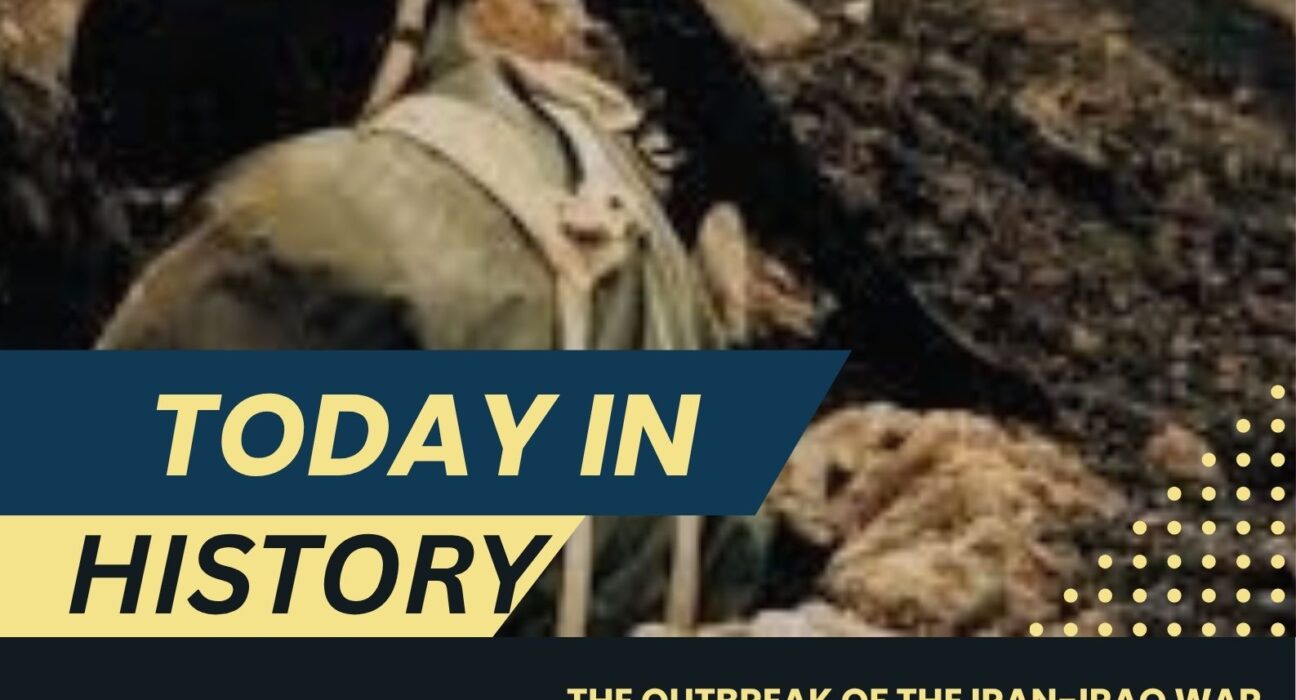
The outbreak of the Iran-Iraq War on September 22, 1980, marked the beginning of one of the most brutal and protracted interstate conflicts of the twentieth century. Sparked by a sudden, full-scale invasion of western Iran by Iraqi forces under President Saddam Hussein, the war shattered regional stability in the Persian Gulf and resulted in a devastating human and economic toll.
Strategic motivations and catalysts drove the conflict, which was rooted in a volatile mix of territorial disputes, personal rivalries, and profound ideological shifts. Following the 1979 Islamic Revolution in Iran, Ayatollah Ruhollah Khomeini established a Shiite theocracy and openly called for the overthrow of Iraq’s secular Ba’athist government. Feeling severely threatened by this potential export of revolutionary ideology to Iraq’s own suppressed Shiite majority, and seeking to control the strategic Shatt al-Arab waterway and the oil-rich Iranian province of Khuzestan, Saddam Hussein launched a surprise offensive. Baghdad anticipated a swift collapse of Iran’s post-revolutionary military structure, but the invasion quickly bogged down.
By 1982, Iranian forces had successfully repelled the initial Iraqi incursions and pushed the front lines back, transforming the conflict into a grinding war of attrition reminiscent of World War I. The battlefield was characterized by large-scale trench warfare, barbed wire, and heavily fortified defensive lines alongside the controversial deployment of young volunteers and paramilitary units in human-wave assaults across minefields. Furthermore, the military engagement saw the widespread, systematic use of chemical weapons, including nerve and mustard gas, by the Iraqi military against both troops and civilian populations, paired concurrently with the Tanker War and missile strikes targeting urban centers and commercial shipping lanes in the Persian Gulf.
After eight years of horrific slaughter, economic ruin, and the loss of an estimated half-million to over a million lives, neither nation achieved its initial grand objectives. The conflict formally concluded on August 20, 1988, following the acceptance of United Nations Security Council Resolution 598, which established a weary ceasefire and restored the pre-war territorial borders. The war left both countries saddled with immense debt and deep political scars, permanently altering the geopolitical landscape of the Middle East.