



Did You Know? Richest States in America Carry Heaviest Debt Burden
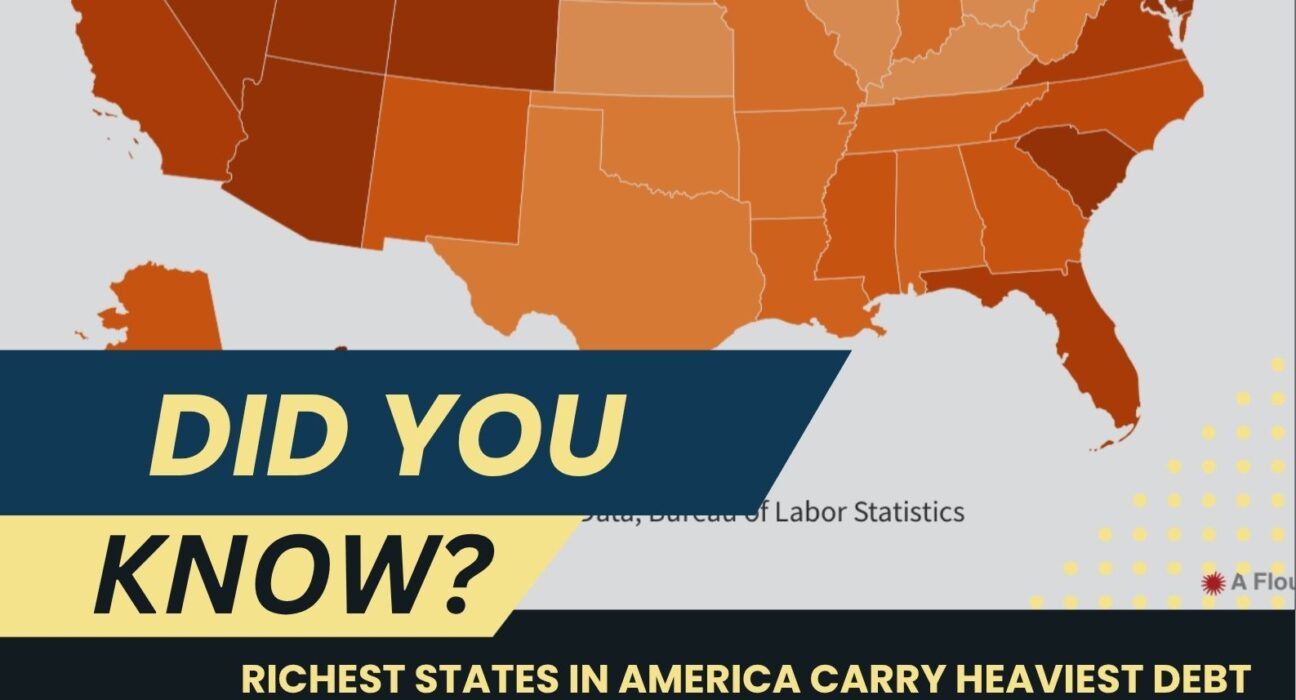
At first glance, it sounds counterintuitive. Why would the most economically productive and wealthiest regions in the United States also be the ones wrestling with the highest debt burdens? Intuitively, we often associate debt with financial struggle, viewing it as a sign of living beyond one’s means.
Yet, when looking at American state governments, wealth and debt rarely exist in isolation. Instead, they are deeply intertwined, and the economic engines driving the country forward are frequently the exact same entities carrying the largest financial liabilities.
To understand this paradox, it helps to look at how state debt is measured, as there is a distinct difference between total gross debt and debt per resident. Massive economic powerhouses like California and New York top the charts in absolute nominal debt, with California’s obligations nearing $500 billion. Rather than a sign of poor management, this massive figure is a natural byproduct of scale.
These states support colossal populations, sprawling transportation networks, and extensive public infrastructure that require immense capital to build and maintain.
Conversely, when debt is scaled down to a per-person basis, wealthy states like Connecticut, New Jersey, and Massachusetts frequently rank near the top. This per capita burden is often driven by legacy obligations, specifically unfunded public pension liabilities promised to civil service workers decades ago. Even though residents in these regions boast some of the highest personal incomes in the nation, their state governments carry a heavy structural mortgage from the past.
In the world of finance, debt is not always a red flag; it is often a strategic tool. Credit markets operate on trust and capacity, meaning lenders are eager to finance entities with massive Gross Domestic Product and steady tax streams because they know those entities have the ability to pay it back.
Furthermore, when debt is used to fund capital projects like clean energy grids, ports, water treatment facilities, and schools, it acts as an investment that generates future economic growth.
This state-level paradox is simply a microcosm of the United States as a whole. The country boasts the largest national economy and highest aggregate wealth in the world, yet it simultaneously carries the largest national debt in history. Global financial markets willingly finance this deficit because the underlying productivity, innovation, and strength of the U.S. economy remain unmatched.
High financial liabilities are frequently the price of admission for building and sustaining a powerhouse economy.