
Progressive Governors, LG Chairmen Should Complement First Lady’s Drive
By Bamidele Atoyebi
Politics is local, as they say. Likewise governance.
When people in the villages, communities and wards feel the impact of governance in their daily lives, they understand that government is working. The same people who are often described as the grassroots are also the people who ultimately determine the strength of any government’s connection with its citizens.
This is why I believe state governors and local government chairmen have a critical role to play in complementing the efforts of the First Lady, Senator Oluremi Tinubu, through the Renewed Hope Initiative.
Since its launch in 2023, the RHI has operated across five major areas: agriculture, economic empowerment, social investment, health and education. Its programmes include grants, agricultural inputs, support for persons with disabilities and the elderly, educational interventions, health initiatives and women’s economic empowerment.
One example is the RHI-Tony Elumelu Foundation women empowerment programme, which targeted 18,500 women, comprising 500 women from each of the 36 states and the FCT, with N50,000 grants to recapitalise existing businesses.
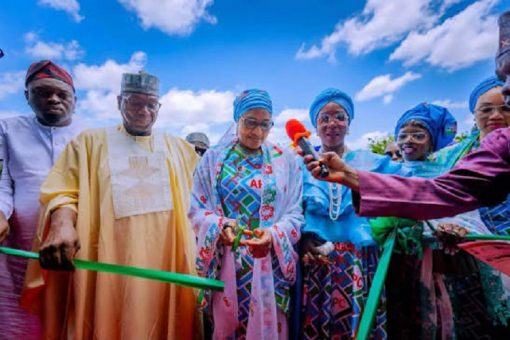
The First Lady has also continued moving from state to state with interventions. In August 2026, for instance, she commissioned a renovated Alternative High School for Girls in Lagos, while other RHI programmes continue across the country.
But the question is: what happens after the First Lady leaves?
She is one person. Nigeria has 36 states and the FCT, 774 local government areas and thousands of wards and communities. There is simply a limit to what one national intervention platform can achieve without strong state and local government partnerships.
This is where governors and local government chairmen must show their own workings.
If the Federal Government is providing interventions, states should implement their own grants. If women receive N50,000 to restart a business, what stops a state or local government from creating an additional business-support scheme? If farmers are receiving inputs, what stops local governments from supporting farmers’ cooperatives with equipment, access roads, storage facilities or additional grants?
And there are already examples of what such collaboration can look like. In Imo State, the women empowerment intervention was expanded beyond the original 500-beneficiary allotment, with the state increasing it to 2,500 women and adding further assistance. That kind of initiative raises a legitimate question: why should similar schemes not be replicated by other state governments?
The same applies to the Renewed Hope Homes and other social interventions being pursued at the federal level. If the Federal Government is responding to housing and social needs, what are other states doing to complement such efforts? Lagos, for instance, has shown that state-level intervention can complement the broader agenda through projects such as the renovated Alternative High School for Girls in Agboju.
The point is not for every state to copy blindly. The point is for every government to look at the needs of its own people and ask: what can we add?
The same applies to education and healthcare.
A governor does not need to wait for Abuja before renovating a primary healthcare centre, equipping a rural school, providing learning materials or supporting children from poor households. Local governments can equally complement these efforts with targeted programmes that respond to the realities of their communities.
Even small interventions can become significant when multiplied across thousands of communities.
Imagine a local government deliberately setting aside funds for women traders, farmers, artisans and young entrepreneurs. Imagine wards having functional healthcare centres, accessible roads, clean water and basic electricity. Imagine schools where children are not only enrolled but are also given the support they need to remain in school.
These are the things people understand immediately.
And this is why governance must not be measured only by the number of major projects commissioned in state capitals. The real test is what happens several kilometres away from the capital, where a farmer needs a road to his farm, where a trader needs working capital, where a mother needs affordable healthcare and where a child needs a functioning school.
The Federal Government has also pursued interventions through the Renewed Hope Initiative in areas ranging from food security to education and social investment. The National Community Food Bank, for example, has brought together federal institutions, private foundations and the Nigeria Governors’ Forum around food support, with the First Lady contributing N500 million and the NGF pledging N17 billion as part of the funding structure announced for the programme.
That is the kind of collaboration that should become the norm.
Governors should not merely receive federal interventions. They should build on them.
Local government chairmen should not merely wait for allocations. They should identify the needs of their people and design measurable interventions around them.
The argument is simple: the Federal Government cannot do everything alone.
If the objective is to make economic reforms meaningful to ordinary Nigerians, then the gains must travel from Abuja to the states, from the states to the local governments, and from the local governments directly into the wards and communities.
That is where governance becomes real.
The time is still there. Progressive governors and local government leaders have the opportunity to complement what is already being done, scale up grassroots interventions and ensure that the people do not merely hear about government programmes but actually experience them.
When governance reaches the grassroots, the story of government is no longer told by speeches.
The people tell it themselves.
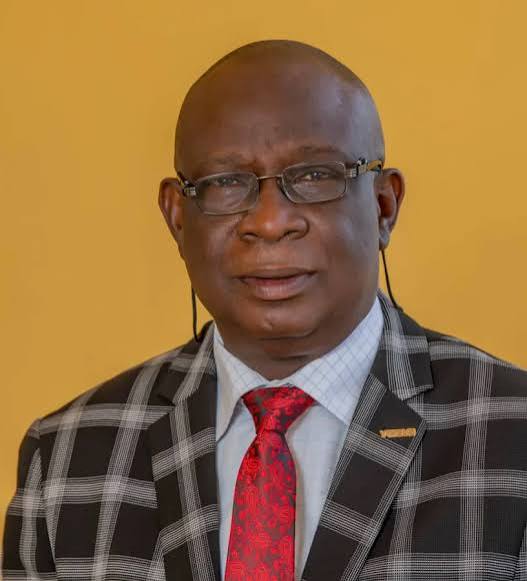
Comrade Bamidele Atoyebi is the Convener of the Bola Ahmed Tinubu Ideological Group, National Coordinator of Accountability and Policy Monitoring PR and a publisher of Unfiltered and Mining Reports.