

Yttrium Now Flashpoint in US-China Trade Standoff
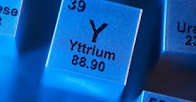
China’s control over yttrium supplies is emerging as a major pressure point in its trade dispute with the United States.
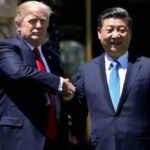
The obscure metal is expected to feature prominently when Chinese President Xi Jinping meets US President Donald Trump in Washington later this month, Reuters reported on September 14, 2026.
Yttrium is essential to several high-technology industries, particularly for thermal barrier coatings used to protect jet engines from extreme heat. It is also used in semiconductors, lasers and display technologies, making disruptions to its supply increasingly important to manufacturers.
China dominates the global yttrium supply chain. Reuters reported that the United States received no yttrium from China during the middle of last year, while subsequent shipments have been irregular.
The disruption followed China’s decision in April 2025 to impose export controls on yttrium and six other rare earths. Exporters must demonstrate that the material will be used for civilian purposes before securing approval to ship it abroad.
US shipments resumed in October 2025 ahead of a meeting between Xi and Trump in Busan, South Korea, but the flow weakened again afterward.
By February 2026, the shortage had become severe enough to contribute to production stoppages in parts of the US coating supply chain, according to Reuters.
China subsequently sent about 60 tonnes of yttrium oxide to the United States in March after what Reuters described as a direct White House intervention on behalf of a major US company facing difficulty obtaining an export licence.
US Trade Representative Jamieson Greer later criticised the slow pace of Chinese exports. Reuters quoted Greer as saying there are times when Washington has to make its point.
Another summit in May produced a Chinese commitment to address US concerns over rare-earth shipments, but exports again stopped before resuming in July, when China shipped 29 tonnes to the United States.
The pattern has raised concerns that Beijing is using yttrium exports selectively, maintaining enough supply to prevent an outright confrontation while leaving pressure on Western supply chains.
Reuters reported that Japan has received little yttrium since November 2025, following comments by Prime Minister Sanae Takaichi about defending Taiwan that angered Beijing. Supplies of other critical metals, including gallium, terbium and dysprosium, have also been restricted.
Japanese companies have increasingly warned about the effect of rare-earth export controls on their businesses. In May and June 2026, more than two-thirds of nearly 200 Tokyo Stock Exchange filings that mentioned rare earths said the controls were already hurting businesses or could do so in the future, Reuters reported.
European Trade Commissioner, Maros Sefcovic has called for China to address the issue by October, warning that failure to do so would generate major political pressure for alternative measures. Talks over China’s controls on critical minerals are expected to form part of that discussion.
Yttrium formally sits outside the lanthanide series but is classified among the rare earths because it occurs alongside the lanthanides and has similar chemical characteristics.
Global production data remain uncertain. Reuters reported that the US Geological Survey estimates 2025 global mine production of yttrium at between 10,000 and 15,000 tonnes, while China does not publicly disclose its mining or separation production quotas.
For the United States, Japan and Europe, the issue is therefore no longer simply about an obscure element of the periodic table. It is about access to a material that has become strategically important to aerospace, energy and semiconductor manufacturing while remaining overwhelmingly dependent on Chinese supply.
Reuters reported that the question now facing Europe is whether it receives Beijing’s cooperation on yttrium or becomes another target of China’s restrictions.