


Naira Strengthens Beyond N1,800/£ as Pound Weakens Against Emerging-Market Currencies
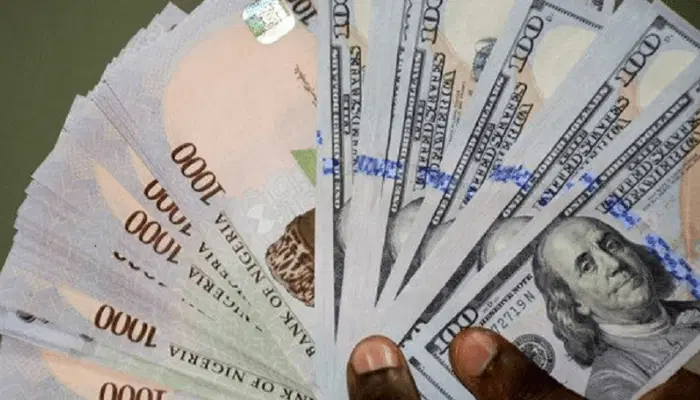
The naira has strengthened past the N1,800-to-one-pound level, trading at about N1,788/£, as improved domestic economic conditions and developments in the global currency market support the Nigerian currency.
The latest movement below the psychological N1,800 threshold reflects changing demand and supply conditions in Nigeria’s foreign exchange market, with monetary policy measures and increased foreign capital inflows contributing to reduced pressure on the naira.
The Central Bank of Nigeria (CBN) has maintained a tight monetary policy stance, including higher interest rates and the promotion of high-yield financial instruments such as Treasury Bills and other investment products.
These measures have made naira-denominated assets more attractive to institutional investors and banks, potentially reducing demand for scarce foreign currencies.
Increased foreign capital inflows, driven by attractive domestic yields and improved investor confidence, could also boost the supply of currencies such as the US dollar and British pound in the Nigerian market.
Higher external reserves, supported by oil production and global crude prices, could further strengthen the CBN’s capacity to intervene in the foreign exchange market, helping to moderate speculative demand and currency hoarding.
Developments in the United Kingdom are also influencing the pound. A weaker UK economy, changes in government fiscal policy or lower interest rates from the Bank of England could put additional pressure on sterling and support emerging-market currencies such as the naira.
Market analysts said the break below N1,800/£ could have technical implications for the naira-pound exchange rate, with the market potentially consolidating between N1,750/£ and N1,850/£ in the coming weeks.
A sustained breach of the N1,800 level could trigger stop-loss orders from traders holding long positions on the pound, particularly if the movement is supported by strong trading volumes.
However, analysts noted that currency declines rarely occur in a straight line. The pound could recover temporarily and retest N1,800/£, which may subsequently act as a resistance level before another downward move.
Further weakness could push the exchange rate towards N1,750/£ and potentially N1,700/£, depending on developments in Nigeria’s foreign exchange market and global sterling sentiment.
Meanwhile, the British pound has remained around the $1.35 level against the US dollar, with analysts projecting a possible move towards $1.3550 during Wednesday’s European trading session.
Recent measures announced by UK authorities to encourage economic growth and private investment have provided some support for sterling, while commitments to fiscal discipline have also helped investor sentiment.
Analysts expect the pound to trade within a relatively narrow range, although recent movements saw it rise from $1.3508 to $1.3547, exceeding an earlier projected range of $1.3490 to $1.3540.
Global geopolitical tensions, particularly developments in the Middle East, continue to influence currency markets. The latest confrontation involving the United States and Iran has increased demand for the dollar as a safe-haven asset, encouraging cautious trading in the pound and other currencies.
The combination of domestic monetary policy, foreign capital flows, oil revenues, external reserves and global sterling movements is therefore expected to remain critical to the naira’s performance against the pound in the near term.