We’ve Been Operating for 16 Years, Made-in-Nigeria Office Says, Nwabueze Wonders Why ICPC Probe
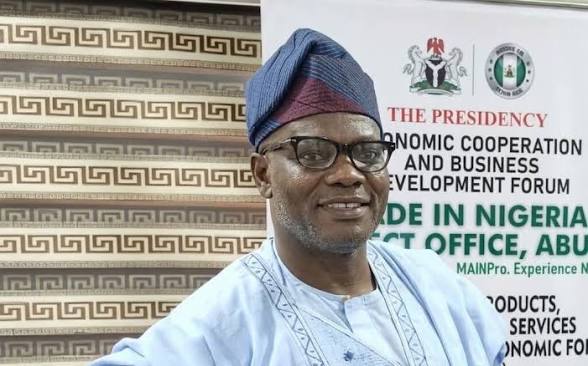
The National Coordinator and Executive Director of the Made-in-Nigeria Project Office, Nwabueze Buchi George, has defended the existence of the organisation amid growing questions over its legal status and an ongoing investigation by the Independent Corrupt Practices and Other Related Offences Commission (ICPC).
George, reacting to public criticism on LinkedIn, argued that the organisation had been in existence for 16 years and questioned why its activities were only attracting public attention in 2026.
His comments came amid the ICPC’s investigation into what it described as a fraudulent federal agency operating under a similar name, with questions surrounding the legal foundation, funding and government oversight of the Made-in-Nigeria Project Office.
“How can you discover a 16 years program in 2026, it’s means you have been blind, we are committed to the national development,” George wrote.
The coordinator said the initiative dates back to June 15, 2010 and cited a July 19, 2010 letter from the Office of the Secretary to the Government of the Federation (OSGF) as evidence of its history.
However, the document he shared was addressed to a person identified as “Buchi George” of The Hats Centre in Owerri, Imo State, and related to the endorsement of a project called “Made In Naija” for an event in Ireland. The letter did not expressly refer to a Made-in-Nigeria brand development programme.
Another document shared by George has also raised questions about his claim of 16 years of continuous operation.
An appointment letter dated October 3, 2025, from the OSGF formally appointed him National Coordinator/Executive Director of the Made in Nigeria Project Office for a five-year tenure commencing in July 2025.
Meanwhile, officials of the OSGF have declined to comment publicly on the controversy.
Enquiries sent to the Special Adviser on Media and Publicity to the Secretary to the Government of the Federation, Yomi Odunuga, were unanswered, while the Head of Information and Public Relations at the OSGF, Chris Ugbuegbulam, could not be reached.
The controversy has also drawn attention to the organisation’s reported network across the country.
Its website displays the names and photographs of 20 state coordinators from states including Kogi, Bauchi, Oyo, Taraba, Kano, Ondo, Benue, Nasarawa, Plateau, Kaduna, Katsina, Niger, Zamfara, Abia, Sokoto, Ogun, Anambra, Osun, Kebbi and Delta.
Anambra SSG explains involvement
The Secretary to the Anambra State Government, Chiamaka Nnake, has also clarified her connection with the organisation after her photograph appeared on its platform as the state coordinator.
Nnake said her involvement began in January 2026, when the state governor received a letter from the Made-in-Nigeria Office requesting the nomination of a state focal person.
She said she was subsequently nominated in February to serve as Anambra’s focal person and later joined a WhatsApp group comprising representatives from the 36 states.
According to her, the office subsequently requested that Anambra host the South-East Made-in-Nigeria Fair. The request was approved, and an inaugural planning meeting was held about two weeks ago with George in attendance.
The fair was scheduled for December 2 to 5, 2026.
Nnake, however, stressed that her involvement was limited to those official engagements and said she had no knowledge of, or connection with, any other activities or claims associated with the organisation.
Ex-permanent secretary blames bureaucratic gaps
The controversy has also prompted concerns about weaknesses within Nigeria’s public service system.
Former Permanent Secretary of the Federal Civil Service Commission, Goke Adeboroye, said bureaucratic shortcomings could allow individuals or organisations to penetrate government structures without adequate verification.
Speaking on Channels Television’s Inside Sources, Adeboroye referred to the ICPC’s discovery of another alleged fake presidential agency, the Presidential Foreign Intervention Promotion Council, which the commission said operated using forged appointment letters and other official documents.
He questioned how an alleged fraudulent organisation could secure budgetary provisions, office accommodation and access to government structures without being detected by relevant authorities.
Adeboroye identified the OSGF, the Office of the Chief of Staff to the President and the Office of the Head of the Civil Service as among the institutions whose bureaucratic systems must be strengthened to provide effective checks and support the implementation of government policies.
He said career civil servants should have the experience and institutional knowledge required to identify questionable directives, particularly because presidential approvals ordinarily pass through established official channels.
According to him, suspicious instructions can also be verified through direct communication with the relevant government offices before officials act on them.
Adeboroye recalled an incident from his time as Permanent Secretary in the Ministry of Interior involving a former governor who claimed presidential approval for a diplomatic passport. He said the relevant immigration official verified the approval and subsequently sought clarification on whether the former governor, who was no longer in office, qualified for the document.
He said the incident demonstrated how institutional knowledge and adherence to established procedures could help prevent irregularities within government.
The ongoing scrutiny of the Made-in-Nigeria Project Office therefore leaves several questions unresolved, particularly concerning its legal status, funding arrangements and relationship with the Office of the Secretary to the Government of the Federation.