
Tinubu’s Macroeconomic Gains Yet to Positively Impact Nigerians’ Living Conditions, Says Ezekwesili

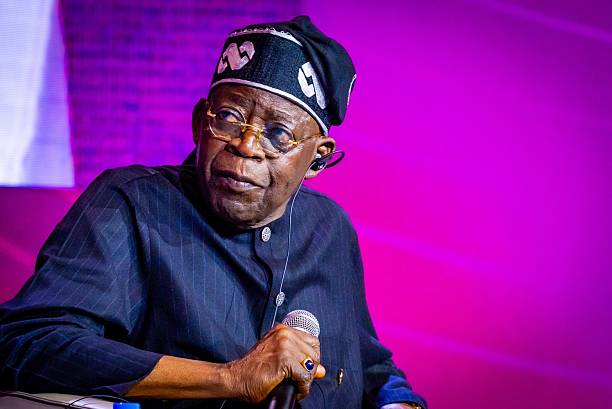
Former Minister of Education, Oby Ezekwesili, has said recent improvements in Nigeria’s macroeconomic indicators under President Bola Tinubu have yet to translate into better living conditions for ordinary citizens.
Ezekwesili, speaking in an interview with News Central TV at the weekend, said the administration’s most notable achievement so far was progress towards macroeconomic stability, particularly in the foreign exchange market.
She, however, argued that the gains had been overshadowed by persistent poverty, high living costs, weak productivity and structural problems within the economy.
According to her, the relative stability in the foreign exchange market was linked to the government’s decision to allow market forces to play a greater role in determining the exchange rate.
She said this improvement should not be mistaken for a broader recovery in household welfare, noting that Nigerians continued to face significant pressure from the high cost of goods and services.
Ezekwesili also criticised the government’s handling of inflation, arguing that the sharp rise in prices experienced in recent years was largely avoidable.
She attributed the inflationary surge to what she described as poor coordination and management of economic policies.
The former minister said Nigeria’s fundamental economic challenge remained low productivity, arguing that sustainable growth would be difficult without increasing the country’s capacity to produce goods and services efficiently.
She maintained that an economy could not become globally competitive without significant improvements in productivity and the removal of structural barriers limiting businesses and households.
Ezekwesili also faulted the government’s approach to budget management, raising concerns over the simultaneous operation of multiple fiscal years.
She contrasted Nigeria’s budget implementation with China, where, she said, annual budgets were expected to be executed within their respective fiscal cycles.
The former minister described the continued existence of overlapping budgets in Nigeria as a sign of poor fiscal management and questioned the effectiveness of the government’s financial planning.
She further criticised the administration for what she described as inadequate disclosure of performance records, saying Nigerians should have access to sufficient information to independently assess the government’s achievements.
Ezekwesili urged the administration to be more transparent about the challenges facing the economy instead of relying primarily on improvements in selected macroeconomic indicators.
She argued that macroeconomic stability alone could not establish that the country had overcome its economic difficulties or that citizens were becoming more prosperous.
Beyond the economy, Ezekwesili said Nigeria’s problems also included institutional weaknesses, insecurity, poor public service delivery and declining social cohesion.
She cited global assessments of state fragility, arguing that Nigeria remained among countries facing serious institutional and governance challenges.
According to her, such assessments consider factors including territorial control, the effectiveness of government institutions, access to basic services, economic conditions, distribution of opportunities and social cohesion.
She stressed that strong institutions were essential to sustainable economic development because they provide predictable rules that allow individuals, businesses and government to operate effectively.
Ezekwesili therefore maintained that Nigeria’s combination of weak institutions, insecurity, low productivity, persistent poverty and limited economic opportunities required deeper structural reforms rather than reliance on improvements in a few macroeconomic indicators.