
DR Congo Renews Cement, Lime Import Restrictions to Protect Domestic Producers
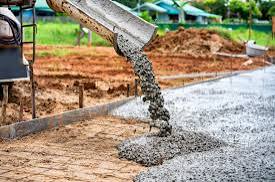
The Democratic Republic of Congo (DRC) has renewed temporary restrictions on imports of cement, clinker and lime in parts of the country as the government steps up efforts to strengthen domestic manufacturing and reduce reliance on imported construction materials.
The renewed measures, signed on 29 July by Foreign Trade Minister Julien Paluku Kahongya, continue restrictions on grey cement and clinker imports into the country’s western and southeastern regions, while lime imports remain restricted in the southeast.
Unlike an outright ban, the policy allows companies to apply for exemptions when locally produced materials cannot adequately meet industrial or consumer demand. Importers seeking waivers must provide documentation validated by SEGUCE-RDC, the country’s single-window foreign trade platform.
The latest decision extends a trade policy first introduced in July 2024, when Kinshasa imposed temporary safeguards to shield domestic cement and lime producers from cheaper imported products while encouraging investment in local production.
The strategy aligns with the DRC’s wider industrialisation agenda, which seeks to process more goods locally rather than rely on imports. Cement has become a strategic commodity as the government expands spending on roads, housing, mining infrastructure and public works, all of which require reliable supplies of construction materials.
Several major producers have invested in expanding domestic capacity in recent years. Western DRC is served by manufacturers including PPC Barnet, CIMKO, Cimenterie de Lukala and CINAT, while the southeast hosts the Grande Cimenterie du Katanga and a cement and lime plant linked to China’s Zijin Group in Lualaba.
Together, these investments have significantly increased the country’s production potential.
However, officials acknowledge that production capacity alone does not guarantee supply across the vast Central African nation. Poor transport infrastructure, long distances and high logistics costs continue to make it difficult to distribute cement efficiently to some provinces, prompting the government to retain an exemption mechanism for areas where local supply remains insufficient.
The approach mirrors a growing trend across Africa, where governments are increasingly using targeted trade measures to support domestic industries, reduce import dependence and encourage value addition.
Countries including Nigeria have adopted similar policies in sectors ranging from cement to food processing, arguing that temporary protection can help local manufacturers scale production and create jobs.
For the DRC, the success of the renewed restrictions will ultimately depend on whether domestic producers can supply sufficient volumes at competitive prices.
If production fails to keep pace with rising demand from infrastructure and mining projects, businesses may continue relying on exemptions to bridge supply gaps, limiting the policy’s impact on reducing imports.