Today in History: How Sirimavo Bandaranaike Made History as the World’s First Female Prime Minister
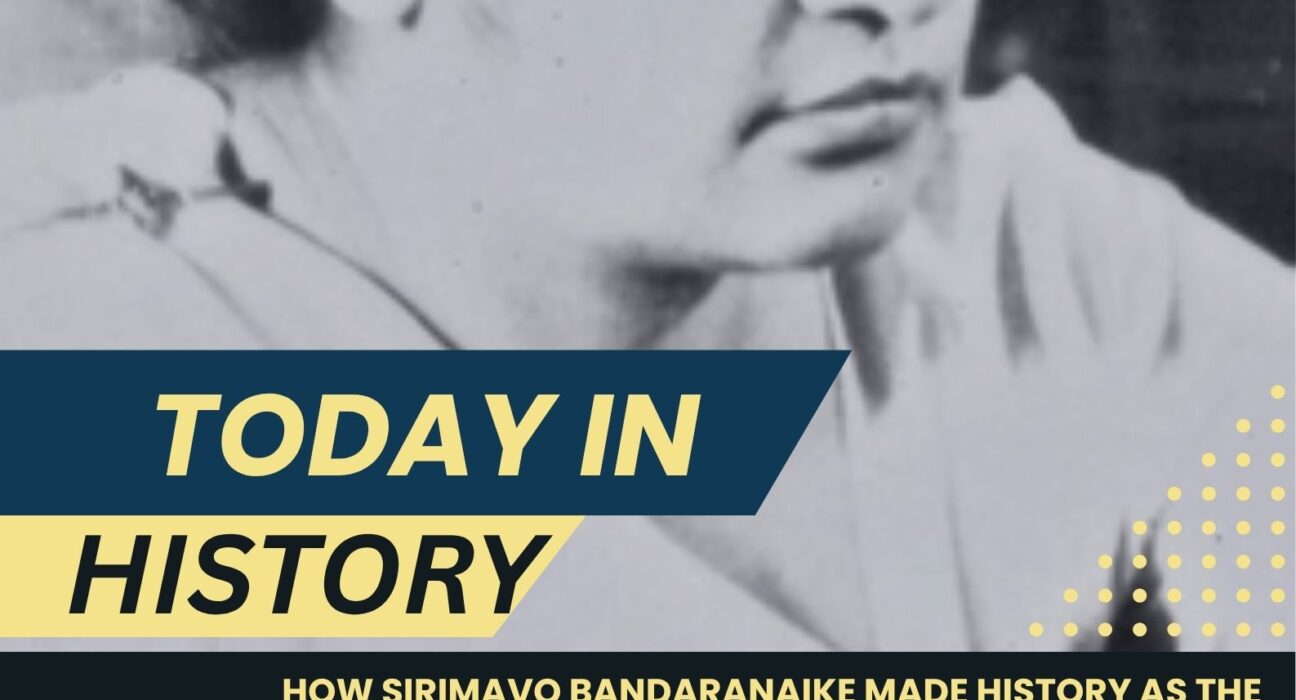
On July 21, 1960, history was rewritten in the island nation of Ceylon, known today as Sri Lanka. Sirimavo Bandaranaike took the oath of office as Prime Minister, becoming the world’s first democratically elected female head of government. In an era where global statecraft was almost exclusively dominated by men, her ascent marked a seismic shift in political history and shattered a long-standing glass ceiling.
Born into an aristocratic family in 1916, Sirimavo Ratwatte was long dedicated to social welfare work and community organizations, possessing little initial intention to enter electoral politics. That trajectory changed abruptly in September 1959 when her husband, Prime Minister Solomon Bandaranaike, was assassinated.
Amid the ensuing political turmoil and fractional leadership struggles, the Sri Lanka Freedom Party turned to her to unify the movement. Reluctantly stepping into the arena, she assumed leadership of the party. Skeptics initially dismissed her entry as a temporary emotional ploy, with political opponents condescendingly labeling her “The Weeping Widow.” However, her quiet determination, pragmatic approach, and powerful connection with the country’s rural populace quickly dismantled those assumptions.
In the general election of July 1960, Bandaranaike led the Sri Lanka Freedom Party to a decisive victory. Because she did not hold a seat in the elected House of Representatives at the time of the election, she was appointed to the Senate to fulfill the constitutional requirement to serve as Prime Minister.
Her appointment resonated far beyond the borders of Ceylon. In 1960, even long-standing Western democracies had yet to see a woman reach the highest executive office. Bandaranaike’s election proved that political leadership at the highest level was not the exclusive domain of men, clearing a path for future global leaders such as India’s Indira Gandhi, Israel’s Golda Meir, and Britain’s Margaret Thatcher.
Bandaranaike’s political career spanned three separate terms as Prime Minister: from 1960 to 1965, 1970 to 1977, and later from 1994 to 2000. Her tenure was defined by transformative national reforms and assertive foreign policy positions. As a key figure in the Non-Aligned Movement alongside leaders like Yugoslavia’s Josip Broz Tito and Egypt’s Gamal Abdel Nasser, she championed anti-imperialism and international neutrality. Domestically, she pursued economic nationalism by nationalizing key sectors, including petroleum companies, foreign banking assets, and private schools, aiming to reduce foreign economic dependency.
Her government achieved a historic constitutional milestone in 1972 by drafting a new constitution that officially severed the nation’s dominion ties with the British Crown and renamed the country the Republic of Sri Lanka.
At the same time, her administration faced significant domestic challenges. State-led economic controls and trade restrictions resulted in severe inflation and consumer shortages, while language policies prioritizing Sinhala intensified ethnic tensions that would shape Sri Lankan politics for decades to come.
Regardless of the political debates surrounding her policies, Sirimavo Bandaranaike’s place in global history remains secure. She broke unprecedented ground at a time when female leadership was almost unimaginable, proving that steady resolve could redefine a nation’s path. When she passed away in October 2000—shortly after casting her ballot in that year’s parliamentary election—she left behind a legacy that permanently transformed the role of women in international statecraft.