



Dangote Refinery Keeps Petrol Prices Stable Despite Rising Global Fuel Costs, Reports S&P
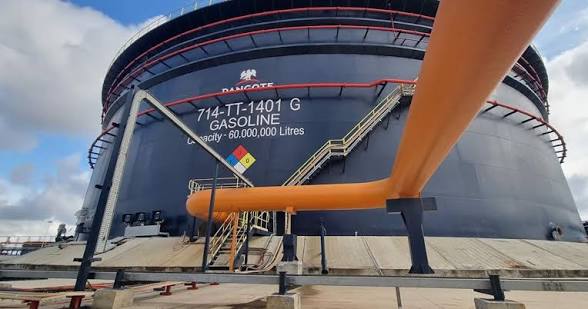
Dangote Petroleum Refinery has continued to maintain stable domestic petrol prices despite rising international gasoline prices, higher freight charges and tightening global fuel supplies, according to a report by S&P Global Commodity Insights.
In its latest market intelligence, S&P said fuel importers supplying the Nigerian market are facing mounting pressure from increasing global gasoline prices and higher shipping costs, making imported products less competitive.
The report noted that local petrol prices are effectively being influenced by Dangote Refinery’s pricing, preventing importers from passing higher international costs on to consumers.
According to S&P, traders said gasoline prices for the Nigerian market remain constrained because the refinery has maintained its coastal sales prices despite sustained increases in global product values. One market participant was quoted as saying that gasoline prices at Lomé had risen above Dangote’s sales prices, making fuel imports into Nigeria commercially unattractive.
The report also highlighted a significant increase in freight rates, with the cost of transporting clean petroleum products from Northwest Europe to West Africa rising from $29.70 per metric tonne at the end of June to $37.12 per metric tonne as vessels shifted to alternative markets.
S&P added that reduced supplies of Russian Black Sea cargoes have tightened diesel markets, driving up prices for high-sulphur gasoil across West Africa and further increasing the cost of imports.
Despite these global developments, Dangote Refinery has continued to reduce domestic fuel prices. Since the end of May, the refinery has lowered the ex-depot price of Premium Motor Spirit (PMS) by more than ₦200 per litre, Automotive Gas Oil (AGO) by over ₦300 per litre and Jet A1 aviation fuel by more than ₦520 per litre.
The refinery maintained that its pricing reflects the cost of crude oil purchased under commercial supply contracts weeks or months before refining rather than daily fluctuations in international Brent crude prices.
Industry analysts cited by S&P said the latest market trends underscore the importance of domestic refining in protecting Nigeria from external supply disruptions. They noted that without the refinery’s production capacity, rising international fuel prices and shipping costs would likely have translated into higher domestic pump prices.
The report further stated that Dangote Refinery is increasingly setting the benchmark for petroleum pricing across West Africa, with importers finding it difficult to compete whenever international replacement costs exceed the refinery’s domestic prices.
According to analysts, the development reflects the refinery’s strategic role in reducing Nigeria’s reliance on imported petroleum products, conserving foreign exchange and providing greater price stability amid ongoing volatility in the global energy market.