Motorists, Businesses Count Losses as Apapa Traffic Gridlock Worsens
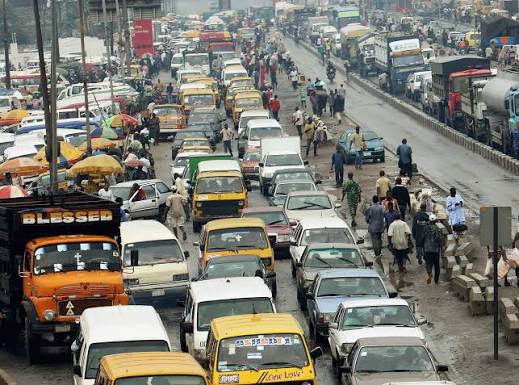
Commuters, motorists and businesses were caught in a prolonged traffic gridlock last week after heavy congestion brought movement on the Oshodi-Apapa Expressway to a near standstill, renewing concerns over the persistent transportation challenges around Lagos ports.
The congestion, which stretched across the Mile 2-Berger Yard axis and adjoining roads, was triggered by a large influx of container trucks and petroleum tankers that occupied major sections of the highway.
Indiscriminate parking and reckless driving by some truck operators further worsened traffic along the Mile 2-Tin Can corridor.
Residents, transport operators and business owners blamed the recurring gridlock on the commencement of operations at the new Kirikiri terminal, deteriorating road infrastructure, poor traffic management, illegal parking by tanker drivers and weak enforcement of traffic regulations.
Despite the presence of police officers, military personnel and officials of the Lagos State Traffic Management Authority, motorists and commercial operators remained stranded for several hours as efforts to ease the congestion yielded little success.
Investigations indicated that the traffic buildup intensified after increased petroleum product availability along the Mile 2-Coconut corridor attracted hundreds of tanker drivers seeking access to tank farms.
Many reportedly diverted from the Dangote Refinery route to the Mile 2-Coconut Expressway in search of loading opportunities.
The congestion was traced to the Coconut axis, where stationary tankers blocked entrances to major depots, including Shema, Integrated and Sahara.
Several drivers who failed to secure clearance to load fuel remained on the roadway, further obstructing traffic.
Members of the Petroleum Tanker Drivers branch of the Nigeria Union of Petroleum and Natural Gas Workers later intervened by attempting to clear the queue.
However, many of the displaced tankers relocated to the opposite side of the road, worsening the situation and preventing loaded trucks from leaving the depots.
The resulting traffic extended to Mile 2, making movement extremely difficult for commuters and motorists.
The latest disruption has renewed concerns over the long-standing traffic challenges around Apapa despite previous government interventions. In 2018 and 2019, former Vice President Yemi Osinbajo led inspections of the corridor alongside Lagos State Governor Babajide Sanwo-Olu and directed joint military and police operations to remove abandoned trailers from the Apapa-Oshodi Expressway.
Although the completion of the Oworo-Mile 2 road project improved traffic flow between Oshodi and Cele Bus Stop, congestion between Mile 2 and Apapa Port has continued to persist.
The situation has also been aggravated by the rainy season, with flooded sections and pothole-ridden portions of the highway slowing vehicular movement.
A visit to the corridor showed trucks occupying both service lanes and sections of the main carriageway while traffic officials struggled to regulate movement.
Residents also complained that trucks conveying empty containers to the ports routinely blocked major sections of the road despite the presence of enforcement officers.
A motorist, Olatunji Oshinowo, said a journey that previously took about 30 minutes between Mile 2 and Tin Can Island Port now lasts between two and three hours, adding that the persistent delays have increased transportation costs and reduced productivity.
Truck driver Monday Isaiah also blamed the congestion on the concentration of tankers and container trucks along the route, noting that travel times had become unpredictable and calling for stronger enforcement and lasting traffic management measures.
Another motorist, Yahaya Adesina, lamented that despite previous government promises to address the Apapa traffic crisis, commuters continue to endure long delays on one of Lagos’ busiest transport corridors linking the seaport and the international airport.
A commercial bus driver, identified simply as Ebube, said severe congestion often forces drivers to abandon their routes around Wharf and seek alternative roads, adding that truck operators attempting difficult turns on narrow roads frequently worsen the traffic situation.
Responding to the development, the Lagos State Traffic Management Authority urged motorists to remain patient, insisting that the Mile 2-Apapa corridor remains one of its priority operational routes.
LASTMA’s Director of Public Affairs and Enlightenment, Adebayo Taofiq, said the agency has maintained a strong operational presence through officers deployed from nearby zonal offices, with additional personnel assigned daily to regulate traffic, remove obstructions and improve vehicular movement.
He added that while the agency has continued to engage transport unions operating along the corridor, some commercial vehicle operators still engage in illegal parking, indiscriminate loading and unloading of passengers, route violations and other traffic offences that contribute significantly to congestion.