It Takes A lot of Guts To Want to Share Power
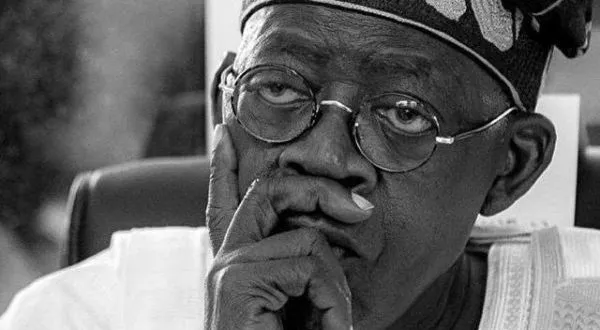
It is an axiomatic reality in the political history of Africa that power is rarely given away willingly. The common political consensus has long been that power, much like wealth, is never enough; those who attain it often look for every means to consolidate, hoard, and expand it. In a poignant reflection shared at a recent Arise TV Town Hall Meeting on state policing in Abuja, elder statesman and veteran journalist, Aremo Olusegun Osoba touched on a profound truth: it takes a unique kind of grit and statesmanship for a president to willingly decentralize authority and share power with sub-national federating states.
In an environment where political actors traditionally scramble for relevance often transiting from governorships to the Senate, and seeking lifelong dominance, President Tinubu is beating a drastically different course. Through a deliberate series of structural reforms, Tinubu is introducing an era of sophisticated leadership, proving that true strength lies not in the monopolization of power, but in its effective distribution.
For decades, Nigeria’s federal structure operated more like a unitary system disguised as a federation. Past administrations routinely frustrated attempts by states to exercise autonomy. A classic historical example is the fierce battle between the federal government and Lagos State when Tinubu, as governor, created Local Council Development Areas (LCDAs) to bring governance closer to the grassroots. The center reacted with heavy-handed resistance, illegally withholding the state’s allocations for years in an attempt to crush the initiative.
Today, as President, Tinubu is reversing that exact trend of over-centralization. Rather than clutching the remote of federal control, his administration has consistently dismantled the federal monopoly over key sectors. By moving power generation and distribution from the exclusive legislative list to the concurrent list, states can now generate their own power independently. His administration actively championed and secured financial independence for local governments, ensuring resources flow directly to the grassroots.
This is the mindset of a leader shaped by years of fighting for true federalism. He understands that a head with paralyzed body cannot function well.
The conversation around state policing highlights the practical necessity of this devolution of power. As various contributors at the Abuja Town Hall noted, the current arrangement of calling governors the “Chief Security Officers” of their states without operational control over the police is a structural blunder. It is akin to calling a man a husband and head of a household, yet he has no home, no independent income, and must rely on an external head to feed and manage his own family.
True policing must be local. Security cannot be effectively managed by an officer deployed from hundreds of miles away who does not understand the local terrain, the language, or the cultural dynamics of the community. For state policing to succeed, it must be community-based and rooted in local recruitment utilizing local hunters, vigilantes, and stakeholders who are genuinely passionate about protecting their own ancestral lands.
While critics express fears over how state policing will be funded or managed, the reality is that localized security dramatically reduces structural costs. Local personnel do not require massive relocation allowances, complex housing logistics, or far-flung operational deployments. They live where they work, and their passion for their community outweighs the bloated administrative costs of a distant, federal bureaucracy.
President Tinubu’s governance style is shifting the paradigm from transactional politics to institutional legacy. Governor Soludo on Arise TV called Tinubu a “Professor of Federalism,” a sentiment backed by Professor of Political Economy Ken Ife on TVC, who stated that “no leader has brought us this close to fiscal federalism like President Tinubu” validating the revelation in my book, “Tinubu’s Proven Principles of Governance”, where I referred to Tinubu as the “Father of Modern Fiscal Federalism.”.
By establishing regional development commissions and divesting the federal government of powers that naturally belong to the states, Tinubu is building an unassailable legacy. He is demonstrating that leadership is not about forcing compliance or hoarding resources; it is about creating a system where every federating unit can maximize its potential and contribute to the national whole.
The ongoing reforms teach us a vital lesson about power: leaders do not choose their followers; followers choose their leaders. True leadership does not force; it inspires through a superior quality of ideas and a willingness to empower others.
While previous political eras were defined by leaders who clung to power for decades without structural impact, the current administration is focused on restructuring Nigeria for generations to come. By choosing to share power with the states, President Bola Ahmed Tinubu is earning his place as the architect of modern fiscal federalism in Nigeria proving that the ultimate measure of a leader’s strength is how much power they give back to the people.
Bamidele Atoyebi is the Convener of BAT Ideological Group, National Coordinator of Accountability and Policy Monitoring and a publisher at Unfiltered and Mining Reporting and political social worker