


Cockroach Janta Party Classic and Why it Got Millions Followers Days after Creation
In the arena of modern political mobilization, a week can feel like a lifetime. But in mid-2026, it took only a few hours for a digital joke to transform into a full-blown youth-led movement that would capture the attention of tens of millions across India.
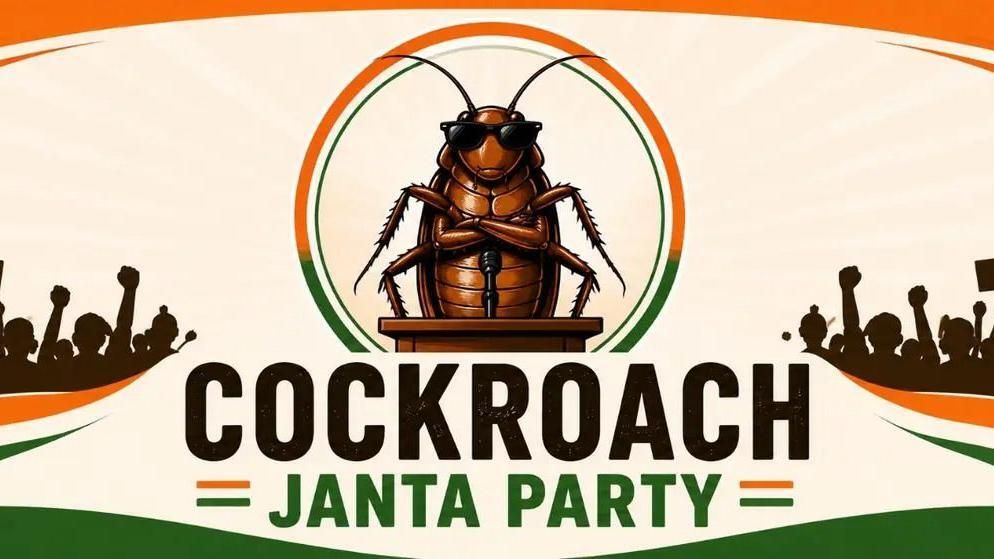
Enter the Cockroach Janta Party (CJP) a satirical, anti-establishment front that has quickly grown from a viral meme into one of the most unexpected challenges to traditional political structures in recent history. Boasting millions of followers and online sign-ups within days of its creation and forcing thousands of youth to transition from typing on screens to marching on the streets of New Delhi, the CJP has proven that you cannot easily squash an internet-era movement.
The inception of the Cockroach Janta Party can be traced back to a specific moment of systemic friction. On May 15, 2026, during an open Supreme Court hearing regarding systemic anomalies and the advocacy of unemployed youth, a controversial remark made by Chief Justice Surya Kant sparked intense national outrage. In his commentary, the justice likened certain protesting and unemployed youth to “cockroaches” and “parasites of society” who attack the very system that sustains them.
While the judiciary later defended the statement, clarifying that it was aimed strictly at individuals operating with fake or bogus professional credentials, the damage in the court of public opinion was already done.
For India’s massive population of Gen-Z and millennial youth many of whom are grappling with a brutal job market and recent high-profile academic scandals—the remark felt like a devastating confirmation of how the elite viewed ordinary, struggling citizens.
Reacting with swift, defiant irony, Abhijeet Dipke, a 30-year-old public relations graduate from Boston University and a former digital communications volunteer for the Aam Aadmi Party (AAP), decided to turn the insult into an identity. On May 16, 2026, Dipke posted a simple Google form on X (formerly Twitter) inviting people to join a new political platform for all the cockroaches out there. The name was a direct, biting play on words targeting the ruling Bharatiya Janata Party (BJP). The tagline was equally sharp: “A political party for the people the system forgot to count.”
To understand how the CJP gained millions of followers within hours, one must look at the unique confluence of digital strategy, relatable humor, and genuine socio-economic pain.
Instead of reacting with defensive anger, the movement fully weaponized satire. The CJP website explicitly lists its ideological identity as Secular, Socialist, Democratic, and Lazy. Its membership criteria are unashamedly tailor-made for the modern internet age, welcoming anyone who is unemployed by force, by choice, or by principle. It invites the physically lazy, the chronically online who spend more than 11 hours daily scrolling on their devices, and anyone capable of professionally renting and aiming their sharp wit at things that matter.
Upon registering, users receive digital membership cards with customized, comedic titles like Chief Spiral Officer or Minister of Naps. This hyper-shareable format turned political dissent into an interactive, gamified community experience that spread across WhatsApp, X, and Instagram like wildfire.
Beyond the humor lies a deep well of systemic frustration. The cockroach metaphor resonated because it directly overlapped with a massive crisis in India’s education and employment sector: the 2026 NEET-UG medical entrance exam scandal. When the crucial exam—where over 2 million students compete for a mere 130,000 slots—was compromised by paper leaks to the highest bidder, it devastated millions of middle-class households. The CJP became the structural umbrella for this student grief, organizing candlelight vigils and sit-ins at Jantar Mantar to demand the resignation of Union Education Minister Dharmendra Pradhan. As founder Abhijeet Dipke pointed out, you find cockroaches where something is rotten, meaning that the system of the country felt so broken that an entire swarm was bound to emerge.
The digital momentum was accelerated when institutional figures and politicians joined the banter. Trinamool Congress (TMC) MPs Mahua Moitra and Kirti Azad publicly interacted with the CJP on social media. When Azad jokingly asked what qualifications were needed to join, the party page cheekily replied that winning the 1983 World Cup was a good enough qualification. Prominent civil society figures, like activist-lawyer Prashant Bhushan and climate reformer Sonam Wangchuk, also declared themselves honorary cockroaches, lending mainstream legitimacy to the satirical front.
The explosive growth of the Cockroach Janta Party has not come without significant pushback. As the movement transitioned from online satire to physical street protests in late May and June 2026, it faced severe digital and physical resistance.
Immediately following its launch, the movement faced a complete digital crackdown. The CJP’s primary X account was withheld in India due to legal demands, and personal and backup Instagram accounts faced targeted hacking and brief suspensions. Dipke also reported receiving death threats. Undeterred, the movement transitioned offline on June 6, 2026, when thousands of youth marched through the streets of New Delhi wearing cockroach masks and holding copies of the Indian Constitution to prove they came in peace.
By late June, the CJP held a multi-day sit-in at Jantar Mantar, honoring students driven to suicide by exam scandals and demanding systemic transparency. The political friction intensified when Union Education Minister Dharmendra Pradhan accused the organization of being a B-team of terrorists. Dipke fiercely rejected this label in his speeches, pointing out that peaceful taxpayers demanding justice for students should not be targeted with such rhetoric by politicians responsible for educational governance. The protests even drew support from local citizens and grandmothers who sent home-cooked meals to the fasting and sitting protesters.
Whether the Cockroach Janta Party will ever register as an official political entity with the Election Commission of India remains highly unlikely and perhaps unnecessary. Skeptics and political analysts point out that while the movement commands tens of millions of digital views, its actual street mobilization numbers hover in the thousands, making it a classic David vs. Goliath battle against India’s massive traditional political machineries.
However, the rapid ascension of the CJP marks a clear turning point in how a younger generation chooses to engage with power. By taking the worst insult thrown at them by the highest echelons of the state, naming it, owning it, and turning it into a badge of honor, India’s youth have sent a clear message to the ruling elite: you can ignore individual citizens, but you can never completely squash the swarm.