AI Expert Says FG’s 36,000 Youth Training Target Too Small for Nigeria
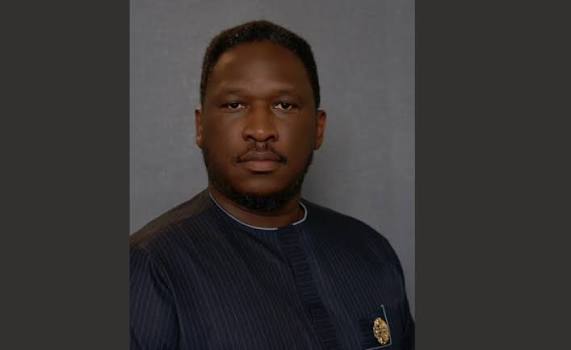
British-Nigerian data and artificial intelligence expert, Abel Aboh, has described the Federal Government’s plan to train 36,000 young Nigerians in artificial intelligence and cybersecurity as inadequate for a country with a population of more than 250 million people.
Aboh said the target would have little impact considering Nigeria’s large youth population, estimated at about 70 per cent of the country’s population, and called for a broader, more structured approach to AI education and adoption.
He spoke during a recent edition of The Coffee Table Podcast hosted by Ugo Obi-Chukwu, following the Federal Government’s partnership with Coursera to train 36,000 Nigerian youths in AI and cybersecurity.
The technology expert said Nigeria could not build meaningful AI capacity by focusing training largely on a small number of young people or restricting digital education to tertiary institutions.
He argued that AI literacy should be introduced from kindergarten and sustained through primary, secondary and tertiary education, saying early exposure would give young Nigerians the skills needed to compete in an increasingly technology-driven global economy.
Aboh said the Federal Government’s National Artificial Intelligence Strategy would remain largely aspirational unless it was linked to specific national challenges and backed by practical implementation measures.
He said the country must move beyond policy documents and limited training programmes by identifying priority areas where artificial intelligence could deliver measurable results.
According to him, Nigeria should clearly define how AI can be deployed to improve agriculture, financial services, transportation, security, education, healthcare and employment generation.
Aboh explained that artificial intelligence could help farmers make better decisions by analysing large volumes of information on soil conditions, weather patterns, crop yields, market demand and planting locations.
He said the technology could improve predictability across the agricultural value chain and help farmers reduce losses while increasing productivity.
The AI expert also urged Nigeria to select about 10 key sectors for targeted AI intervention, including security, education, financial services and unemployment.
He cited India’s outsourcing industry as an example of how large-scale digital skills development could create employment opportunities and expand a country’s participation in the global technology economy.
On insecurity, Aboh said artificial intelligence could support the use of drones, closed-circuit television systems, intelligence analysis and facial recognition technology to monitor threats and track criminal activity.
He further called for increased investment in data centres and other digital infrastructure needed to store, process and manage data within Nigeria.
Aboh said Nigeria had the potential to attract data-centre investments because of factors such as available land and access to water, but added that government decision-makers needed to engage more effectively with relevant industry stakeholders.
He also expressed concern that many states lacked commissioners or senior officials specifically responsible for technology and innovation, a situation he said was slowing the spread of AI development at the subnational level.
While describing Lagos as Nigeria’s leading innovation centre because of its growing financial technology ecosystem, Aboh said the state still trailed several African cities in some global fintech rankings.
He maintained that AI should be treated as a practical tool for solving problems, increasing revenue, cutting costs and reducing risks, rather than as a distant technological ambition.
Aboh called for a national strategy around general-purpose technologies, arguing that Nigeria must advance AI development alongside investments in oil, rail transportation, space technology and other strategic sectors.
Meanwhile, the Nigeria Data Protection Commission has announced plans to review the Nigeria Data Protection Act to provide clearer provisions for emerging technologies, including artificial intelligence, big data and robotics.
The National Commissioner of the commission, Dr Vincent Olatunji, said the review became necessary because of the rapid pace of technological advancement since the law was signed by President Bola Tinubu on June 12, 2023.
He said emerging technologies were addressed only broadly in the original legislation because the digital landscape was less developed at the time the law was drafted.