
Sanwo-Olu Reaffirms Lagos’ South-West Identity, Pushes Regional Economic Integration
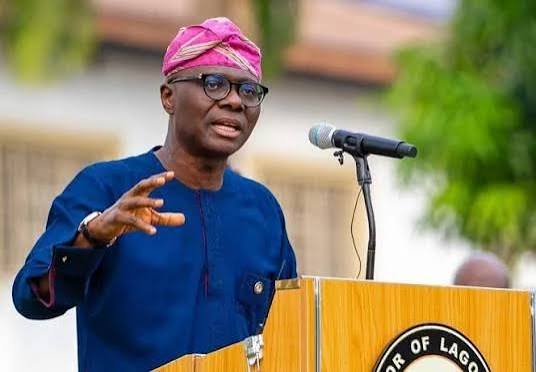
Lagos State Governor, Babajide Sanwo-Olu, has restated his administration’s commitment to strengthening economic cooperation among South-West states, declaring that Lagos remains firmly rooted in the region and will continue to promote shared prosperity.
Sanwo-Olu, who chairs the South-West Governors’ Forum, made the remarks on Saturday at the Geo-Economic Optimisation Summit Lagos 2026 held in Oregun.
The summit, organised by the Citadel School of Government, featured the governor’s keynote address titled, “From South-West Nigeria to the Globe: Lagos State as a Geoeconomic Hub.”
In a statement issued by his Special Adviser on Media and Publicity, Gboyega Akosile, the governor said Lagos was strategically positioned to serve as a major economic gateway for Nigeria, West Africa and the wider African continent.
He said the state’s strengths in commerce, infrastructure, financial services, technology, logistics and human capital had placed it at the centre of efforts to expand prosperity beyond its borders.
Sanwo-Olu called on political and business leaders in the South-West to pursue development through collective planning and cooperation, arguing that individual states could achieve more by working as a bloc.
He said regional leaders must adopt a shared vision, make deliberate decisions and collaborate in a manner that allows every state to benefit from the region’s economic potential.
The governor maintained that Lagos would continue to support initiatives aimed at deepening integration among the South-West states.
Sanwo-Olu said Lagos accounts for about one-third of Nigeria’s Gross Domestic Product and ranks as Africa’s second-largest metropolitan economy after Cairo, with an estimated purchasing power parity output of more than $259.75 billion.
He said that if Lagos were assessed as an independent country, its economy would rank as the eighth-largest on the African continent.
According to him, more than 90 per cent of the state’s economic activities are generated by non-oil sectors, including finance, technology, trade, logistics, creative enterprises and the blue economy.
The governor highlighted major infrastructure projects being undertaken to improve movement, trade and investment, including the Blue and Red Rail Lines, the proposed Green Line and the ongoing reconstruction of the Lagos-Badagry Expressway.
He also referred to federal-backed projects such as the Coastal Highway and the Sokoto-Badagry Superhighway, saying they would further enhance connectivity and economic activity.
Sanwo-Olu again made a case for a constitutional special-status designation for Lagos, citing the state’s former role as Nigeria’s federal capital, its contribution to national revenue and the pressure created by its large population.
He said Lagos hosts about one-tenth of Nigeria’s population and carries responsibilities that require additional recognition and support from the Federal Government.
The governor assured investors that Lagos would continue to welcome partnerships involving the private sector, neighbouring South-West states and international stakeholders to promote sustainable development.
Founder and Board Chairman of the Citadel School of Government, Pastor Tunde Bakare, described Lagos as an example of how sub-national governments could achieve economic progress through focused leadership and long-term planning.
Bakare said the state’s growth reflected strategic vision, continuity in public institutions and sustained investment over time.
Also speaking, the Executive Director of the University of Lagos Business School, Prof. Sunday Adebisi, said Lagos had moved beyond its traditional role as Nigeria’s commercial centre to become a major economic force in West Africa with global aspirations.