
Tinubu is Committed to Structural Change, Not Superficial Policies
It is safe to say that a structure usually outlives its builder. This truism is evident in the words of Pastor Matthew Ashimolowo, who once remarked that you cannot fix the head and leave the system. This simply means that the structure and system themselves need to be fixed, as too much attention is currently paid to the leader without repairing the underlying framework.
To prove this, we can look at the United States as an example. America has been ruled by very different people coming from diverse professions and levels of education. The US has seen everything from farmers and elderly statesmen to actors and even a businessman running the country like an enterprise. Yet, these vastly different leadership styles did not lead to the collapse of the country. We must ask ourselves why that is. The basic reason is that the American structure is built to work, and it is designed to withstand any form of abuse.
I made a joking statement last week that if not for the proclaimed cultural superiority between the US and Nigeria, Donald Trump should actually be under the learning tree of Asiwaju Bola Ahmed Tinubu. I said so because Asiwaju possesses courage, vision, and knowledge. These three vital features are precisely what has been lacking in our political system. In the past, Nigeria has had leaders with either one or two of these traits, but rarely all three together. Asiwaju changed the game because he possesses all three qualities simultaneously.
It is no secret that the developmental activities Tinubu is currently engaging in have long been part of Nigeria’s national developmental plan. For example, both the Sokoto-Badagry Highway and the Lagos-Calabar Coastal Highway have been on the card for decades, but previous leaders simply lacked the courage and vision to implement them.
As I stated in my previous article, an economy can only grow to the size of its infrastructure, and no economy can outgrow its foundational framework. It is just like pouring water into a cup, where you will only ever get back the exact amount of water the cup was built to contain. Tinubu is engaging in massive infrastructure building precisely to increase the foundational size of the Nigerian economy.
Tinubu understands the challenges and possesses the solutions to them. This is the reason he is actively decentralizing every sector of the country, knowing that this battle cannot be fought and won by the central government alone. The current system is broken from top to bottom, and it needs deep fixing.
If you notice, some of the foremost actions of Asiwaju were to decentralize electricity so that individual states can undertake independent power projects tailored to their respective needs, while also enforcing financial autonomy for local governments so that funds go directly to the grassroots.
Asiwaju knows that many of our national problems originated at the grassroots level, and they can only be fixed there. For example, the Local Council Development Areas (LCDAs) he created when he was the Governor of Lagos State. These LCDAs have undertaken projects that the state or central governments could not even see, let alone solve. Imagine if all other states embarked on this same process of breaking down massive local government areas into smaller LCDAs. If they did, many of Nigeria’s localized problems would have been solved by now. The LCDAs in Lagos are actively involved in solving personal, everyday issues ranging from local security to healthcare and even providing food for the people.
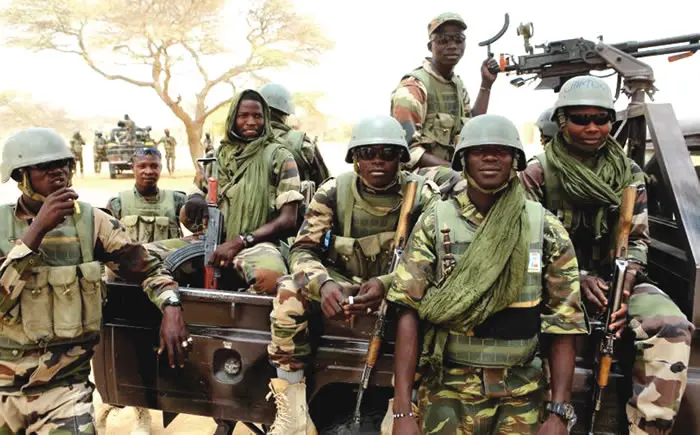
Furthermore, Tinubu is aggressively involved in establishing state police, a policy that is currently in its final stages. He has also championed the decentralization of military training centers and police academies, which were previously located solely in the North. The system has been broken for decades because the level of centralization in Nigeria is simply too high, leaving almost nothing decentralized to semi-autonomous bodies.
Every state and community has a unique problem that only they can properly solve. To centralize the problem-solving apparatus in Abuja is a major miscalculation because the central government cannot possibly know all the problems of every state or local government, let alone know how to solve them.
Take the North, for example. We all know the region faces a severe lack of formal education, where some parents have children without the capacity to care for them, leaving them to eventually fall into the hands of bandits. This problem is not the same in the South-West. The South-West does not lack education; its issues are entirely different. The central government cannot implement a one-size-fits-all solution for these distinct regions. Doing so would be like trying to wear your shoes on your head.
Nigeria’s structure has suffered an oblique fracture. To quote the Bible, if the foundations are destroyed, what can the righteous do? This is exactly what Asiwaju is trying to correct by stuffing the pockets of the state and local governments to ensure they have the financial wherewithal to handle their unique problems. Tinubu has even made it clear that state governors must be held accountable by their own people because he is pumping enough federal money into their hands.
For instance, if the federal government gives 75,000 Naira as a Conditional Cash Transfer to 15 million households, and each local government handles 1,000 people while the state government handles another 1,000, the level of poverty alleviation will be reduced in a massive, visible way. The Federal Government’s NELFUND (Nigerian Education Loan Fund) is a highly commendable initiative designed to support students in higher institutions. However, to truly transform our educational landscape, State and Local Governments must step up with similar, localized programs targeting primary and secondary schools. While some regions particularly the South-West theoretically offer free education, a closer look reveals a different reality. The financial burden has simply been shifted onto parents through a cycle of hidden fees like PTA fee, chair fee, exam fee, etc.
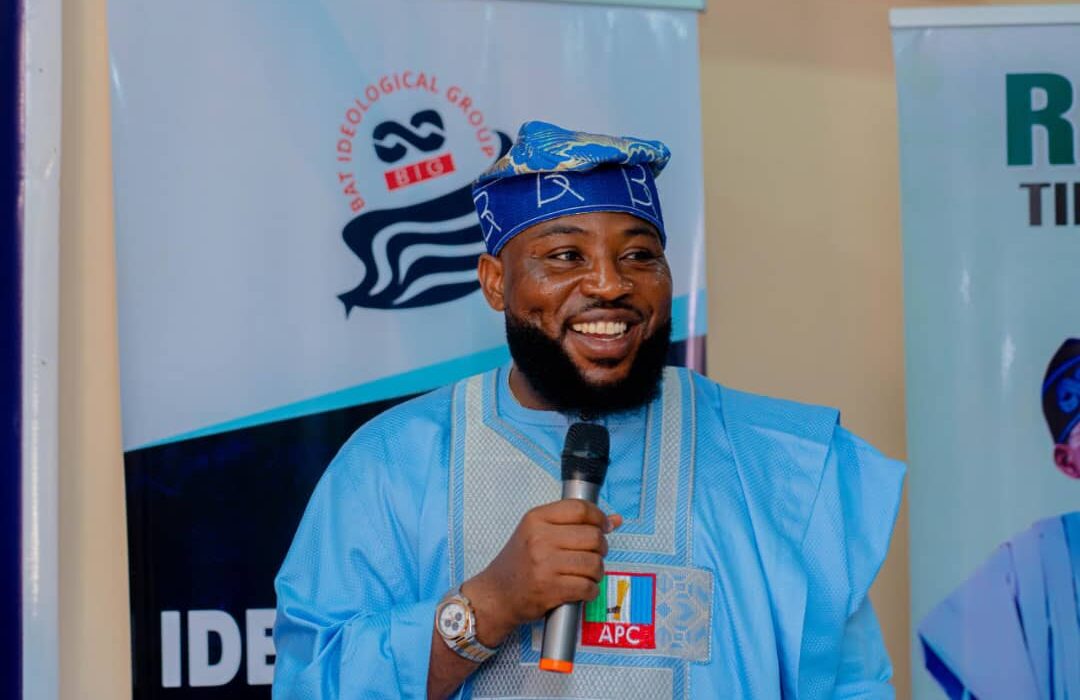
The BAT-Ideology exists to close these structural gaps and imbue future leaders with the necessary qualities to lead. Assuming the BAT-Ideology Group (BAT-IG) had existed long ago, there would already be a pool of qualified leaders waiting to be deployed to rule.
The BAT-IG has been actively engaged in community uplifting, creating a wide-reaching impact. The group has facilitated electricity for many rural communities, advocated for better healthcare for military and paramilitary personnel, and campaigned for the rehabilitation of primary healthcare centers that were in deplorable conditions. Most recently, the organization has provided clean water and healthcare for the people of Yobe State, while also restoring electricity to Isoko North, Isoko South, and parts of Jos. Our impact is truly limitless.
I had in my previous intervention submitted that we need to raise men and women who will be a walking career of Asiwaju political ideology. who will mount the throne of leadership at every level in which leadership exist in Nigeria starting from the grassroot up till the very top position.
As I stated in my previous article, Tinubu is fighting a Buffalo Order of Battle, which is a conflict that cannot be fought alone. Every citizen, every sector, and every level of government must come onboard to support this mission. The country needs to start working like a well-oiled machine.
Bamidele Atoyebi is the Convener of BAT Ideological Group, National Coordinator of Accountability and Policy Monitoring and a publisher at Unfiltered and Mining Reporting and political social worker