Sportswashing, Meaning and Global Application
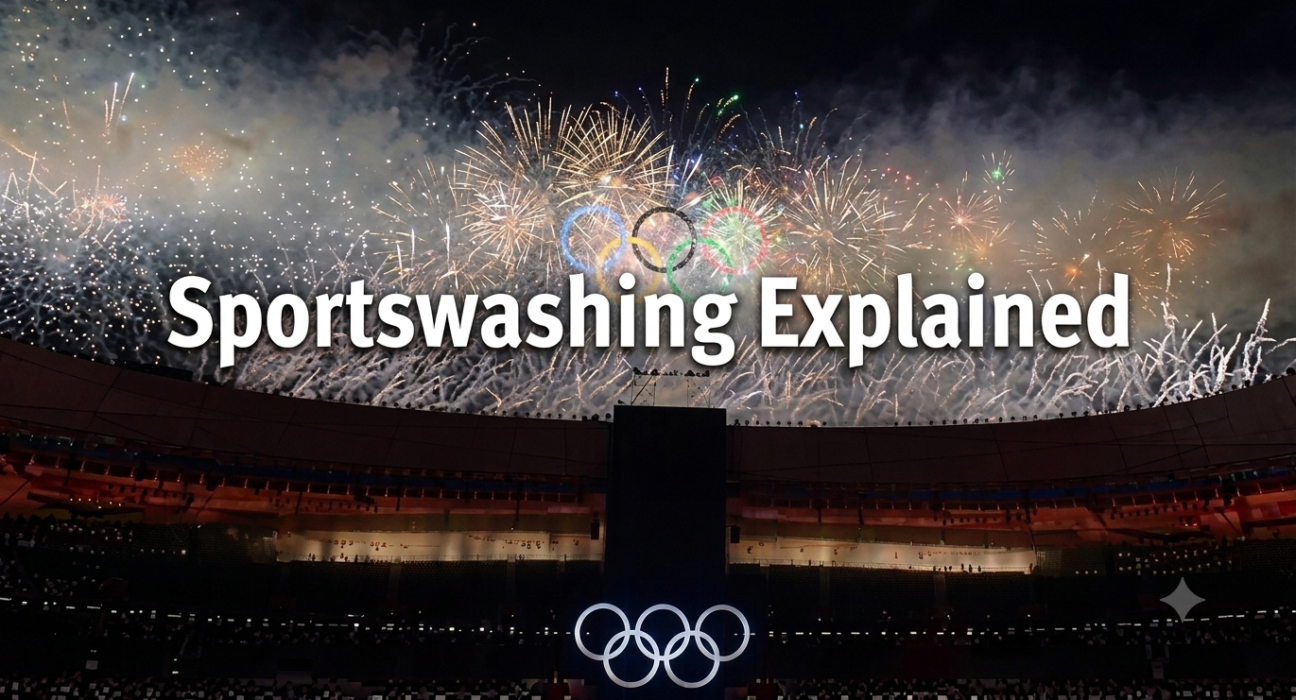
Sportswashing is a public relations strategy where a government, corporation, or regime uses high-profile sporting events, team ownerships, or athlete sponsorships to polish its tarnished reputation. The goal is to divert international attention away from poor human rights records, political corruption, or controversial military actions. By associating themselves with the passion, unity, and excitement of global sports, these entities “wash” their public image, turning critics into spectators.
Countries That Have Historically Used It
Nazi Germany (1936)
The modern blueprint for sportswashing was drawn by Adolf Hitler during the 1936 Berlin Olympics. The Nazi regime used the global stage to present Germany as a peaceful, benign, and economically prosperous nation. Behind the scenes, they temporarily toned down their violent anti-Semitic rhetoric and scrubbed anti-Jewish signage from the streets to present a sanitized facade to international visitors and journalists, successfully masking the horrors they were already preparing to unleash on Europe.
Argentina (1978)
In 1978, Argentina hosted the FIFA World Cup while under the brutal rule of a military junta led by Jorge Rafael Videla. The regime was actively torturing, murdering, and “disappearing” thousands of political dissidents sometimes just blocks away from the soccer stadiums. By hosting and ultimately winning the tournament, the junta successfully generated a wave of fierce national pride and painted a picture of a stable, joyous nation to the rest of the world, temporarily drowning out the cries of human rights organizations.
Russia (2014 & 2018)
Vladimir Putin’s government masterfully deployed sportswashing twice in one decade. First, they spent a record-breaking $51 billion on the 2014 Sochi Winter Olympics to project modern Russian excellence only to invade and annex Crimea days after the closing ceremony. In 2018, Russia hosted the FIFA World Cup, welcoming millions of international fans and shifting global news headlines to colorful fan culture, effectively softening the country’s image amidst severe geopolitical tensions with the West and domestic crackdowns.
Qatar (2022)
Qatar faced unprecedented scrutiny over its treatment of migrant workers, LGBTQ+ rights, and the corrupt bidding process leading up to the 2022 FIFA World Cup. In response, the country spent an estimated $220 billion to build state-of-the-art stadiums and infrastructure. The spectacle of Lionel Messi lifting the trophy in a traditional Qatari bisht became the defining image of the tournament, successfully shifting the global narrative from human rights abuses to sporting history and cultural hospitality.
Saudi Arabia (Present)
Through its Public Investment Fund (PIF), Saudi Arabia has launched arguably the most aggressive sportswashing campaign in modern history. Faced with intense global backlash over human rights violations and the murder of journalist Jamal Khashoggi, the Kingdom has invested billions into buying Newcastle United, launching the LIV Golf circuit, hosting massive boxing title fights, and signing aging soccer megastars like Cristiano Ronaldo. This massive influx of capital has forced the sports world to reframe Saudi Arabia as an unavoidable global entertainment hub rather than an authoritarian regime.
Is The US Doing The Same?
Welcome to the summer of 2026. The flags are flying, the fans are roaring, and the biggest FIFA World Cup in history is officially underway across North America. But beneath the glittering surface of the beautiful game, a cynical whisper is echoing across the internet: Is the United States using the world’s favorite sport to pull off the ultimate magic trick?
For decades, the West has pointed fingers at the Middle East and Russia, accusing them of “sportswashing” using multi-billion-dollar athletic spectacles to clean up dirty political reputations. But as the world tunes in to watch the US Men’s National Team take the pitch in Los Angeles and Seattle, internet skeptics and geopolitical analysts are asking a uncomfortable question: Has Uncle Sam just mastered the game?
The rumor mill is spinning fast, alleging that the US government is thrilled to have the World Cup dominate the news cycle for one primary reason: distraction.
First, there is the ongoing fallout from the massive, multi-million-page dump of the Jeffrey Epstein files by the Department of Justice. With the documents heavily scrutinized for links to powerful global figures and politicians, the public hunger for accountability is at an all-time high. What better way to bury uncomfortable headlines and late-night talk show monologues than a month of non-stop, flag-waving soccer drama?
Second, the tournament kicks off against a tense geopolitical backdrop, with the threat of conflict in the Middle East and heavy political positioning regarding Iran constantly looming in the background. War and systemic scandal make for bad PR; a global celebration of athleticism and unity makes for a perfect curtain.
Historically, sportswashing has been the weapon of choice for autocrats looking to hide their sins. From Hitler’s Berlin Olympics in 1936 to Qatar’s dazzling 2022 World Cup, the play has always been the same: give the people “bread and circuses,” and they will forget the politics.
As the world’s cameras focus on the penalty boxes and superstar goals over the coming weeks, the real match might be happening behind the scenes. Whether you believe the rumors or think it’s just a conspiracy theory, one thing is certain: while the world is watching the ball, it isn’t watching the news. Let the games begin.