
Lagos Made Everyone Who Is Who in Nigeria, Says VP Shettima
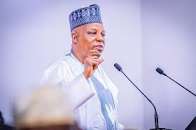
Vice President Kashim Shettima has made a sweeping tribute to Lagos State as the engine room of Nigerian success, declaring that the commercial capital has played a defining role in shaping the fortunes of virtually every significant figure in the country’s economic and business landscape.
Speaking on the matter, the Vice President pointed to the towering business empires of Africa’s richest man Aliko Dangote and Africa’s second richest man Abdulsamad Ishaq Rabiu as prime examples of how Lagos has served as the ultimate launchpad and growth accelerator for Nigerian billionaires, noting that while both men trace their roots to Kano, it was the Lagos business environment that provided the platform, infrastructure and commercial ecosystem that allowed their wealth to reach continental and global proportions.
Shettima’s remarks carry particular significance coming from a northern politician, reflecting a candid acknowledgement that Lagos’s unique position as Nigeria’s commercial nerve centre transcends regional rivalries and sentiments to deliver tangible economic outcomes for Nigerians regardless of their state of origin.
The Vice President’s assertion that Lagos made almost everybody who is who in Nigeria speaks to the city’s unrivalled concentration of financial institutions, trading networks, industrial capacity, port infrastructure and entrepreneurial talent that has made it not just Nigeria’s economic capital but one of Africa’s most consequential business destinations.
Lagos currently accounts for a disproportionately large share of Nigeria’s Gross Domestic Product, housing the headquarters of the country’s largest banks, manufacturers, media organisations and technology companies while also serving as the primary gateway for Nigeria’s international trade and foreign investment inflows.
Shettima’s comments are expected to fuel further debate about the balance of economic development across Nigeria’s six geopolitical zones, with many advocates for regional equity arguing that while Lagos’s contributions are undeniable, deliberate investment in other states could unlock similar economic potential across the country.