



Dangote Refinery Plans Global Dominance, Expands Crude Flexibility to 130 Grades
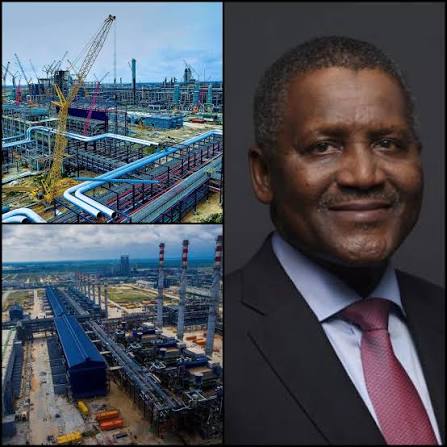
Aliko Dangote is positioning his petroleum refinery to expand its crude processing flexibility from around 40 crude types to as many as 130 different crude grades.
In a recent interview with S&P Global Commodity Insights, the refinery’s Chief Executive Officer, David Bird, revealed that this crude supply diversification is the central pillar of a capacity expansion designed to double the Lagos facility’s output to 1.4 million barrels per day.
The shift will transition the massive Lekki complex far beyond Nigeria’s domestic supply base and transform it into a highly adaptable global energy hub.
Targeting a selection of 130 grades will place the facility on par with the world’s most sophisticated trading hubs, such as Singapore’s Pulau Bukom refinery, which Bird previously managed.
As Bird explained, “This is not a traditional refinery in an oil-producing country that just sits at the end of a crude pipeline and processes one crude. This is a fully merchant refining model that you could see in Europe or Asia.”
Being able to process up to 130 different crude oil types means the refinery is highly flexible in the global oil market. Instead of relying on a single regional supply, it can buy crude from many countries and adjust quickly based on price and availability.
This also allows it to produce a wider range of fuels that meet different international standards, making it easier to sell refined products into multiple regions. In short, it strengthens both its sourcing options and its ability to compete in global fuel markets.
This immense flexibility will allow Dangote to aggressively enter international markets, enabling the facility to process heavy oils and foreign streams depending on real-world market economics.
Explaining the operational scope of the incoming expansion trains, Bird stated, “We will be in the crude blending game. So you can easily imagine at 1.4 million bpd we could process 30 per cent Middle Eastern grades on each train.”
This scale is projected to drop operating costs below $2 per barrel, cementing its position as one of the lowest-cost large-scale operations on earth.
Facing a continuous output stream, Bird noted that managing operators face “a tsunami of product coming down the pipe every day” and unpredictable truck demand, prompting the business to shift toward longer-term purchasing commitments from global distributors and national oil companies.
To protect local aviation partners, Bird pointed out, “We’ll be making sure that we’re not the supplier of last resort. We want to start building some of those direct offtake relationships.”