
Leadership Vacuum Deepens in ISWAP Following Mainok’s Reported Killing
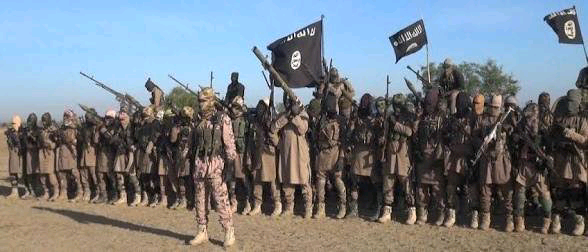
A reported leadership dispute has emerged within the Islamic State West Africa Province (ISWAP) following the death of one of its most influential commanders, Abubakar Mainok, during a recent counterterrorism operation.
Security sources familiar with developments said efforts by the Islamic State’s central leadership to quickly appoint a successor have encountered difficulties after a senior figure within the group, Ba’a Shuwa, allegedly showed little enthusiasm for assuming a broader leadership position.
Mainok, also known by several aliases, was reportedly killed during a coordinated operation involving Nigerian and United States forces. His death is believed to have created a significant gap within ISWAP’s command structure, particularly because of the multiple strategic responsibilities he handled.
According to intelligence sources, ISIS leaders outside Africa began consultations with senior figures within ISWAP shortly after the operation, seeking someone capable of maintaining operational stability and preserving the group’s links with the wider Islamic State network.
Ba’a Shuwa reportedly emerged as one of the preferred candidates. However, intelligence assessments suggest he has not indicated a willingness to take on the role, raising questions about the group’s succession plans.
Security officials believe growing military pressure across the Lake Chad Basin may be contributing to the reluctance among senior commanders to accept high-profile leadership positions. In recent months, intelligence-led operations and targeted strikes have intensified against insurgent networks operating in the region.
Analysts regard Mainok’s reported death as a major setback for ISWAP. Beyond his battlefield responsibilities, he was said to have played a critical role in coordinating propaganda activities, managing media operations, and maintaining communication channels with ISIS leadership abroad.
In a rare move, ISWAP publicly acknowledged his death through its media platforms, underscoring the significance of the loss. The group alleged that the operation followed months of surveillance and targeted several locations linked to its activities in the Lake Chad region.
The statement also claimed that individuals connected to the group’s media apparatus, foreign fighters, and other associates were among those killed during the strikes. Despite the reported destruction of some facilities, ISWAP has continued releasing propaganda materials through its established communication channels.
Security experts noted that the public admission marked one of the first instances in which the group openly discussed the loss of a senior commander in an operation allegedly involving direct U.S. participation.
Open-source assessments have suggested that the broader operation may have resulted in substantial casualties among the group’s fighters, although exact figures remain unconfirmed.
Intelligence sources further revealed that discussions are ongoing within the organisation over leadership succession and the future structure of its media operations. Concerns have reportedly grown following the elimination of several high-ranking figures in recent months.
Efforts to position Ba’a Shuwa in a more prominent leadership role were viewed as part of a wider strategy to reassure members and maintain organisational cohesion. However, reports indicate that uncertainty surrounding the succession process has instead heightened tensions among rival factions.
Sources also suggested that disagreements over leadership could be contributing to instability within the group, with some fighters reportedly relocating from traditional strongholds amid fears of further military offensives.
Security analysts argue that replacing Mainok will not be straightforward because of the unique combination of responsibilities he held. His influence reportedly extended beyond military operations to ideological guidance, media coordination and international engagement within the Islamic State network.
While the leadership uncertainty may create operational challenges, experts caution against underestimating ISWAP’s ability to adapt. They note that the group has previously survived major losses by reorganising its command structure and redistributing responsibilities among remaining leaders.
Nevertheless, the current situation is seen as a critical test for the organisation as it seeks to maintain cohesion and operational effectiveness in the face of sustained military pressure across the Lake Chad Basin.