
Gowon’s Autobiography Rekindles Debate Over Nigeria’s Civil War History
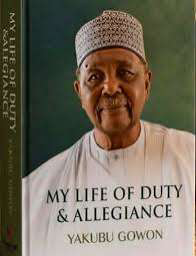
The launch of the autobiography of former Nigerian Head of State, Yakubu Gowon, has reignited debates over his role in some of the most controversial moments in Nigeria’s political history, including the events leading to the civil war and the collapse of the Aburi Accord.
The book, titled My Life of Duty and Allegiance, was unveiled last week at the International Conference Centre in Abuja, drawing political leaders, military figures, and other prominent Nigerians.
The memoir provides Gowon’s personal account of the political crisis that followed the 1966 military coups and the Nigerian Civil War between 1967 and 1970.
Before the release of the autobiography, much of the public understanding of the period had been shaped by accounts from other military officers, historians, and political actors involved in the events.
Observers say the book was expected to clarify lingering controversies surrounding Gowon’s leadership during the crisis years, particularly his handling of the Aburi Accord reached in Aburi in 1967.
The accord, negotiated between Nigerian military leaders and representatives of the then Eastern Region led by Chukwuemeka Odumegwu Ojukwu, proposed a loose confederation for Nigeria following tensions that erupted after the coups of 1966.
Critics of Gowon have long argued that failure to fully implement the agreement contributed to the outbreak of the civil war.
However, supporters of the former leader insist he lacked the authority to independently accept the arrangement without broader consultation with the Supreme Military Council and other national stakeholders.
They also argued that the political atmosphere at the time made implementation of the accord difficult and potentially dangerous for Gowon’s administration.
The debate has also revived discussions around the killings that followed the July 1966 counter-coup and the subsequent attacks on Eastern Nigerians in parts of Northern Nigeria, issues for which some critics continue to hold Gowon responsible.
Supporters of the former Head of State, however, maintain that he inherited a deeply divided country and was unexpectedly thrust into leadership during a volatile period.
The book launch has further renewed public interest in Gowon’s rise to power after surviving the January 1966 coup in which several senior military officers, including Brigadier Zakariya Maimalari, were killed.
Gowon later emerged as Head of State and led the country until he was removed in a bloodless coup in 1975.
The autobiography also revisits long-standing arguments over military hierarchy between Gowon and Ojukwu, with supporters of the former Head of State insisting that Gowon was senior based on commissioning dates and military training records.
Despite ongoing criticism of his leadership, supporters say Gowon played a major role in preserving Nigeria’s unity during one of the country’s most difficult political periods.
The release of the memoir is expected to further stimulate public discourse on Nigeria’s civil war history, national reconciliation, and the legacy of military rule in the country.