
Nigeria’s Mining Sector Looses $700 Billion to Illicit Financial Flows
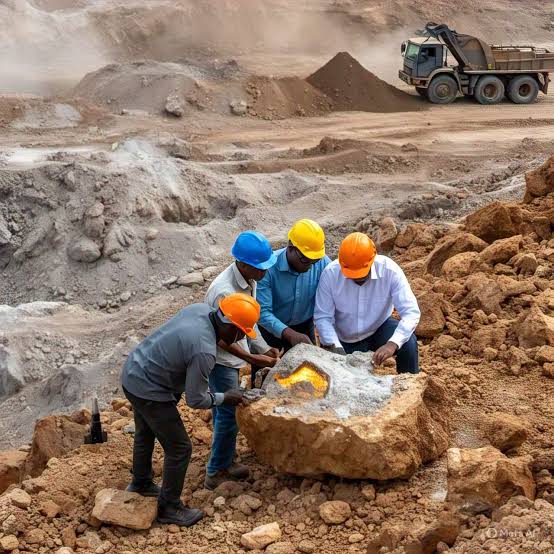
Africa’s leading oil producer, Nigeria also says it holds deposits of more than 40 mineral resources. The country’s mineral wealth — including gold, iron ore and rare earths — is expected by the authorities to become a key pillar of economic diversification.
Illicit financial flows however continues to undermine Nigeria’s mining industry, according to a report released Thursday by the Nigeria Extractive Industries Transparency Initiative (NEITI), which identified the systemic drivers behind the practice and warned of its impact on a sector estimated to hold $700 billion in untapped potential.
Titled “Stemming the Scourge of Illicit Financial Flows in Nigeria’s Mining Sector,” the report details how illegal mining and the informal economy are fueling illicit financial flows across the country. NEITI found that more than 70% of Nigeria’s mining activity is dominated by artisanal and small-scale operators, many of whom operate outside any regulatory framework, without licenses or traceability systems. The watchdog said the situation has enabled “parallel economies” to develop beyond state oversight.
Minerals extracted from illegal sites are routinely mixed with legally produced output before entering official export channels, complicating verification and facilitating smuggling, tax losses and the laundering of mining proceeds.
Weak oversight of artisanal mining also limits the authorities’ ability to enforce controls and collect taxes.
The report also highlights the opacity surrounding mining permit ownership, noting that permits are often held through shell companies or complex corporate structures designed to conceal the true beneficial owners of extractive assets. This creates opportunities for criminal actors, undisclosed foreign interests and politically exposed persons to participate in mining operations.
Poor verification of beneficial ownership information further worsens the problem, increasing the risks of corruption, commercial misreporting and money laundering. While NEITI does not estimate the overall cost of illicit financial flows to the sector, it links them to the mining industry’s persistent underperformance. In 2023, mining contributed only 401 billion nairas ($292 million) to public revenues and accounted for just 0.72% of national GDP.
NEITI’s findings are far from unique to Nigeria. Across Africa, illicit financial flows driven partly by smuggling continue to deprive governments and local communities of substantial revenues. In Burkina Faso, for example, the Extractive Industries Transparency Initiative (EITI) estimates illicit financial flows linked to five key minerals at $4.93 billion between 2012 and 2021, with gold and zinc accounting for the largest share.
Analyses conducted under the framework identified underreporting of export values, smuggling and commercial mispricing practices.
In Nigeria, the findings expose major weaknesses in a mining sector that remains largely opaque despite its widely cited potential. Authorities say the country’s subsoil contains more than 40 mineral substances, including critical minerals such as lithium and rare earths. As early as 2019, the United States Geological Survey reported production of around ten minerals in Nigeria, including gold, iron ore, tantalum, zinc, tin and rare earths, though it did not specify extraction sites.
Those resources are central to Abuja’s efforts to diversify the economy and reduce dependence on hydrocarbons, which remain the backbone of Nigeria’s economy. The government aims to raise mining’s contribution to GDP to 10% this year.
As investments worth several hundred million dollars flow into industrial mining projects, NEITI says curbing illicit financial flows will be essential for the sector’s growth. The body recommends stronger coordination among government agencies, the integration of anti-money laundering measures into mining regulation, the formalisation of artisanal and small-scale mining (ASM) to improve traceability, and mandatory disclosure of beneficial ownership information.
Formalising ASM has already become a major reform priority in several African countries. Ghana and Burkina Faso, for example, have established dedicated structures to better regulate gold flows and bring more small-scale miners under official oversight. Those reforms helped boost artisanal output in both countries, with Burkina Faso’s production rising from around 8.1 tonnes in 2024 to 42 tonnes in 2025.