



Nigeria’s Cocoa Decline: Policy Failures and the Southwest-Enugu Contrast
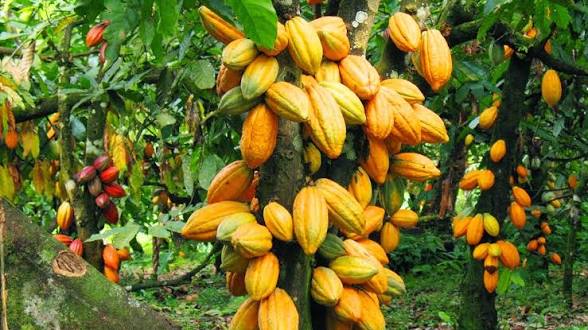
Once the world’s largest cocoa producer, Nigeria’s Southwest region—Oyo, Osun, Ekiti, Ondo, Ogun, and Kwara—now has no functional cocoa plantations of significance. Yet Enugu, a state with no cocoa history, launched a pilot plantation in February 2025. The contrast exposes a half-century of leadership failure.
Nigeria’s cocoa output has fallen from over 400,000 metric tonnes annually in the 1960s to roughly 300,000 tonnes today, while Côte d’Ivoire and Ghana now dominate the global market. The collapse is not due to climate or soil—the Southwest remains agriculturally viable. The cause is a string of deliberate policy choices by successive governments.
The first turning point came in the 1970s oil boom. Revenue from crude oil dwarfed agricultural earnings, and successive military regimes quietly abandoned investment in cocoa research, extension services, and rural infrastructure. Cocoa trees aged beyond productivity, and no systematic replanting programme replaced them.
The fatal blow arrived in the 1980s under General Ibrahim Babangida. As part of the Structural Adjustment Programme (SAP), his administration dissolved the Cocoa Marketing Board in 1986. That board had guaranteed minimum prices, provided subsidised inputs, and maintained quality standards. Its abolition left smallholder farmers at the mercy of private middlemen, destroyed quality control, and removed all incentives for long-term investment.
By contrast, Côte d’Ivoire retained state support for its cocoa sector, and Ghana later rebuilt its Cocobod institution. Nigeria did neither.
Enugu State announced a 20-hectare pilot cocoa plantation in Nkanu East LGA in February 2025, partnering with WhiteRabbit Agro Limited and using high-yield seedlings from CRIN. It is a commendable local initiative. But the fact that a non-cocoa state is now planting cocoa while traditional cocoa states are not is a damning indictment of federal agricultural policy failure.
No single president—neither Tinubu, nor Buhari, nor Jonathan—bears sole blame. The rot began with the oil boom and was cemented by Babangida’s SAP. Later administrations failed to reverse course. The consequence is that Nigeria, once a cocoa giant, now watches from the sidelines as its former cocoa belt lies fallow.